Close Menu
    Facebook X (Twitter) Instagram
    Trending
    • The Witness and the Service of Eastern Orthodoxy to the One Undivided Church
    • GOA 48th Biennial Clergy Laity Congress Reports
    • Assembly of Bishops Appoint July 26, 2026 as Prison Ministry Awareness Sunday
    • Statement on the Occasion of the 250th Anniversary of the United States of America
    • The Patriarchate of Antioch’s Antiochian Global Reach Project
    • From the World Cup to the Orthodox Church—US Soccer Star Desmond Armstrong on his Life & Faith
    • The First, Second, and Third Rome – in Paris
    • Ecumenical Patriarch Bartholomew urges absent churches to accept Holy and Great Council decrees
    Orthodox Christian Laity
    Facebook X (Twitter) YouTube
    • Home
    • OCL
      • About OCL
      • Leadership
      • OCL News
      • OCL Publications
      • Focused Study and Research Topics
      • OCL Archives at DePaul University
    • Orthodox News & Links
      • Orthodox News Stories
      • Headlines & News Archives
      • Governance & Unity
        • Governance Top Stories
        • Governance & Unity Commentary
        • Grassroots Unity in Action
      • OCL Forums
      • Orthodox Christian Laity News
      • Web Links
    • Audio & Video
      • Audio Index
      • Video Index
    • Contact
    • Make a Donation
    Orthodox Christian Laity
    You are at:Home»Orthodox News»Orthodox Church: monastic movement raising new controversy in Greek Orthodoxy in America

    Orthodox Church: monastic movement raising new controversy in Greek Orthodoxy in America

    4
    By Webmaster on January 19, 2017 Orthodox News, Orthodox News Top Stories
    Share
    Facebook Twitter LinkedIn Pinterest Email Telegram WhatsApp Copy Link

    Source: Religioscope
    BY RICHARD CIMINO, 24 NOVEMBER 2011

    A popular monk has become the center of growing controversy in the Greek Orthodox Church over his charismatic leadership and strict ascetic teachings. Known as Elder Ephraim, the Greek monk has spearheaded a monastic movement in the U.S.

    Since 1989, Elder Ephraim and his followers have established 18 monasteries in North America, attracting both cradle and convert Orthodox Christians to its strict ascetic practices. The “Ephraimite” monasteries stress reclusive living, fasting, bodily mortification, vigils, and constant recitation of the Jesus Prayer, according to sociologist Frances Kostarelos of Governors State University. In a paper on the Ephraimite monasteries presented at the meeting of the Society for the Scientific Study of Religion in Milwaukee, Wisconsin in late October, Kostarelos found that Elder Ephraim, who was a monk on Mount Athos in Greece, is viewed as a living saint by his followers who is said to have a divine gift for working miracles and healings.

    Elder Ephraim and the nuns and monks of his monasteries also claim to have the ability to exorcise the devil from people through prescribing spiritual techniques requiring bodily mortification and the denial of worldly pleasures. While such asceticism is common in many Orthodox monasteries, the way in which these strict practices have been imported into parish life and to non-monastic church members has become a source of controversy.

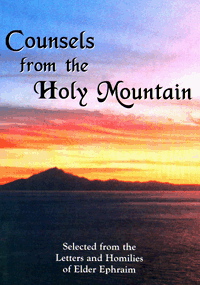
    Much of Elder Ephraim’s teachings are collected in two texts, the Counsels from the Holy Mountain and A Call from the Holy Mountain, and are viewed as required guides for the Christian life and gaining salvation. The writings stress the end times and offer harsh critiques of Western Christianity and criticism of the Ecumenical Patriarchate. Kostarelos writes that Elder Ephraim claims Elder Joseph, a monk on Mt. Athos , as his spiritual father and main influence on his ascetic practices and teachings. Elder Ephraim was abbot of Philotheou Monastery on Mt. Athos but was allegedly removed from that position, she adds. In the 1990s, he briefly joined the Russian Orthodox Church Outside Russia because of its strong monastic thrust, but then returned to the Patriarchate of Constantinople and Greek Orthodoxy.

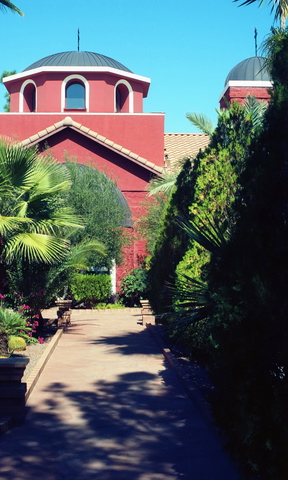
    Church at St. Anthony’s Greek Orthodox Monastery in Arizona (© Paul Moore | Dreamstime.com).

    Most of Elder Ephraim’s critics have come from educated professionals and second-generation Orthodox Christians who claim he is leading the church into heresy, such as encouraging the belief that he is a living saint, and engaging in “cult”-like activities and abuse of those joining the monasteries. One such criticism is that marital sexual relations are condemned by the Ephraimites unless they are for the purpose of procreation. Another concern is that followers may be encouraged to move beyond parish boundaries, such as in seeking a spiritual father other than one’s own priest. A group known as Concerned Orthodox Laity (COLA) has been formed to protest the influence of the Ephraimites, operating a Facebook page. In Chicago, Greek Orthodox Christians of Chicago for Truth and Reform (OCCTR) started a website in 2009, seeking to expose and monitor the Ephraimite movement in the diocese, where its influence is said to be strong. Both groups cite anti-cult literature that has been published on Elder Ephraim and the movement. The OCCTR website links to the anti-cultist Rick A. Ross Institute, which has a page devoted to Elder Ephraim and alleged abuses.Elder Ephraim is reported to have the strong support of various Greek Orthodox bishops, who have allowed the monasteries to be built in their jurisdictions. In Kostarelos’ study of three Chicago parishes that have been influenced by the monk’s teachings, she found that they have experienced divisions and membership losses. These parishes have introduced such changes as disbanding the choir and prohibiting the church fellowship hall to be used for social events deemed inappropriate, such as bingo, fashion shows and Halloween parties. Kosterelos adds that Elder Ephraim’s teachings are alleged to have divided and disrupted families and marriages and added to long-standing divisions in the Greek church in the U.S.

    Priests targeted for criticism by these reform groups are reluctant to publicly respond. One Chicago priest contacted by Religioscope requested to remain anonymous because revealing his name would lead to further attacks and distortions of his views by these groups. He said that COLA and the Chicago group make their charges anonymously, making it difficult to respond to them. They also take too literally the view by some followers that Elder Ephraim is a living saint; they only mean it as an expression of admiration and affection rather than as a doctrinal statement, he added.

    Bill Tsosis, a Chicago attorney representing both COLA and OCCTR, said that the reason these groups do not reveal the names of accusers is that they are concerned about reprisals from Ephraimites and the church hierarchy supportive of the movement. Tsosis said he is part of a Greek Orthodox Archidiocese committee that is investigating the Ephraimite movement and will make a report to the bishops in 2012. Although not wiling to reveal the contents of the report, he said that cases of both “spiritual abuse” and doctrinal distortions, including the belief in Elder Ephraim beng a living saint, will be documented.

    Supporters of Elder Ephraim argue that his movement is seeking to transplant the monasticism of Mt. Athos in America and has experienced growing pains in the process. On the website Athos in America, Fr. Theologos Pantanizopoulos acknowledges that Ephraim’s followers may have been “over-zealous,” but the Ephraimite monasteries have received support by the Patriarch, and the eldership exercised by Elder Ephraim is well within the bounds of the Orthodox monastic tradition. He adds that the controversy is part of the long-standing conflicts in the Greek Orthodox Archdiocese over episcopal leadership styles, with a lay movement pressing for a more modern and American-style democratic approach to church government.

    Richard Cimino

    Editor’s Note (Archival Content)

    
This article is part of the Orthodox Christian Laity archives and reflects the context, concerns, and discussions present at the time of its original publication. It is made available here for historical reference and ongoing study. Readers should note that perspectives, circumstances, and ecclesial developments may have evolved since its initial release.

    Share. Facebook Twitter Pinterest LinkedIn Tumblr Email WhatsApp Copy Link
    Previous ArticleAbout American Orthodox Geography and American Orthodox Bishops
    Next Article St. Vladimir’s Seminary Dean Assumes Metropolitan Kallistos Chair in Theology in Amsterdam

    Related Posts

    July 7, 20263 Mins Read

    Assembly of Bishops Appoint July 26, 2026 as Prison Ministry Awareness Sunday

    July 1, 20261 Min Read

    From the World Cup to the Orthodox Church—US Soccer Star Desmond Armstrong on his Life & Faith

    June 20, 20263 Mins Read

    Greek Orthodox Patriarchate Condemns Israel Over Church Land Seizure in Jerusalem

    4 Comments

    1. Peter on January 19, 2017 4:49 pm

      The link for the Rick A Ross institute is not correct. “Rick’s pics” has to do with casinos not with cults and monasteries.

      Reply
    2. George Costalas on June 13, 2020 12:13 am

      Clearly, you deliberately did not visit any of Geronta Ephraim’s 20 monasteries in North America nor speak with any of us whose lives he touched. I have known him since 1993-1994. He was arguable the most humble, most loving person I ever met. The secret sacrifices that he made for me and for us all is beyond comprehension. I personally do not know anyone who was negatively affected by Elder Ephraim. To the contrary. Geronta and his monks and nuns never force, never demand. Nor do they hold themselves out as saints or even better than us (although the more you know them the more obvious it becomes that they are blessed). This is in direct contrast to many, if not most of the Hierarchs of the Greek Orthodox Church in America.

      This from a non orthodox:
      https://youtu.be/ZRl3THDYN6Q

      Reply
      • Katherine Edmiston on April 14, 2021 1:28 pm

        Obviously cult devotees are incapable of tolerating any legitimate criticism of the object of their idolatry. Cults do not promote a positive impression of religion.

        Reply
    3. GEORGE K COSTALAS on June 13, 2020 12:16 am

      https://orthochristian.com/107374.html
      Do some research…write the truth. You owe to your readers. You’re supposed to be a journalist reporting facts as opposed having an agenda.

      Reply
    Leave A Reply Cancel Reply

    This site uses Akismet to reduce spam. Learn how your comment data is processed.

    Declaration for Orthodox Unity – click here…

    A quote from a homily by St. Nikolai Velimirovich on Orthodoxy in America

    “The time may not be far off when there will be a united Orthodox Church in America, which will include all the present Eastern national Churches in this country, a Church with one central administrative authority. I see a tendency toward such an end in each of our now individual Churches. … And when by God’s Providence the time is ripe for the accomplishment of such a unity, I dare not doubt that the venerable heads of all our Orthodox Churches in Europe, Asia, and Africa, always led by the Holy Spirit, will give their blessing for the organization of a new and autonomous sister Church in America.”

    DONATE NOW

    Subscribe to our Newsletter

    Sign the Declaration for Orthodox Christian Unity

    Enter the Slogan Contest

    Recent Comments
    • on Ethiopian Bible is the oldest and complete bible on earth
      The Ethiopian bible is not the oldest bible by a long shot. It was not completed until the 14th century...
    • on The Earliest Known Prayer to the Theotokos
      When originally published, the claim was that P470 was not earlier than the 350's A.D. One scholar (Lobel) did think...
    • on NEW STRATEGY NEEDED TO SAVE ENDANGERED ECUMENICAL PATRIARCHATE
      If the Patriarch leaves Constantinople, Russia will assume primacy. This has been the goal of the Third Romists even before...
    • on The Trail of the Tithe
      This article presents a thoughtful and well-researched examination of the historical development of tithing. The clear organization, careful use of...
    • on NEW STRATEGY NEEDED TO SAVE ENDANGERED ECUMENICAL PATRIARCHATE
      The essay by Peter Marudas is relevant today and should be part of the process of assessing the state of...
    DISCLAIMER

    All articles represent the views of the authors and  not necessarily the official views of Orthodox Christian Laity (OCL). They are posted to encourage thoughtful discussion on topics and concerns relevant to Orthodox Christians living in a pluralistic society. OCL encourages your comments.

    Upcoming Events
    Notice
    There are no upcoming events.
    OCL Archives Online

    Click here or on the OCL logo

    St. Symeon the New Theologian and St. Photini are the Patron Saints of OCL

    footer-fnl

    Orthodox Christian Laity
    PO Box 6954

    West Palm Beach, FL · 33405
    561-585-0245

    ocladmin@ocl.org (or) orthodoxchristianlaity@gmail.com

    Sponsored by Ann Souvall in memory of husband George

    DISCLAIMER: All articles represent the views of the authors and  not necessarily the official views of Orthodox Christian Laity (OCL). They are posted to encourage thoughtful discussion on topics and concerns relevant to Orthodox Christians living in a pluralistic society. OCL encourages your comments.

    ©2026 Orthodox Christian Laity (OCL) ·  Login

    Type above and press Enter to search. Press Esc to cancel.