
Close Menu
    Facebook X (Twitter) Instagram
    Trending
    • #Giving Tuesday – Support Orthodox Christian Laity!
    • Together We Thrive: OCL Annual Conference & Year-End Giving Campaign
    • Archon Officers Participate in Historic Pilgrimage to Nicaea
    • Ecumenical Patriarch Bartholomew and Pope Leo recite the Creed together during 1700th Anniversary of Nicaea
    • Mission Center Board Convenes
    • The “Orthodoxy as Masculinity” Narrative
    • Walk with Us: Orthodox Volunteer Corps (OVC)
    • St. John Chrysostom’s Legacy: From Antioch to America
    Orthodox Christian Laity
    Facebook X (Twitter) YouTube
    • Home
    • OCL
      • About OCL
      • Leadership
      • OCL News
      • OCL Publications
      • Focused Study and Research Topics
      • OCL Archives at DePaul University
    • Orthodox News & Links
      • Orthodox News Stories
      • Headlines & News Archives
      • Governance & Unity
        • Governance Top Stories
        • Governance & Unity Essays
        • Grassroots Unity in Action
      • OCL Forums
      • Orthodox Christian Laity News
      • Web Links
    • Audio & Video
      • Audio Index
      • Video Index
    • Contact
    • Make a Donation
    Orthodox Christian Laity
    You are at:Home»Governance & Unity News»Governance & Unity Essays»Death of an Orthodox visionary — in America

    Death of an Orthodox visionary — in America

    0
    By Webmaster on March 24, 2014 Governance & Unity Essays, Governance & Unity News
    Share
    Facebook Twitter LinkedIn Pinterest Email Telegram WhatsApp Copy Link
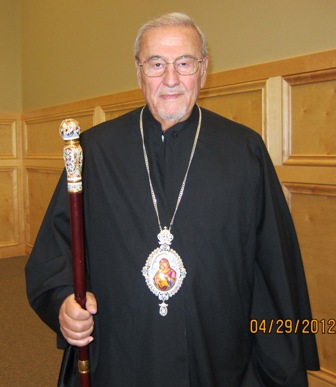
    Metropolitan Philip Saliba
    Metropolitan Philip Saliba

    Source: Terry Mattingly On Religion

    When major religious leaders die, it’s traditional that public figures — secular and sacred — release letters expressing sorrow and sending their condolences to the spiritual sheep who have suddenly found themselves without a shepherd.

    This is precisely what Greek Orthodox Archbishop Demetrios Trakatellis did, acting as chairman of the assembly of America’s
    Eastern Orthodox bishops, after he heard about the death of Metropolitan Philip Saliba — the leader of the Antiochian Orthodox
    Christians in North America for a half century. His letter was kind and gracious, but contained a hint of candor that spoke volumes.

    “For more than 15 years I have had the opportunity and privilege to work closely with Metropolitan Philip,” wrote Archbishop
    Demetrios, noting that the Antiochian leader served as vice-chairman of the assembly of bishops. Metropolitan Philip was a pastor to his people, but he also “passionately supported a common witness to our Orthodox faith in the world. It is well known that he spoke his mind openly on a number of important issues and would often challenge inactivity surrounding serious issues, which he felt Orthodoxy could address in unique and important ways.”

    That’s one way to put it.

    Metropolitan Philip — who died March 19th — was more than an advocate for Orthodox life and faith. He was more than a
    pragmatic strategist who helped his flock grow from 66 parishes to 275, while opening youth camps and a missions and evangelism office.

    The Lebanese-born archbishop was also a fierce advocate of Orthodox unity in the United States, to whatever degree possible among Greeks, Arabs, Russians, Ukrainians, Romanians, Serbians and others.

    After living his adult life in this land, he made the controversial decision in the mid-1980s to embrace waves of evangelical converts (I am one of them). These converts affected all levels of his church including, as much as anywhere else, in seminaries and, thus, at Orthodox altars.

    That was the backdrop to the symbolic moment when Archbishop Demetrios surprised Metropolitan Philip by asking him to
    make some off-the-cuff remarks at the 2004 Clergy-Laity Congress of the Greek Orthodox Church in New York City.

    “I reminded him that when I speak, I tell it like it is,” said Philip, when I interviewed him for an “On Religion” column soon
    after that event.

    Rather than speaking in Byzantine code, Metropolitan Philip bluntly addressed the delegates as Americans, not Greeks. He
    said he thought it was time to challenge ecclesiastical ties that continued to bind their churches in the new world to those in the old.
    Then he marched straight into a minefield, bringing greetings from the Antiochian Orthodox delegates who, a few days earlier, had unanimously approved what many Greeks have long desired — a constitution granting them more control of their church in North America.

    “I told them that if I could sum up this new constitution, I would begin with the words, ‘We the people,’ ” he told me. “We
    cannot ignore this truth — Americans are infested with freedom. We cannot ignore that our churches are in America and we are here to stay.”

    A press aide for the Greek archdiocese noted: “It would be accurate to say that he received an enthusiastic response.”

    Part of the problem was that Philip was intentionally calling to mind the 1994 gathering in Ligonier, Pa., when America’s
    Orthodox bishops boldly declared: “We commit ourselves to avoiding the creation of parallel and competitive Orthodox parishes, missions, and mission programs. We commit ourselves to common efforts and programs to do mission, leaving behind piecemeal, independent, and spontaneous efforts … moving forward towards a concerted, formal, and united mission program in order to make a real impact on North America through Orthodox mission and evangelism.”

    That effort failed. Two decades later, Metropolitan Philip left instructions that he was to be buried at the Antiochian Village
    camp near Ligonier, where young people will visit his grave for generations to come.

    “This faith was to remain the best kept secret in America because of our laziness, we Orthodox, because we have been busy taking
    care of our little ethnic ghettos,” said Philip, during one of the first rites ushering an entire evangelical congregation into his
    archdiocese.

    “It is time that we let this light shine. American needs the Orthodox faith. I said to the Evangelical Orthodox in these past
    Sundays, I said, ‘Welcome home.’ ”

    Terry Mattingly (www.tmatt.net) directs the Washington Journalism Center at the Council for Christian Colleges &
    Universities.

    [subscribe2]
    Share. Facebook Twitter Pinterest LinkedIn Tumblr Email WhatsApp Copy Link
    Previous ArticleSpecial Live Tribute to Metropolitan Philip on Ancient Faith Today with Kevin Allen, Sunday, March 23, at 8 PM Eastern
    Next Article OCA Holy Synod releases Bishop Nikolai

    Related Posts

    December 1, 20251 Min Read

    #Giving Tuesday – Support Orthodox Christian Laity!

    November 28, 20255 Mins Read

    Archon Officers Participate in Historic Pilgrimage to Nicaea

    November 28, 20251 Min Read

    Ecumenical Patriarch Bartholomew and Pope Leo recite the Creed together during 1700th Anniversary of Nicaea

    Leave A Reply Cancel Reply

    This site uses Akismet to reduce spam. Learn how your comment data is processed.

    Sign the Declaration for Orthodox Unity – click here…

    Register for OCL's Annual Conference - October 11, 2025

    Sign the Declaration for Orthodox Christian Unity

    Enter the Slogan Contest

    Share this page
    DISCLAIMER

    All articles represent the views of the authors and  not necessarily the official views of Orthodox Christian Laity (OCL). They are posted to encourage thoughtful discussion on topics and concerns relevant to Orthodox Christians living in a pluralistic society. OCL encourages your comments.

    Stay Informed!

    Subscribe to our Newsletter

    WE WELCOME YOUR INPUT AND SUPPORT!

    Your donation impacts and helps advance the unity of the Orthodox Church of America.

    DONATE NOW

    THANK YOU FOR YOUR CONTINUED SUPPORT!

    Upcoming Events
    Notice
    There are no upcoming events.
    Recent Comments
    • George Warholak on Ecumenical Patriarch Bartholomew and Pope Leo recite the Creed together during 1700th Anniversary of Nicaea
    • Dn Nicholas on Ecumenical Patriarch Bartholomew and Pope Leo recite the Creed together during 1700th Anniversary of Nicaea
    • Dana C Purnell on Ethiopian Bible is the oldest and complete bible on earth
    • Peter on Abp. Elpidophoros installed as National Council of Churches board chair
    • james wiliams on Video: A Vision for Orthodox Christianity’s Future in North America
    • Veras Coltroupis on Abp. Elpidophoros installed as National Council of Churches board chair
    • Joe Forzani on Ancient Christianity (Free Course) – Hillsdale College Online
    • Joe Forzani on Ancient Christianity (Free Course) – Hillsdale College Online
    • sandy myers on Ethiopian Bible is the oldest and complete bible on earth
    • Peter on Unity in the Orthodox Church
    OCL Archives Online
    Project for Orthodox Renewal
    renewal-resize
    OCL Digital Newsletter

    Subscribe to our Newsletter

    MAKE A DONATION

    Sign the Declaration for Orthodox Christian Unity

    Facebook
    Twitter
    YouTube

    St. Symeon the New Theologian and St. Photini are the Patron Saints of OCL

    footer-fnl

    Orthodox Christian Laity
    PO Box 6954

    West Palm Beach, FL · 33405
    561-585-0245

    ocladmin@ocl.org (or) orthodoxchristianlaity@gmail.com

    Sponsored by Ann Souvall in memory of husband George

    DISCLAIMER: All articles represent the views of the authors and  not necessarily the official views of Orthodox Christian Laity (OCL). They are posted to encourage thoughtful discussion on topics and concerns relevant to Orthodox Christians living in a pluralistic society. OCL encourages your comments.

    ©2025 Orthodox Christian Laity (OCL) ·  Login

    Type above and press Enter to search. Press Esc to cancel.