
Close Menu
    Facebook X (Twitter) Instagram
    Trending
    • #Giving Tuesday – Support Orthodox Christian Laity!
    • Together We Thrive: OCL Annual Conference & Year-End Giving Campaign
    • Archon Officers Participate in Historic Pilgrimage to Nicaea
    • Ecumenical Patriarch Bartholomew and Pope Leo recite the Creed together during 1700th Anniversary of Nicaea
    • Mission Center Board Convenes
    • The “Orthodoxy as Masculinity” Narrative
    • Walk with Us: Orthodox Volunteer Corps (OVC)
    • St. John Chrysostom’s Legacy: From Antioch to America
    Orthodox Christian Laity
    Facebook X (Twitter) YouTube
    • Home
    • OCL
      • About OCL
      • Leadership
      • OCL News
      • OCL Publications
      • Focused Study and Research Topics
      • OCL Archives at DePaul University
    • Orthodox News & Links
      • Orthodox News Stories
      • Headlines & News Archives
      • Governance & Unity
        • Governance Top Stories
        • Governance & Unity Essays
        • Grassroots Unity in Action
      • OCL Forums
      • Orthodox Christian Laity News
      • Web Links
    • Audio & Video
      • Audio Index
      • Video Index
    • Contact
    • Make a Donation
    Orthodox Christian Laity
    You are at:Home»Orthodox News»Readers: Orthodox Should Not Unite with all Churches

    Readers: Orthodox Should Not Unite with all Churches

    1
    By Webmaster on October 10, 2013 Orthodox News, Orthodox News Top Stories
    Share
    Facebook Twitter LinkedIn Pinterest Email Telegram WhatsApp Copy Link
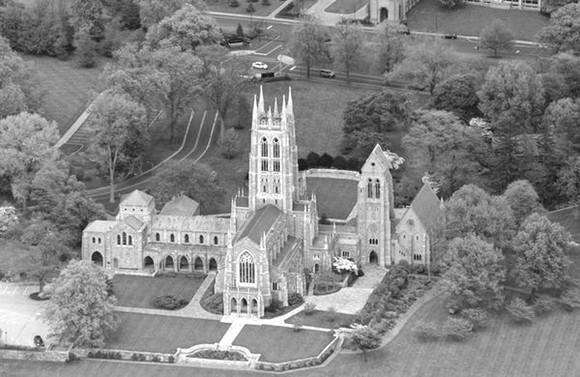
    The Bryn Athyn Cathedral in Bryn Athyn, PA, the headquarters of the Church of the New Jerusalem, a Christian denomination that follows Emanuel Swedenborg's teachings. Swedenborgians believe that Hell is a place locked from the inside, meaning that its inhabitants are there by choice. Are such denominations helpful or harmful to advancing our collective Christian IQ?
    The Bryn Athyn Cathedral in Bryn Athyn, PA, the headquarters of the Church of the New Jerusalem, a Christian denomination that follows Emanuel Swedenborg’s teachings. Swedenborgians believe that Hell is a place locked from the inside, meaning that its inhabitants are there by choice. Are such denominations helpful or harmful to advancing our collective Christian IQ?

    Source: The National Herald

    Constantinos E. Scaros
    Special to The National Herald

    In our September 30 edition we unveiled our new “Question of the Week” format, which the readers, given the number of total votes, received favorably. The question was whether the Greek Orthodox Church should remain independent, combine only with the Catholic Church, or whether all Christian churches ought to unite. In last week’s issue (Oct. 5), we published the results: 52% (slightly more than half) believed the Orthodox should not unite with any other Christian counterpart, 20% thought they should unite only with the Catholics, and 28% thought all Christian churches should join together and become one. It is a complex question, indeed, and there is a plausible case to be made for any of the answer choices.

    At first glance, it is tempting to strive for the unity of all Christian denominations, in order to form one Christian Church – after all, that’s how it used to be before egos, schisms, and reformations got in the way. A more careful analysis, however, might reveal some problems with that choice. What would the final product be, once the countless denominations agree to come to the table and become one? Would the priests (or would they be ministers, or pastors?) have long beards like the Orthodox, remain celibate like the Catholics, and believe that physical matter – such as the newspaper you are holding or the computer screen you are reading – doesn’t really exist, as do the Christian Scientists? What about church traditions? Would they be important, or would everything simply boil down to the Bible? Would there be a liturgy, and, if so, would the faithful receive the body and blood of Christ actually, or just symbolically?

    Is faith in Christ all that is required to get into Heaven, as many Protestant denominations believe, or do good works matter, too? Or, as Christian Universalists maintain, does everyone ultimately get to Heaven?

    And what would a modern-day unified Christian Church have to say about Hell? Shall it be a place of literal fire and brimstone, or just a state of mind? Or, is it locked from the inside, as Swedenborgians contend, meaning that its inhabitants are all there by choice?

    Sure, if we could all say: “all other Christian denominations need to follow mine, because mine is the best one,” and that actually happened, then life would be peaches and cream. Or would it? What if we were wrong?

    What if God will speak to us at some point and tell us how we strayed from what He would have wanted us to do – sort of like a teacher going over the answers on the test that we got wrong? Wouldn’t we have a better chance of evolving theologically if there continued to be a dynamic among multiple denominations that raised our collective Christian IQ?

    As to the majority of the readers’ answer to our Question of the Week, then, to use a legal term, I concur. Essentially, that means I agree with the result, if not the reasoning. I think that many, if not most, of those who think that Orthodoxy should not unite with any other denomination feel that way because they believe that Orthodoxy is more correct than any of the others, and if it were to give up any of its practices, traditions, and beliefs, it would become a diluted, inferior version of itself. If that is in fact the reasoning behind that vote, I am not sure that I agree.

    Like most of you, I was baptized Greek Orthodox when I was a baby and had no say in the matter. That I have remained Greek Orthodox, however, is not out of laziness or apathy. Rather, it is because I have yet to find, and might never find, another denomination worth changing for, i.e., a superior one.

    On the other hand, I have visited the churches and studied the writings of numerous other Christian denominations, and there are bits and pieces from several of them that I wish the Orthodox Church would adopt. And that is precisely why the Christian denominations are probably better off divided. Not because of “my religion is better than yours” pettiness, but because, truly, we can all learn from one another.

    [subscribe2]
    Share. Facebook Twitter Pinterest LinkedIn Tumblr Email WhatsApp Copy Link
    Previous ArticleIndependent audit for 2012 now available
    Next Article Local kids helping Syrian refugees with care packages

    Related Posts

    December 1, 20251 Min Read

    Together We Thrive: OCL Annual Conference & Year-End Giving Campaign

    November 22, 20253 Mins Read

    Mission Center Board Convenes

    November 20, 20253 Mins Read

    Walk with Us: Orthodox Volunteer Corps (OVC)

    1 Comment

    1. Roy Snyder on October 14, 2013 4:34 pm

      We can’t even unite with ourselves! Perhaps we should unite with all denominations. At our pace, it should only take 700 or 800 years.

      Reply
    Leave A Reply Cancel Reply

    This site uses Akismet to reduce spam. Learn how your comment data is processed.

    Sign the Declaration for Orthodox Unity – click here…

    Register for OCL's Annual Conference - October 11, 2025

    Sign the Declaration for Orthodox Christian Unity

    Enter the Slogan Contest

    Share this page
    DISCLAIMER

    All articles represent the views of the authors and  not necessarily the official views of Orthodox Christian Laity (OCL). They are posted to encourage thoughtful discussion on topics and concerns relevant to Orthodox Christians living in a pluralistic society. OCL encourages your comments.

    Stay Informed!

    Subscribe to our Newsletter

    WE WELCOME YOUR INPUT AND SUPPORT!

    Your donation impacts and helps advance the unity of the Orthodox Church of America.

    DONATE NOW

    THANK YOU FOR YOUR CONTINUED SUPPORT!

    Upcoming Events
    Notice
    There are no upcoming events.
    Recent Comments
    • George Warholak on Ecumenical Patriarch Bartholomew and Pope Leo recite the Creed together during 1700th Anniversary of Nicaea
    • Dn Nicholas on Ecumenical Patriarch Bartholomew and Pope Leo recite the Creed together during 1700th Anniversary of Nicaea
    • Dana C Purnell on Ethiopian Bible is the oldest and complete bible on earth
    • Peter on Abp. Elpidophoros installed as National Council of Churches board chair
    • james wiliams on Video: A Vision for Orthodox Christianity’s Future in North America
    • Veras Coltroupis on Abp. Elpidophoros installed as National Council of Churches board chair
    • Joe Forzani on Ancient Christianity (Free Course) – Hillsdale College Online
    • Joe Forzani on Ancient Christianity (Free Course) – Hillsdale College Online
    • sandy myers on Ethiopian Bible is the oldest and complete bible on earth
    • Peter on Unity in the Orthodox Church
    OCL Archives Online
    Project for Orthodox Renewal
    renewal-resize
    OCL Digital Newsletter

    Subscribe to our Newsletter

    MAKE A DONATION

    Sign the Declaration for Orthodox Christian Unity

    Facebook
    Twitter
    YouTube

    St. Symeon the New Theologian and St. Photini are the Patron Saints of OCL

    footer-fnl

    Orthodox Christian Laity
    PO Box 6954

    West Palm Beach, FL · 33405
    561-585-0245

    ocladmin@ocl.org (or) orthodoxchristianlaity@gmail.com

    Sponsored by Ann Souvall in memory of husband George

    DISCLAIMER: All articles represent the views of the authors and  not necessarily the official views of Orthodox Christian Laity (OCL). They are posted to encourage thoughtful discussion on topics and concerns relevant to Orthodox Christians living in a pluralistic society. OCL encourages your comments.

    ©2025 Orthodox Christian Laity (OCL) ·  Login

    Type above and press Enter to search. Press Esc to cancel.