
Close Menu
    Facebook X (Twitter) Instagram
    Trending
    • #Giving Tuesday – Support Orthodox Christian Laity!
    • Together We Thrive: OCL Annual Conference & Year-End Giving Campaign
    • Archon Officers Participate in Historic Pilgrimage to Nicaea
    • Ecumenical Patriarch Bartholomew and Pope Leo recite the Creed together during 1700th Anniversary of Nicaea
    • Mission Center Board Convenes
    • The “Orthodoxy as Masculinity” Narrative
    • Walk with Us: Orthodox Volunteer Corps (OVC)
    • St. John Chrysostom’s Legacy: From Antioch to America
    Orthodox Christian Laity
    Facebook X (Twitter) YouTube
    • Home
    • OCL
      • About OCL
      • Leadership
      • OCL News
      • OCL Publications
      • Focused Study and Research Topics
      • OCL Archives at DePaul University
    • Orthodox News & Links
      • Orthodox News Stories
      • Headlines & News Archives
      • Governance & Unity
        • Governance Top Stories
        • Governance & Unity Essays
        • Grassroots Unity in Action
      • OCL Forums
      • Orthodox Christian Laity News
      • Web Links
    • Audio & Video
      • Audio Index
      • Video Index
    • Contact
    • Make a Donation
    Orthodox Christian Laity
    You are at:Home»Orthodox News»THE DETOX TOOLBOX: THE 19th PSALM FOR THE 19th YEAR OF THE 21st CENTURY

    THE DETOX TOOLBOX: THE 19th PSALM FOR THE 19th YEAR OF THE 21st CENTURY

    0
    By Webmaster on January 13, 2019 Orthodox News, Orthodox News Top Stories, Uncategorized
    Share
    Facebook Twitter LinkedIn Pinterest Email Telegram WhatsApp Copy Link
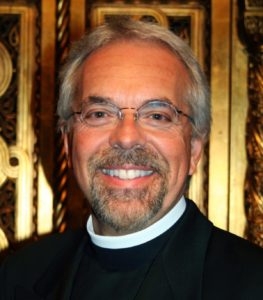
    Fr Frank Marangos

    Source: OINOS Educational Consulting

    by Frank Marangos, D.Min., Ed.D., FCEP

    “The culture of an organization is like a river. It can be fluid, strong and consistent, serving as a lubricant while guiding its members in the right direction. In contrast, a river can become stale and toxic, silently killing those who drink at its shore.” ~ Ron Kaufman (2002)
    Each year, the Oxford Press selects, then narrows down, a list of words that best highlight the manner in which the English lexicon is changing in response to current events. According to Katherine Martin, editor of the publisher’s US Dictionaries, “Oxford’s 2018 Word of the Year is … toxic.”

    The Word of the Year is a word or phrase that Oxford judges to aptly reflect “the ethos, mood, or preoccupations of the passing year, and has lasting potential as a term of cultural significance.” In 2017 the Word of the Year was “youth-quake,” defined as a significant cultural, political, or social change arising from the actions or influence of young people.” Influenced by the Brexit referendum and the general political landscape, “post-truth” was chosen as Oxford’s word for 2016.

    According to the publisher’s website, “toxic” was chosen from a shortlist “drawn from evidence gathered by (its) extensive language research program which gathers around 150 million words of current English from web-based publications each month.” Apart from being used in an array of contexts, both in its literal and more metaphorical senses, the word “toxic” had a 45% rise in the number of times it was referenced in 2018.

    As a neologism that describes the current zeitgeist, Oxford is correct in linking “toxicity” to pollutants that endanger relationships, organizations, schools, and churches. Since its inauguration, the 21st Century has unfortunately been plagued by a number of corrupt and unethical leadership scandals. Moral deficiencies have been prevalent among leaders in the public, private, political, and faith-based sectors. Most recently, the algae of toxic leadership have been exposed in the crucibles of political partisanship, sexual harassment, religious hierarchies, media-wars, and unethical investment ruses. As a result, there is a pressing need for leaders to honestly assess the levels of toxicity within themselves and the cultures of their respective organizations.

    In his book, Reflections on the Psalms (1986), the British novelist and Christian theologian C.S. Lewis referred to the 19th Psalm as “the greatest poem in the Psalter and one of the greatest lyrics in the world.” Apart from its elegant theological poetry, the 19th Psalm of the 19th Book of the Bible provides valuable insights to leaders who are interested in detoxifying themselves and their respective organizations during the 19th year of the to the 21st Century.

    The 19th Paean of David celebrates the value of God’s creative Word. According to Israel’s 2nd King, the insights contained in the Word of the Lord, as found in His “Law,” are superior to secular wisdom and material wealth. The first part (1-6) of Psalm 19 highlights the implications of God’s Word “spoken” (communicated) through the created order. While the second section (7-10), focuses on the value of God’s Word communicated in His “Law,” the third and final section (11-14), draws attention to the “servant” who has the wisdom to pray that God’s Word “cleans,” “preserve,” and “orders” his/her life “blamelessly.”

    David outlines five detoxifying tonics in God’s Word, each with its own specific outcome: (1) Testimonies, (2) Precepts, (3) Commandments, (4) Fear of the Lord, and (5) Judgements (19:7-9). Testimonies are aspects of the Word of God that testify (indicate) to God’s Will. If listened to, the Lord’s Testimonies provide “wisdom.” Precepts, on the other hand, are instructions that are “right.” When prudently observed, God’s precepts bring inward “happiness,” which flows from a clean ethical conscience.

    According to Israel’s intuitive political and spiritual leader, the Commandments found in God’s Law are “pure.” Consequently, if respected, they “enlighten” leaders with the requisite knowledge and discernment for making appropriate decisions. While the “Fear of the Lord” is that aspect of His Word that nurtures a “reverential respect” for God that can help leaders remain “clean,” Judgements are those aspects of the Lord’s moral system of “truth and justice” that regulate interpersonal relationships and society.

    Before his death, David shared a valuable counsel with Israel’s future leader. “Be strong, and show yourself a man, keeping the charge of the Lord your God.”  Reminiscent of his 19th Psalm, David concluded his instruction to his son Solomon by exhorting him to “walk in God’s ways and keep his statutes, commandments, precepts, and testimonies, that you may prosper in all that you do and wherever you turn” (1 Kings 2:1-3).

    The 19th Psalm celebrates the detoxifying value of God’s Word as something “more precious than fine gold and sweeter than honey and the honeycomb” (19:10).  While not advocating works of righteousness, the Psalmist contends that adherence to this Word “revives the soul,” “makes wise the simple,” and “enlightens the eyes.” King David concludes his enlightening Canticle with a beautiful prayer: “Let the words of my mouth and the meditation of my heart be acceptable in Your sight, O Lord, my Rock and my Redeemer” (19:14).

    Understood in such a holistic fashion, the 19th Psalm has much to offer the 21st Century leader interested in “detoxifying” their hearts, words, and actions. But what exactly is “toxic leadership” and how can it be effectively expurgated?

    CLICK HERE TO READ THE WHOLE ARTICLE


    Share. Facebook Twitter Pinterest LinkedIn Tumblr Email WhatsApp Copy Link
    Previous ArticleMetropolitan Gerasimos Speaks to TNH about Youth, the Archdiocese, and Holy Cross
    Next Article Building at Renowned Kiev Monastery Complex Catches Fire

    Related Posts

    December 1, 20251 Min Read

    Together We Thrive: OCL Annual Conference & Year-End Giving Campaign

    November 22, 20253 Mins Read

    Mission Center Board Convenes

    November 20, 20253 Mins Read

    Walk with Us: Orthodox Volunteer Corps (OVC)

    Leave A Reply Cancel Reply

    This site uses Akismet to reduce spam. Learn how your comment data is processed.

    Sign the Declaration for Orthodox Unity – click here…

    Register for OCL's Annual Conference - October 11, 2025

    Sign the Declaration for Orthodox Christian Unity

    Enter the Slogan Contest

    Share this page
    DISCLAIMER

    All articles represent the views of the authors and  not necessarily the official views of Orthodox Christian Laity (OCL). They are posted to encourage thoughtful discussion on topics and concerns relevant to Orthodox Christians living in a pluralistic society. OCL encourages your comments.

    Stay Informed!

    Subscribe to our Newsletter

    WE WELCOME YOUR INPUT AND SUPPORT!

    Your donation impacts and helps advance the unity of the Orthodox Church of America.

    DONATE NOW

    THANK YOU FOR YOUR CONTINUED SUPPORT!

    Upcoming Events
    Notice
    There are no upcoming events.
    Recent Comments
    • George Warholak on Ecumenical Patriarch Bartholomew and Pope Leo recite the Creed together during 1700th Anniversary of Nicaea
    • Dn Nicholas on Ecumenical Patriarch Bartholomew and Pope Leo recite the Creed together during 1700th Anniversary of Nicaea
    • Dana C Purnell on Ethiopian Bible is the oldest and complete bible on earth
    • Peter on Abp. Elpidophoros installed as National Council of Churches board chair
    • james wiliams on Video: A Vision for Orthodox Christianity’s Future in North America
    • Veras Coltroupis on Abp. Elpidophoros installed as National Council of Churches board chair
    • Joe Forzani on Ancient Christianity (Free Course) – Hillsdale College Online
    • Joe Forzani on Ancient Christianity (Free Course) – Hillsdale College Online
    • sandy myers on Ethiopian Bible is the oldest and complete bible on earth
    • Peter on Unity in the Orthodox Church
    OCL Archives Online
    Project for Orthodox Renewal
    renewal-resize
    OCL Digital Newsletter

    Subscribe to our Newsletter

    MAKE A DONATION

    Sign the Declaration for Orthodox Christian Unity

    Facebook
    Twitter
    YouTube

    St. Symeon the New Theologian and St. Photini are the Patron Saints of OCL

    footer-fnl

    Orthodox Christian Laity
    PO Box 6954

    West Palm Beach, FL · 33405
    561-585-0245

    ocladmin@ocl.org (or) orthodoxchristianlaity@gmail.com

    Sponsored by Ann Souvall in memory of husband George

    DISCLAIMER: All articles represent the views of the authors and  not necessarily the official views of Orthodox Christian Laity (OCL). They are posted to encourage thoughtful discussion on topics and concerns relevant to Orthodox Christians living in a pluralistic society. OCL encourages your comments.

    ©2025 Orthodox Christian Laity (OCL) ·  Login

    Type above and press Enter to search. Press Esc to cancel.