
Source: Antiochian Orthodox Christian Archdiocese of North America
Originally published on May 15, 2024
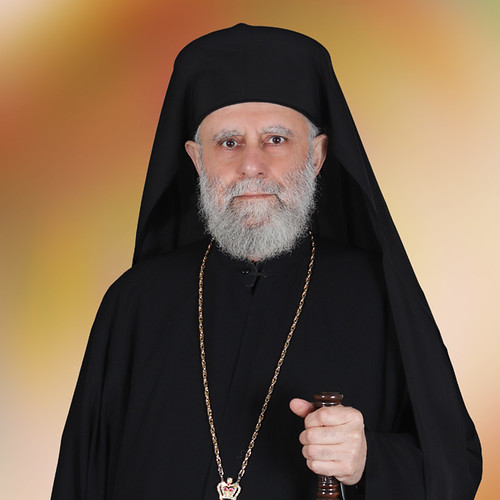
During Holy Week, ecclesiastical media reported news of the ordination of a liturgical deaconess in one of the churches in Zimbabwe, Africa, affiliated with the Orthodox Patriarchate of Alexandria. I won’t delve into the subject of ordaining a deaconess. That’s a matter I’ll leave to theologians and synods, for now. In this article, I’ll simply raise some questions stemming from this event. Such an event requires Orthodox consensus, as any ecclesiastical action outside Orthodox consensus and unanimity poses a danger and leads to undesirable consequences. How much more so a matter as sensitive as this, especially at this time, would be considered a step towards the ordination of women to the priesthood.
There is no doubt that a deep and faithful study of the Christian heritage, especially the Orthodox one, and the pastoral needs required by the Church in today’s world, is urgently needed for this topic. However, resorting to individual decisions remains more dangerous than any step its proponents might perceive as beneficial to the Church. Theological studies require scientific honesty and objectivity, not manipulation of information to serve personal agendas. Here, the role of the pure saints, not just scholars and researchers, is highlighted, lest we negate what we have been saying for centuries, that theology is the experience of God’s presence, not just rational or philosophical thinking.
My deliberations stem from a concern for Orthodox unity, which I see in danger due to the absence of dialogue among the churches and the spread of individualism within them, to the point where the fear of following the footsteps of Protestant-type individualism is imminent. May God protect us from replacing Orthodox unity with an Orthodox union.
The existence of deaconesses in the early Church needs further clarification. Our historical information does not confirm that all churches witnessed the service of deaconesses, but rather some, especially large churches and in major cities. Moreover, the distinction between the service of deaconesses and the service of widows also needs further exploration. Our available information indicates that the service of deaconesses included several aspects, such as guarding and overseeing the women’s section in the church; according to the social custom in the past, women and men each stood in designated areas of the nave. Also, deaconesses assisted women in baptisms, such as anointing their bodies with oil. Furthermore, deaconesses may have been responsible for teaching women, but not all scholars agree on this. In the fourth service, based on the social tradition of the past, deaconesses accompanied women when they needed to meet with the bishop, as it was forbidden for a bishop to meet with a woman alone.
There came a time when this ministry fell into disuse in the Church. We do not know the exact reasons for its disappearance. Don’t we need studies to show the reasons why? Don’t we need to clarify its fields of service before adopting it in our churches? Is its acceptance consistent with Orthodox tradition and understanding of the ordained priesthood? Can it be limited to educational service and service of love in all its forms? What are the boundaries between this ministry and the ministry of the faithful (laity)? What are the motives behind giving it a liturgical role? Why is this role necessary?
If this type of service is authentic, should we demand it, and does the Church really need it? To what extent do we demand it as influenced by humanistic and feminist movements? What is motivating the Church to activate its pastoral service: theological thought or worldly thought? How does the Church respond to the faith, moral, and humanitarian challenges facing today’s societies? On what basis does the Church build its pastoral programs, social or theological?
Moreso, what is the effect of accepting deaconesses and female priests in non-Orthodox churches that have adopted this phenomenon? Has this acceptance increased their spiritual and numerical growth, or the opposite? Is accepting deaconesses a first step towards accepting priestesses? What would be the effect of having male and female priests on the spiritual and theological concept of the priesthood? To what extent does this contribute to the secularization or degeneration of the priesthood and considering it a religious function? What is the psychological effect of having both sexes around the Holy Table?
Where will the Orthodox Church end up if each church continues to adopt what it deems appropriate without consulting and agreeing among all Orthodox churches? Where is the collective spirit that distinguishes Orthodoxy? What about the unity of the Faith? And what will unite Orthodox Churches if practices without unanimous agreement begin to appear here and there?
Do those who applaud the emergence of deaconesses think about the future of Orthodox unity? How do we know if we are allowing the Holy Spirit to work and create new talents? How do we know if we are limiting It within the framework of our limited thinking? Are we submitting It to our personal desires and visions?
I won’t add any more questions here, although they would be necessary if we truly want to be honest, faithful, and pure in every work we do in the Church. The pain from what is happening stifles me.
I hope that some of these questions encourage a few sincere, honest, and humble persons to pause before proceeding with individualism that increases divisions and creates new schisms.
1 Comment
The goal of an ordained female diaconate is to return the Biblically established order of the diaconate to one of a model of Christ-like servant leadership on behalf of ALL the people. To do this, and to address both the crisis and the formative manner in which the men’s club operates to protect those who are abusive clergy in every way makes it absolutely necessary to engage women in meaningful roles. By nature of cultural mores, it is unlikely for this to occur where the Islamic culture is the dominant one in any given nation or to have leaders come to America from these countries where the cultural formation and men-women relations are dominated by Islamic traditions in opposition to what Christ showed to us while on earth and His relationships he modeled with women, and by the honor given to His Mother to freely accept the will of God and be the one through whom God became man.
The heavenly sign given to us was when the Miracle working ikon written by the Evangelist Saint Luke the Apostle and Doctor took herself out of Constantinople 70 years before the Fall of Constantinople and went to the new mission areas of the Slavic regions in the Tikhvin River network to share the love of God where Orthodox Christianity could permeate the culture again with truth and love for all people.
https://www.oca.org/saints/lives/2019/06/26/101821-appearance-of-the-tikhvin-icon-of-the-mother-of-god