
A Simple Introduction to Orthodox Christian Administrative Unity in the United States
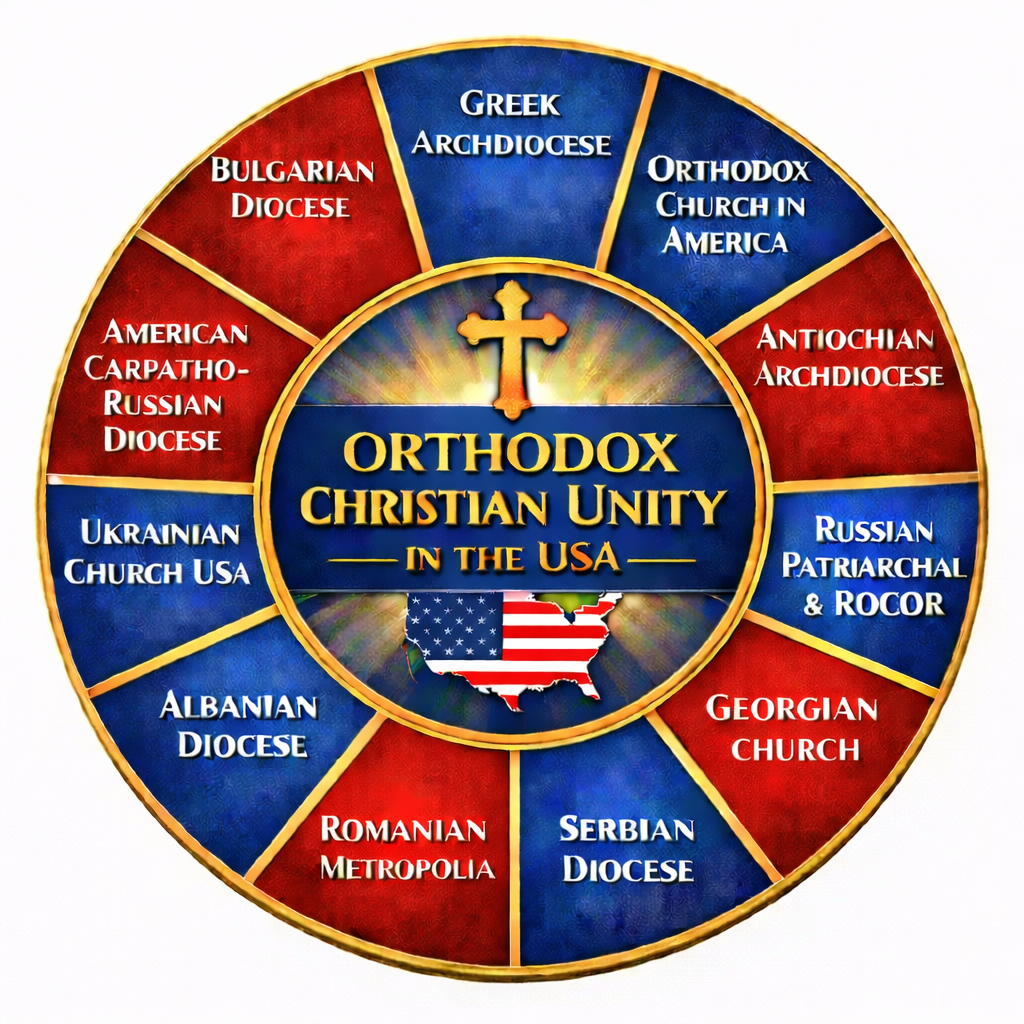
Who this is for:
Orthodox Christians who love the Church and want to understand—without pressure or polemics—what “administrative unity” means, why it is discussed, and why it matters.
1. What do we mean by “administrative unity”?
Administrative unity refers to Orthodox Christians in a given country being organized under a unified, coordinated ecclesiastical structure, rather than multiple overlapping jurisdictions based on ethnic or historical lines.
It does not mean:
-
Changing Orthodox theology or doctrine
-
Eliminating legitimate liturgical or cultural diversity
-
Disrespecting the episcopacy or canonical order
It does mean:
-
Greater coordination, clarity, and stewardship
-
A more understandable Orthodox presence in society
-
Structures that reflect the Church’s life in the place she exists
2. What is the situation in the United States today?
In the United States, Orthodox Christians are served by more than a dozen jurisdictions, often overlapping in the same cities and regions.
This arrangement developed historically as immigrants brought their faith with them. While this was understandable at the time, many now ask whether these structures still serve the Church’s mission today.
3. Why does this matter?
Administrative division can affect:
-
Witness: Orthodoxy is harder to understand when represented by many parallel structures
-
Stewardship: Duplication of effort and resources
-
Pastoral life: Confusion for converts, youth, and mixed-background families
-
Future generations: Young Orthodox Christians often ask why unity seems distant
These are not political concerns—they are pastoral and practical ones.
4. What has been done so far?
In 2010, the Assembly of Canonical Orthodox Bishops in the United States was formed to foster cooperation and move toward canonical normalization.
Progress has been made in areas such as:
-
Shared ministries
-
Pan-Orthodox cooperation
-
Common statements and relief efforts
At the same time, many Orthodox Christians perceive that visible administrative unity remains elusive, and questions persist about pace, structure, and direction.
5. What is the role of the laity?
Orthodox tradition recognizes that the laity:
-
Share responsibility for the life and witness of the Church
-
Have a role in expressing concerns respectfully and faithfully
-
Contribute through prayer, stewardship, education, and dialogue
Listening to the laity—carefully and without pressure—is part of healthy ecclesial life.
6. What is Orthodox Christian Laity (OCL)?
Orthodox Christian Laity is a national lay organization dedicated to:
-
Education and communication
-
Encouraging dialogue about unity
-
Supporting the Church’s witness in America
-
Acting respectfully, constructively, and non-confrontationally
OCL does not seek to replace or challenge Church authority. Its role is to listen, educate, and elevate responsible lay engagement.
7. What can I do?
You can:
-
Learn more and stay informed
-
Share resources respectfully
-
Participate in anonymous listening efforts like the Unity Pulse
-
Pray for the Church’s unity, witness, and faithfulness
Administrative unity is not an abstract idea. It is about how the Church lives, serves, and witnesses in this land—now and for generations to come.
👉 Add your voice: Take the Unity Pulse (1 question, anonymous) – CLICK HERE
👉 Receive thoughtful updates: Sign up for OCL’s Unity Briefings – FILL IN THE FORM BELOW