
Source: Public Orthodoxy
In the midst of an unprecedented crisis, it is often hard or even impossible to think about what comes next, after the crisis ends. What will our life after lockdown look like? What will happen to our personal dynamics after social distancing? And what about our spiritual life after not going to Church for what feels like an eternity? All these questions, and many more, are legitimate. Every crisis gives rise to a judgment. In a way, that is the role that crises play in history, sorting out the chaff from the wheat as we start to make sense of a tragedy and discern the opportunity to live up to the radicality of the Gospel.
Within the Orthodox Church, we have seen a wide range of answers and solutions, but also an increasing polarization of the members of Christ’s body, with virulent arguments raging about questions that touch the essence of our faith, particularly whether, since the Eucharist is the real Body and Blood of Christ, we can get sick by receiving Holy Communion. But I am afraid that by engaging in these debates, we are missing what is really at stake here. We find ourselves paralyzed by these arguments at a time when we need to rediscover the virtue of being and becoming more apostolic. In other words, we are at risk of trying to save the Church and Christianity rather than seeking our salvation in them. In this sense, His All-Holiness Ecumenical Patriarch Bartholomew had one of the best insights into the challenges we face in a recent message when he said: “However, that which is at stake is not our faith—it is the faithful. It is not Christ—it is our Christians. It is not the divine-man—but human beings.” In this time of crisis, we need to be less argumentative and defensive and more apostolic: our true priority is our neighbor.
The social dimension of this crisis is certainly its greatest challenge for most of us, since the virus is transmitted through human interactions and proximity. As the Coronavirus crisis unfolded, a Commission mandated by the Ecumenical Patriarchate published, with the blessing of His Eminence Archbishop Elpidophoros of America, a crucial document on the social ethos of the Orthodox Church. This document gives us the keys to make sense of our current experiences and to understand what an Orthodox response should look like. “Our actions are to flow from love of God and loving union with Him in and through Christ, in whom we meet and treat our brother and sister as our very life. This communion with Christ in the face of our neighbor is what lies behind the first and great commandment of the Law to love God with one’s whole heart and one’s neighbor as oneself (Matthew 22:37–39).” (par. 2)
Our relationship to science, politics, human rights, and secularization is shaped by our vocation to welcome the Holy Spirit like the disciples on the day of Pentecost and to transfigure the world. Today, in the midst of the coronavirus outbreak, let us transfigure the world not by going out, but by staying home: “We look to the time when our ascetical struggles in this life will bear their final, true fruit in the next, when all our efforts to transfigure the world are fulfilled in a renewed creation, and when our journey of theosis will be carried up into eternity as we are ‘transformed from glory to glory’ (2 Corinthians 3:18).” (par. 31)
We are, of course, especially hurt by the timing of this pandemic, coming as it does during Holy Lent. We entered Lent planning to go to church more, pray more, change our lives more, repent more, love more, and forgive more. Instead, we find ourselves being told not to go to church, to pray at home, to change our lives in a way we were not prepared for, to love our neighbors by isolating ourselves, and to forgive at a time when our human interactions are increasingly virtual.
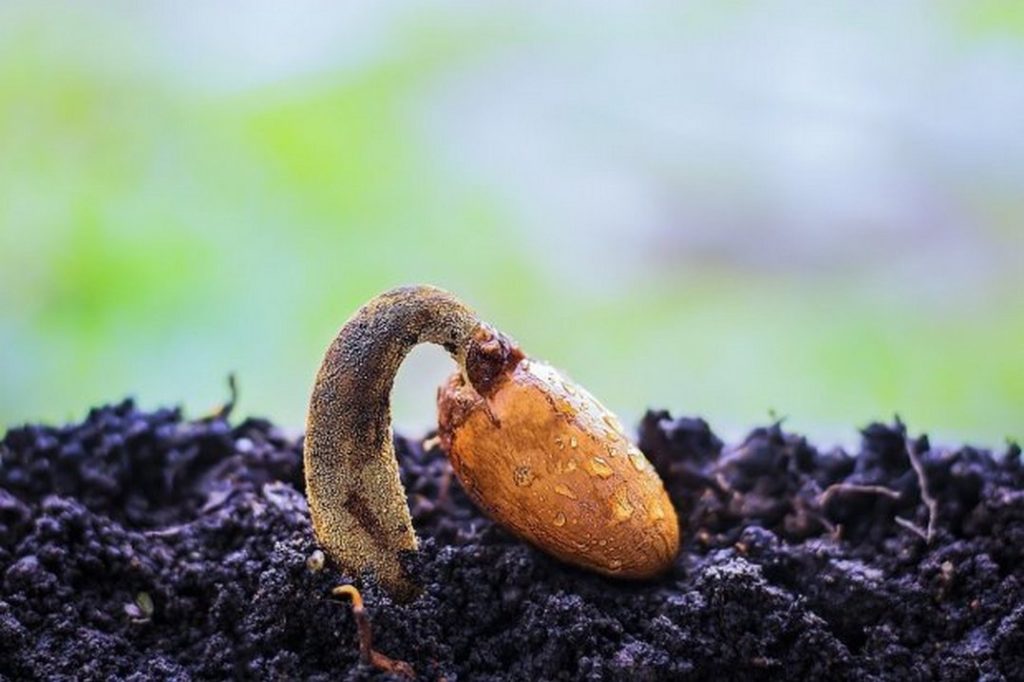
This Lent is strange in many ways, because we are asked to fast, to pray, and to repent by renouncing our old ways of fasting, praying, and repenting. If fasting is also renunciation, the current crisis has the potential to become the best Lent we have ever had, as we find ourselves forced to renounce the possibility of attending Church, and perhaps even celebrating Holy Week and Pascha in the way we are used to. In the monastic literature, St. Dorotheus of Gaza (6th century) and St. John Climacus (7th century) consider “renunciation” as the first step in our spiritual life. St. Dorotheus writes that “we must renounce the very attachment to things, knowing in what our renunciation consists,” while St. John Climacus states: “Let us not even abhor or condemn the renunciation due merely to circumstances… I have seen seeds casually fall on the earth and bear plenty of thriving fruit… Thus for some the unintentional was stronger and surer than what was intentional in others.”
Finding ways to live a life in Christ that are different from those we have received in the Tradition of the Church does not come naturally to us. Livestreamed services cannot truly replace church attendance, yet they still expose us to the grace of the Holy Spirit through the prayer of the Church, which continues according to St. Paul’s teaching: “Rejoice always, pray without ceasing, give thanks in all circumstances; for this is the will of God in Christ Jesus for you.” (1 Thessalonians 5:16-18) At a time when we are unable to receive Holy Communion, we might be able to rediscover the grace of praying with our families, a new meaning of community, making our homes what St. John Chrysostom called a “small Church.” Today, to stay home is to live the radicality of the Gospel. A genuine Orthodox ethos is an ethos of solidarity and love for our neighbor.
What can we do? What will we do? The answer to these questions is up to us and our ability to live the experience of the Church and its Tradition in a self-sacrificing way, with full awareness of our social responsibility. Our churches are closed. It is very unlikely that we will celebrate Pascha as we usually do. But the joy of the feast remains real, and once this crisis is resolved, on the first day when we all return to Church to offer our prayers as one body of Christ, celebrating our Christian vocation to salvation and deification by our renewed presence in the temple of God, we will sing with one voice and one heart: Christ is risen!
Rev. Dr. Nicolas Kazarian, Ecumenical Officer and Director of the Department of Inter-Orthodox, Ecumenical and Inter-Faith Relations, Greek Orthodox Archdiocese of America.
Public Orthodoxy seeks to promote conversation by providing a forum for diverse perspectives on contemporary issues related to Orthodox Christianity. The positions expressed in this essay are solely the author’s and do not necessarily represent the views of the editors or the Orthodox Christian Studies Center.