
Close Menu
    Facebook X (Twitter) Instagram
    Trending
    • #Giving Tuesday – Support Orthodox Christian Laity!
    • Together We Thrive: OCL Annual Conference & Year-End Giving Campaign
    • Archon Officers Participate in Historic Pilgrimage to Nicaea
    • Ecumenical Patriarch Bartholomew and Pope Leo recite the Creed together during 1700th Anniversary of Nicaea
    • Mission Center Board Convenes
    • The “Orthodoxy as Masculinity” Narrative
    • Walk with Us: Orthodox Volunteer Corps (OVC)
    • St. John Chrysostom’s Legacy: From Antioch to America
    Orthodox Christian Laity
    Facebook X (Twitter) YouTube
    • Home
    • OCL
      • About OCL
      • Leadership
      • OCL News
      • OCL Publications
      • Focused Study and Research Topics
      • OCL Archives at DePaul University
    • Orthodox News & Links
      • Orthodox News Stories
      • Headlines & News Archives
      • Governance & Unity
        • Governance Top Stories
        • Governance & Unity Essays
        • Grassroots Unity in Action
      • OCL Forums
      • Orthodox Christian Laity News
      • Web Links
    • Audio & Video
      • Audio Index
      • Video Index
    • Contact
    • Make a Donation
    Orthodox Christian Laity
    You are at:Home»Governance & Unity News»Governance & Unity Essays»Book Review – The Orthodox Dilemma: Personal Reflections On Global Pan-Orthodox Christian Conciliar Unity

    Book Review – The Orthodox Dilemma: Personal Reflections On Global Pan-Orthodox Christian Conciliar Unity

    0
    By Webmaster on April 22, 2016 Governance & Unity Essays, Governance & Unity News
    Share
    Facebook Twitter LinkedIn Pinterest Email Telegram WhatsApp Copy Link

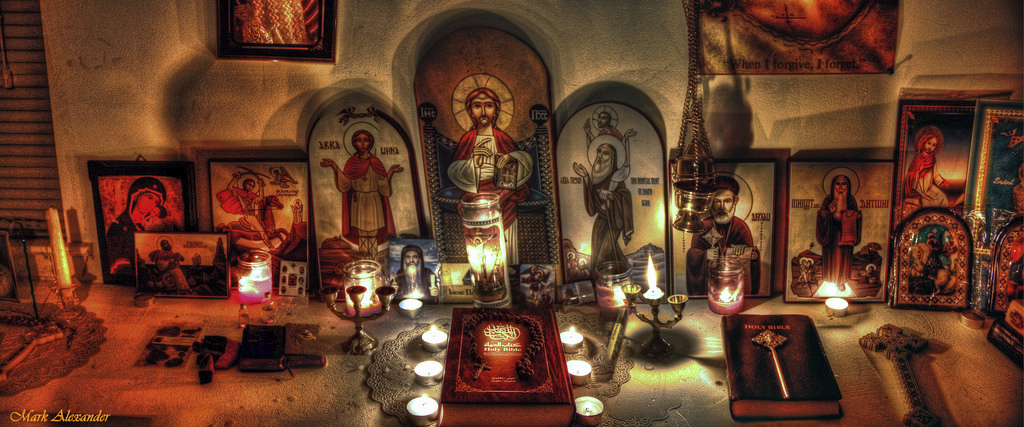
    coptic-icons
    Source:  American Orthodox Institute / Touchstone Magazine (May/June 2016)

    Eastern Union

    The Orthodox Dilemma: Personal Reflections On Global Pan-Orthodox Christian Conciliar Unity
    George Alexander
    OCP Publications, 2015; 202 pages, $12.00, paperback

    By John G. Panagiotou

    In George Alexander’s “The Orthodox Dilemma” the reader is given a highly accessible overview of the history, current situation, and possible future of Eastern Orthodoxy and Oriental Orthodoxy. Through personal vignettes and historical illustrations, the writer, himself Oriental Orthodox, seeks to explain and address how the Orthodox Churches have found themselves in their present circumstances.

    To those with a relatively undeveloped knowledge of Eastern Christianity, many examples that Alexander cites regarding these churches in both Eastern Orthodox and Oriental Orthodox expression may seem esoteric and obscure, but his central reason for writing the book is plain—to issue a plea for greater Pan-Orthodox unity of witness on a global platform.

    He begins by asserting that before any sort of coordinated form of Orthodox Christian witness can be made, the official estrangement and sacramental division between the Eastern Orthodox (Greek, Russian, Serbian, Antiochian, Romanian, and Bulgarian) and the Oriental Orthodox (Coptic, Armenian, Ethiopian, Syriac, and Indian Malankara) needs to be addressed. He makes very compelling arguments that this “Eastern Schism” is the result of linguistic misunderstandings in Christology that have long since been theologically resolved, and he notes that it has been the long-­standing pastoral practice that Oriental Orthodox receive the sacraments in Eastern Orthodox Churches. It is high time, the author believes, that official communion should be acknowledged and proclaimed on the hierarchal level.

    Nowhere is this point more pointedly made than where he observes that both Eastern Orthodox and Oriental Orthodox bishops and theologians have made great efforts to dialogue and ecumenically interact with the Western Church in both its Roman Catholic and Protestant expressions (in the World Council of Churches and elsewhere) while the Eastern Church has yet to get its own house in order, for which he provides multiple examples from the Council of Chalcedon (a.d. 451) on down to our own time. In the words of the famed Greek Orthodox theologian John S. Romanides, whom he quotes in the book, “The two traditions (Eastern Orthodox and Oriental Orthodox) survived the complexities of history, while always maintaining essentially the same Orthodox Faith.”

    The official declaration of reunion of the Eastern Churches would aid much in dealing with the cultural estrangements, prejudices, and suspicions of its members for one another. The irony Alexander notes, however, is that ultimately this needs to be a “grass roots” movement from the bottom to the top, issuing from the laity and the clergy, and facilitated by the hierarchy through better communication and public acknowledgment that the Eastern Orthodox and Oriental Orthodox Churches are sisters.

    This, coupled with greater opportunities for interaction between the members of both churches, should be happening throughout Orthodoxy. Concerted efforts along these lines would serve to mitigate prejudices, of which the author provides copious examples. Among the paradigms for reunion that the author cites to demonstrate the achievability of this are the reunification of the Russian Orthodox Church Abroad (aka ROCOR) with the Patriarchate of Moscow in 2007, the Patriarchate of Moscow’s recent outreach to the Old Believers’ Church, and the Pan-­Orthodox pioneering work of the Oriental Orthodox theologians Metropolitan Gregorios Paulose and Fr. V. C. Samuel.

    It is important to note that Alexander is not calling for a one­world administrative hierarchical bureaucracy, but rather for an integrated Orthodox Christian witness, which will serve as a platform compatible with the concilliar nature of the Church’s episcopacy. This platform would be an expression of sacramental unity in all of its spiritual aspects of love and shared faith. It is not a call for a single form of worship or administration based on ecclesial jurisdiction, but an incorporation of St. Irenaeus of Lyon’s theme of “unity in diversity.”

    The author provides numerous suggestions for realizing a unified Orthodox platform through better theological education for clergy, better use of the modern means of communication and media, and work in social justice ministries. To my knowledge, this is the first published book to provide thoughtful detail on the execution of this vital project. In many ways, it is a seminal work.

    John G. Panagiotou is a Greek Orthodox theologian and writer, a graduate of St. Vladimir’s Orthodox Theological Seminary and Wheeling Jesuit University. He can be reached at johnpan777@gmail.com.

    Share. Facebook Twitter Pinterest LinkedIn Tumblr Email WhatsApp Copy Link
    Previous ArticleA GENEALOGY OF GOD’S MERCY
    Next Article Synod Defrocks Gounaris & Ehrs, Suspends Dokos

    Related Posts

    December 1, 20251 Min Read

    #Giving Tuesday – Support Orthodox Christian Laity!

    November 28, 20255 Mins Read

    Archon Officers Participate in Historic Pilgrimage to Nicaea

    November 28, 20251 Min Read

    Ecumenical Patriarch Bartholomew and Pope Leo recite the Creed together during 1700th Anniversary of Nicaea

    Leave A Reply Cancel Reply

    This site uses Akismet to reduce spam. Learn how your comment data is processed.

    Sign the Declaration for Orthodox Unity – click here…

    Register for OCL's Annual Conference - October 11, 2025

    Sign the Declaration for Orthodox Christian Unity

    Enter the Slogan Contest

    Share this page
    DISCLAIMER

    All articles represent the views of the authors and  not necessarily the official views of Orthodox Christian Laity (OCL). They are posted to encourage thoughtful discussion on topics and concerns relevant to Orthodox Christians living in a pluralistic society. OCL encourages your comments.

    Stay Informed!

    Subscribe to our Newsletter

    WE WELCOME YOUR INPUT AND SUPPORT!

    Your donation impacts and helps advance the unity of the Orthodox Church of America.

    DONATE NOW

    THANK YOU FOR YOUR CONTINUED SUPPORT!

    Upcoming Events
    Notice
    There are no upcoming events.
    Recent Comments
    • George Warholak on Ecumenical Patriarch Bartholomew and Pope Leo recite the Creed together during 1700th Anniversary of Nicaea
    • Dn Nicholas on Ecumenical Patriarch Bartholomew and Pope Leo recite the Creed together during 1700th Anniversary of Nicaea
    • Dana C Purnell on Ethiopian Bible is the oldest and complete bible on earth
    • Peter on Abp. Elpidophoros installed as National Council of Churches board chair
    • james wiliams on Video: A Vision for Orthodox Christianity’s Future in North America
    • Veras Coltroupis on Abp. Elpidophoros installed as National Council of Churches board chair
    • Joe Forzani on Ancient Christianity (Free Course) – Hillsdale College Online
    • Joe Forzani on Ancient Christianity (Free Course) – Hillsdale College Online
    • sandy myers on Ethiopian Bible is the oldest and complete bible on earth
    • Peter on Unity in the Orthodox Church
    OCL Archives Online
    Project for Orthodox Renewal
    renewal-resize
    OCL Digital Newsletter

    Subscribe to our Newsletter

    MAKE A DONATION

    Sign the Declaration for Orthodox Christian Unity

    Facebook
    Twitter
    YouTube

    St. Symeon the New Theologian and St. Photini are the Patron Saints of OCL

    footer-fnl

    Orthodox Christian Laity
    PO Box 6954

    West Palm Beach, FL · 33405
    561-585-0245

    ocladmin@ocl.org (or) orthodoxchristianlaity@gmail.com

    Sponsored by Ann Souvall in memory of husband George

    DISCLAIMER: All articles represent the views of the authors and  not necessarily the official views of Orthodox Christian Laity (OCL). They are posted to encourage thoughtful discussion on topics and concerns relevant to Orthodox Christians living in a pluralistic society. OCL encourages your comments.

    ©2025 Orthodox Christian Laity (OCL) ·  Login

    Type above and press Enter to search. Press Esc to cancel.