
Close Menu
    Facebook X (Twitter) Instagram
    Trending
    • #Giving Tuesday – Support Orthodox Christian Laity!
    • Together We Thrive: OCL Annual Conference & Year-End Giving Campaign
    • Archon Officers Participate in Historic Pilgrimage to Nicaea
    • Ecumenical Patriarch Bartholomew and Pope Leo recite the Creed together during 1700th Anniversary of Nicaea
    • Mission Center Board Convenes
    • The “Orthodoxy as Masculinity” Narrative
    • Walk with Us: Orthodox Volunteer Corps (OVC)
    • St. John Chrysostom’s Legacy: From Antioch to America
    Orthodox Christian Laity
    Facebook X (Twitter) YouTube
    • Home
    • OCL
      • About OCL
      • Leadership
      • OCL News
      • OCL Publications
      • Focused Study and Research Topics
      • OCL Archives at DePaul University
    • Orthodox News & Links
      • Orthodox News Stories
      • Headlines & News Archives
      • Governance & Unity
        • Governance Top Stories
        • Governance & Unity Essays
        • Grassroots Unity in Action
      • OCL Forums
      • Orthodox Christian Laity News
      • Web Links
    • Audio & Video
      • Audio Index
      • Video Index
    • Contact
    • Make a Donation
    Orthodox Christian Laity
    You are at:Home»Governance & Unity News»Governance & Unity Essays»The “Orthodoxy as Masculinity” Narrative

    The “Orthodoxy as Masculinity” Narrative

    0
    By Webmaster on November 22, 2025 Governance & Unity Essays, Governance & Unity News
    Share
    Facebook Twitter LinkedIn Pinterest Email Telegram WhatsApp Copy Link

    Source: Public Orthodoxy

    Dr. George Demacopoulos
    Fr. John Meyendorff & Patterson Family Chair, Co-Director of the Orthodox Christian Studies Center, Fordham University
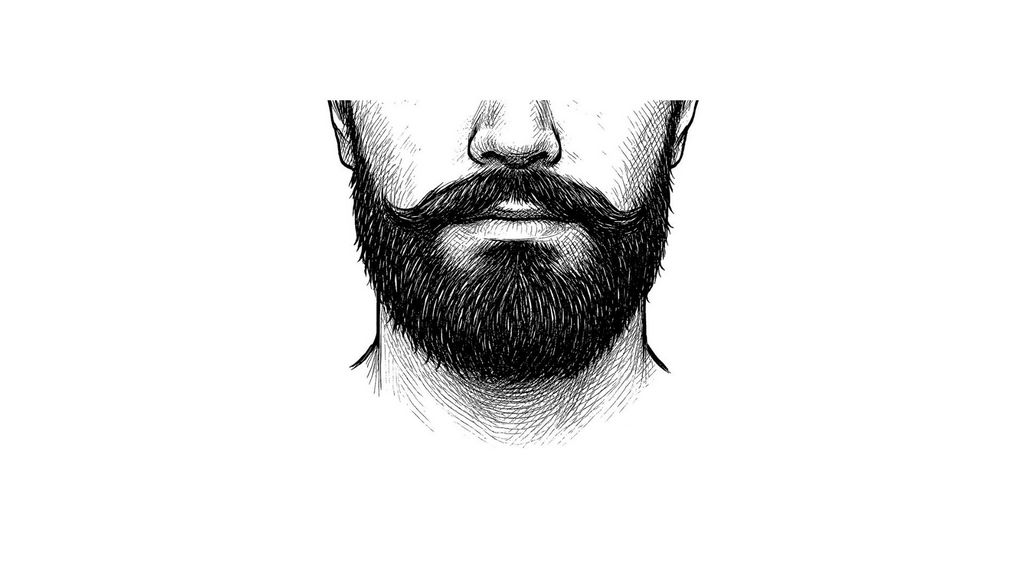
    According to the New York Times, young, conservative men are flocking to the Orthodox Church because it provides an all-too-rare space that celebrates masculinity. This “Orthodoxy as Masculinity” narrative is not new. It has been pushed by social media monetizers and tabloid reporters for a few years. And there is some truth to it—there is an aggressive online “Orthobro” culture, consisting of recent male converts. The uptick in male seekers to the Church is, at least in part, explained by the distorted vision of Orthodox teaching and practice that they perpetuate.

    The problem with the Times essay isn’t so much that it reported these trends but that it did so without acknowledging that the “Orthodoxy as Masculinity” narrative is consistently rejected by Church leaders and scholars because it is so blatantly misaligned with the Church’s theology and history.

    As a scholar of early Christianity, I could ramble on about the early Church’s radically egalitarian vision, its subversion of Greco-Roman gender norms, its celebration of female leaders, or the fact that it encouraged women to reject marriage and child-bearing in the pursuit of sanctity. I might also highlight the fact that asceticism is not about “masculine toughness,” it is about spiritual transformation for both men and women.

    But I’m not bothered that the Times story failed to report on basic Christian teaching or history. Nor am I particularly concerned that the story resorted to a kind of scare-the-reader reporting: “Look out, here comes the toxic-male-Orthodox.”

    Rather, my concern is that this kind of story only increases the threat that the “Orthodox as Masculinity” narrative poses to the Church, especially to those charged with the catechism of potential converts.

    In most parishes, catechism falls squarely on the parish priest who is already overburdened, often under-resourced, and likely untrained as a catechist. Because no Orthodox jurisdiction in the United States has an official catechism, each parish priest is left to craft his own curriculum. This means that the rigor, length, content, and experience of catechism varies widely from parish to parish and from jurisdiction to jurisdiction. In such a context, it is difficult enough for the priest to instruct those seekers who come to the tradition with an acceptable level of understanding of what Orthodox Christianity is, how it differs from the tradition they might be coming from, and why it is that they are interested in learning more.

    It is all the more difficult for the priest or lay catechist to assist seekers when they are coming to the faith because they have been badly misinformed about what Orthodox Christianity is or because they are searching for a religious tradition that they have been told will amplify already-existing cultural or political ideologies. This is precisely what those pushing the Orthodoxy as Masculinity narrative are doing—they are selling a myth and they are doing so because they are seeking to remake the Church in ways that align to a preconceived social and political agenda that do not map onto an ancient faith like Orthodox Christianity.

    The other, obvious threat posed by the “Orthodoxy as Masculinity” narrative is that it alienates faithful women who are part of the tradition. Not surprisingly, young women are leaving the Church in record numbers. That is tragic on its own, but even more so because early Christianity was largely a women’s movement—the first movement in the history of the world that proclaimed the inherent dignity of women.

    It may well be the case that young adults in the United States view Christianity as an impediment to women’s equality, a view amplified by the “Orthodoxy as Masculinity” narrative. But that is not what Orthodox Christianity proclaims. Imagine what might be possible for the Church, for young women, and for young men if we were able to catechize everyone properly.
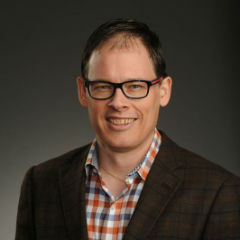

    Dr. George Demacopoulos

    Fr. John Meyendorff & Patterson Family Chair, Co-Director of the Orthodox Christian Studies Center, Fordham University

    George Demacopoulos is the Fr. John Meyendorff & Patterson Family Chair of Orthodox Christian Studies, co-director of the Orthodox Christian Studies Center, and a Professor of Historical Theology at Fordham University. Professor Demacopoulos’ research and teaching interests are in the fields of early Christian and Byzantine church history. He specializes in the relationship between the Eastern Orthodox and Roman Catholic churches during the Middle Ages.

    The University of Tennessee College of Arts and Sciences—where Demacopoulos earned his undergraduate degree—honored him with the 2016 Humanities Achievement Award. Demacopoulos earned an MTS, with highest honors, from Holy Cross Greek Orthodox School of Theology before enrolling at the University of North Carolina at Chapel Hill, where he earned an M.A. and Ph.D. in Religious Studies.

    In 2012, Demacopoulos earned the most prestigious grant awarded for humanities-based research: a National Endowment for the Humanities (NEH) Matching Challenge Grant. His current research project is a reevaluation, via postcolonial critique, of medieval encounters between eastern and western Christians in the era of the Crusades.

    Demacopoulos is the author of numerous scholarly articles, blogs, and several books, including Five Models of Spiritual Direction in the Early Church (2006); The Invention of Peter: Apostolic Discourse and Papal Authority in Late Antiquity (2013); and Gregory the Great: Ascetic, Pastor, and First Man of Rome (2016). He has published a translation (from Latin) of St. Gregory the Great’s Book of Pastoral Rule (2011) for St. Vladimir’s Seminary Press’ Popular Patristic Texts Series. He and his colleague Aristotle Papanikolaou are the co-editors of Tradition, Secularization, and Fundamentalism (forthcoming); Christianity, Democracy and the Shadow of Constantine (forthcoming); Orthodox Constructions of the West (2013); Orthodox Readings of Augustine (2008); and the Fordham University Press Series: Orthodox Christianity and Contemporary Thought.

    Demacopoulos is an Archon of the Ecumenical Patriarchate, offikion designation Didaskalos Tou Genous (Teacher of the People).

    Share. Facebook Twitter Pinterest LinkedIn Tumblr Email WhatsApp Copy Link
    Previous ArticleWalk with Us: Orthodox Volunteer Corps (OVC)
    Next Article Mission Center Board Convenes

    Related Posts

    December 1, 20251 Min Read

    #Giving Tuesday – Support Orthodox Christian Laity!

    November 28, 20255 Mins Read

    Archon Officers Participate in Historic Pilgrimage to Nicaea

    November 28, 20251 Min Read

    Ecumenical Patriarch Bartholomew and Pope Leo recite the Creed together during 1700th Anniversary of Nicaea

    Leave A Reply Cancel Reply

    This site uses Akismet to reduce spam. Learn how your comment data is processed.

    Sign the Declaration for Orthodox Unity – click here…

    Register for OCL's Annual Conference - October 11, 2025

    Sign the Declaration for Orthodox Christian Unity

    Enter the Slogan Contest

    Share this page
    DISCLAIMER

    All articles represent the views of the authors and  not necessarily the official views of Orthodox Christian Laity (OCL). They are posted to encourage thoughtful discussion on topics and concerns relevant to Orthodox Christians living in a pluralistic society. OCL encourages your comments.

    Stay Informed!

    Subscribe to our Newsletter

    WE WELCOME YOUR INPUT AND SUPPORT!

    Your donation impacts and helps advance the unity of the Orthodox Church of America.

    DONATE NOW

    THANK YOU FOR YOUR CONTINUED SUPPORT!

    Upcoming Events
    Notice
    There are no upcoming events.
    Recent Comments
    • George Warholak on Ecumenical Patriarch Bartholomew and Pope Leo recite the Creed together during 1700th Anniversary of Nicaea
    • Dn Nicholas on Ecumenical Patriarch Bartholomew and Pope Leo recite the Creed together during 1700th Anniversary of Nicaea
    • Dana C Purnell on Ethiopian Bible is the oldest and complete bible on earth
    • Peter on Abp. Elpidophoros installed as National Council of Churches board chair
    • james wiliams on Video: A Vision for Orthodox Christianity’s Future in North America
    • Veras Coltroupis on Abp. Elpidophoros installed as National Council of Churches board chair
    • Joe Forzani on Ancient Christianity (Free Course) – Hillsdale College Online
    • Joe Forzani on Ancient Christianity (Free Course) – Hillsdale College Online
    • sandy myers on Ethiopian Bible is the oldest and complete bible on earth
    • Peter on Unity in the Orthodox Church
    OCL Archives Online
    Project for Orthodox Renewal
    renewal-resize
    OCL Digital Newsletter

    Subscribe to our Newsletter

    MAKE A DONATION

    Sign the Declaration for Orthodox Christian Unity

    Facebook
    Twitter
    YouTube

    St. Symeon the New Theologian and St. Photini are the Patron Saints of OCL

    footer-fnl

    Orthodox Christian Laity
    PO Box 6954

    West Palm Beach, FL · 33405
    561-585-0245

    ocladmin@ocl.org (or) orthodoxchristianlaity@gmail.com

    Sponsored by Ann Souvall in memory of husband George

    DISCLAIMER: All articles represent the views of the authors and  not necessarily the official views of Orthodox Christian Laity (OCL). They are posted to encourage thoughtful discussion on topics and concerns relevant to Orthodox Christians living in a pluralistic society. OCL encourages your comments.

    ©2025 Orthodox Christian Laity (OCL) ·  Login

    Type above and press Enter to search. Press Esc to cancel.