
Source: Public Orthodoxy
A Look at the Recent Influx of Converts
Rev. Matthew Brown
Doctoral Student in Systematic Theology at Fordham University
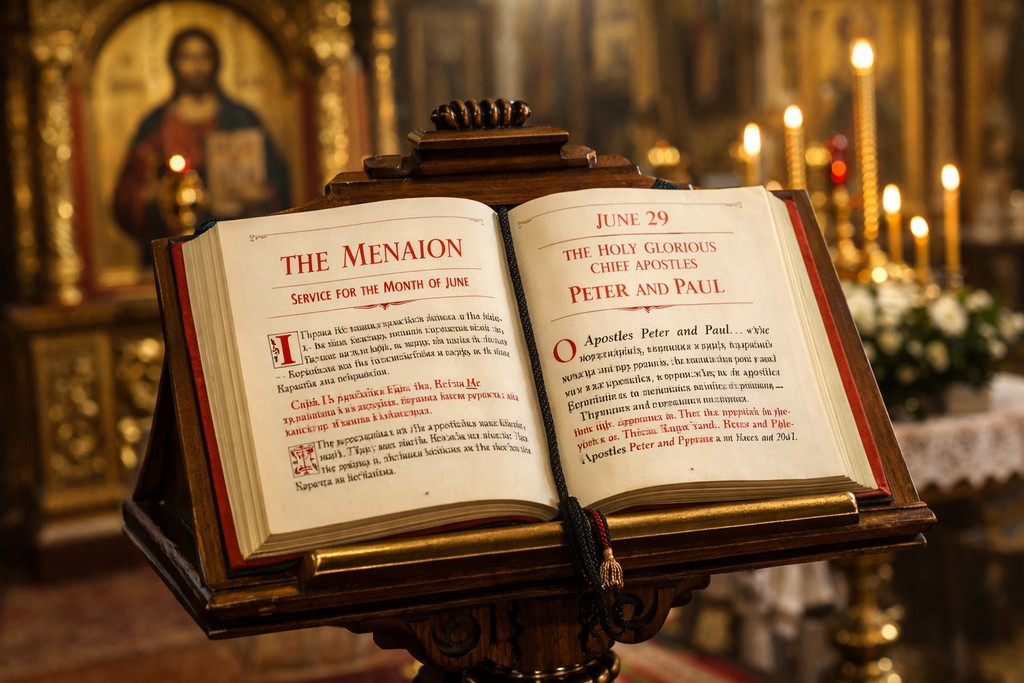 Ever since emerging from the lockdowns, Orthodox parishes—almost exclusively English-speaking ones—have experienced a historic increase in inquirers and converts. It is probably safe to say that there hasn’t been such an intense and sustained period of growth in the history of Orthodoxy in America. What is remarkable is not only the sheer number of newcomers but also the short timeframe in which this has occurred.
This past July, I participated in the Orthodox Church in America’s All-American Council, a triennial event comprising the Synod of Bishops along with clergy and lay delegates from across our jurisdiction. Nearly every conversation I had with fellow clergy was marked by the same theme: unprecedented growth. Parishes with 10, 20, or even 30 catechumens were not outliers—they were the norm.
This influx is novel not only in quantity but in composition. Before COVID, inquirers were typically devout individuals from other religious traditions experiencing a crisis of faith—what is now popularly termed “deconstruction”—or people marrying into the faith. Converts were usually white. Today, we are seeing people from nearly every background, most of whom have little or no religious upbringing. They are not as knowledgeable or devout as the typical inquirer from previous decades. Furthermore, the ethnic and racial diversity among them is significantly broader than anything we’ve seen previously.
As much as this is a cause for celebration, it is also a moment for caution. This influx presents serious pastoral challenges. Across jurisdictions, there is a shortage of clergy. Catechumens and inquirers require substantial attention—and rightly so. Setting a firm, healthy foundation for our “little ones” (neophytes) is our duty. Growth on this scale demands that we rethink how we do catechesis: it must be more organized, and priests must increasingly delegate ministry to lower clergy and trained lay leaders. Organization has not historically been Orthodoxy’s strength, but it is now essential.
The internet is playing a central role in drawing these seekers to the Church, simply because our society is online to a far greater degree than ever—especially Generation Z. The internet has expanded Orthodoxy’s visibility enormously. Almost every visitor to our parishes today has encountered the Church first in the virtual realm. Additionally, Orthodox Christians enjoy an outsized online presence—both in quantity and quality. I suspect this is due to two factors: first, we are the youngest of all Christian traditions in America, as highlighted by the recent Orthodox Christian Studies Institute report analyzing the 2024 Pew Religious Landscape Study and the Cooperative Election Study. Second, the kinds of people who convert to Orthodoxy are typically self-selecting outliers. Orthodoxy, not being a mainstream tradition in America, tends to attract those who are seeking something markedly different.
A New York Times article, commenting on the previously mentioned 2024 Pew study in February 2025, noted that—for the first time in decades—the decline in American religiosity has stalled, primarily due to Generation Z. Ruth Graham writes: “The ‘nones’—those in the American population who tell researchers they have no religious affiliation—have been growing for decades. ‘Now that growth has either slowed or stopped completely,’ Dr. Burge said, ‘and that’s a big deal.’”
An earlier Times article from Fall 2024 highlighted another surprising trend: a significant uptick in religious observance among young men. This “masculine turn” among Gen Z was also noted by the Pew study, which revealed that Orthodoxy now has the highest percentage of male adherents among Christian traditions in the U.S.
Some corners of online Orthodoxy have characterized this trend as a manifestation of “toxic masculinity” or viewed it as more a problem than a cause for celebration. I believe such characterizations are overstated. From my own pastoral experience, I have not encountered what I would consider a prevalence of ‘toxic masculinity’. Rather, what is far more common is a good degree of immaturity, but this is to be expected among young adults who overwhelmingly come from broken households. A good religious community with healthy older male role models is a good antidote. Furthermore, what one sees online is far from representative of what walks through the front doors of our churches. Too often I fear our opinions on many matters in society are disproportionately formed from the virtual rather than the analog and we live in a media landscape which in its ruthless attention economy has primed us to be overly reactive and fearful.
Historically, religion in America has skewed heavily female in terms of adherents. What we’re seeing now is a narrowing of that gap. Pew data confirms that Orthodoxy, at most, has achieved a 50/50 gender ratio—whereas other traditions, especially mainline denominations, remain overwhelmingly female.
If your parish has not seen this phenomenon, one likely reason is the language of your liturgical services. Converting to Orthodoxy is already a significant undertaking; adding a linguistic barrier is often too much. Those seeking Orthodoxy are not looking to change their ethnic identity, even if they deeply appreciate the cultural diversity within the Church. Rather, they seek to transform the cultural and social space they already inhabit through the Orthodox faith. These individuals will almost always gravitate toward communities where the Divine Services are celebrated in English.
Now is the time for the Greek Archdiocese to transition to English-language worship. I do not mean a token gesture—I mean predominantly. A good rule of thumb is this: the liturgical language should reflect the linguistic reality of the parish. If only 10% of the worshippers speak Greek as their first language, then no more than 10% of the Liturgy should be in Greek.
Moreover, this is not an Orthodox land. We have been entrusted with the Gospel and charged to proclaim it. We ought to have an eye not only to the linguistic reality of our parishes, but to the wider community in which they are set. Our worship should reflect the language of this time and place. This is a real sacrifice. The language of our ancestors is not without value. But it is a small treasure to relinquish for the sake of the greater treasure of fulfilling our Lord’s desire: “And I, when I am lifted up from the earth, I will draw all people to myself” (John 12:32).
If we want Orthodoxy to be more than an ethnic enclave or a boutique religion for outliers, we must remove the barriers that keep seekers at bay. We must not bind them with burdens too heavy to bear (Matt. 23:4). To settle for remaining a marginal tradition in American life is a betrayal of our Lord’s command: “Go into all the world…” (Mark 16:15).
We stand at a pivotal moment—a gift has been given to us. What will we do with it? Will we, in Eucharistic fashion, offer it back to God in thanksgiving?
In the Divine Liturgy, we take the fruits of the earth—wheat and grapes—and mix them with our labor to produce bread and wine, making them something more than what we started with. Then, in imitation of Christ’s own sacrifice, we offer them back to God. If we do the same with this present gift to the Church, we will find, as we do every Sunday, that God will give it back to us a hundredfold. “Give, and it will be given to you: good measure, pressed down, shaken together, and running over…” (Luke 6:38).
But we must do the work—all of us. God will not complete this mission without us. The wheat and wine of this present moment in Orthodoxy will become for us the very body and blood of Christ. For what does the human heart desire more than love? And what is love, if not communion with the One who first loved us? And who is more beloved by God than the lost sheep (Luke 15:1-7)?
Let us love them with that same cruciform love. A resurrectional gift awaits us—if we are willing to join Christ on the cross and make the necessary sacrifice laid before us now. Then, when we offer the Holy Gifts, we will be able to say with all sincerity: “Thine own, of Thine own…” (Anaphora of St. John Chrysostom).
About the author
 Rev. Matthew Brown
Doctoral Student in Systematic Theology at Fordham University