
Source: Solia Calendar 2015 – Romanian Orthodox Episcopate of America – pages 200-252
The following paper was written by Rev. Dr. Gabriel Gardan with the blessing of His Grace, Bishop Petroniu of Salaj (Romania) in honor of the 30th Anniversary of the Enthronement of His Eminence, Archbishop Nathaniel on November 17, 2014.
FROM DREAM TO REALITY: ORTHODOX UNITY IN THE UNITED STATES OF AMERICA[i]
Rev. Dr. Gabriel-Viorel Gârdan, University Lecturer
Faculty of Orthodox Theology in Cluj-Napoca, Romania
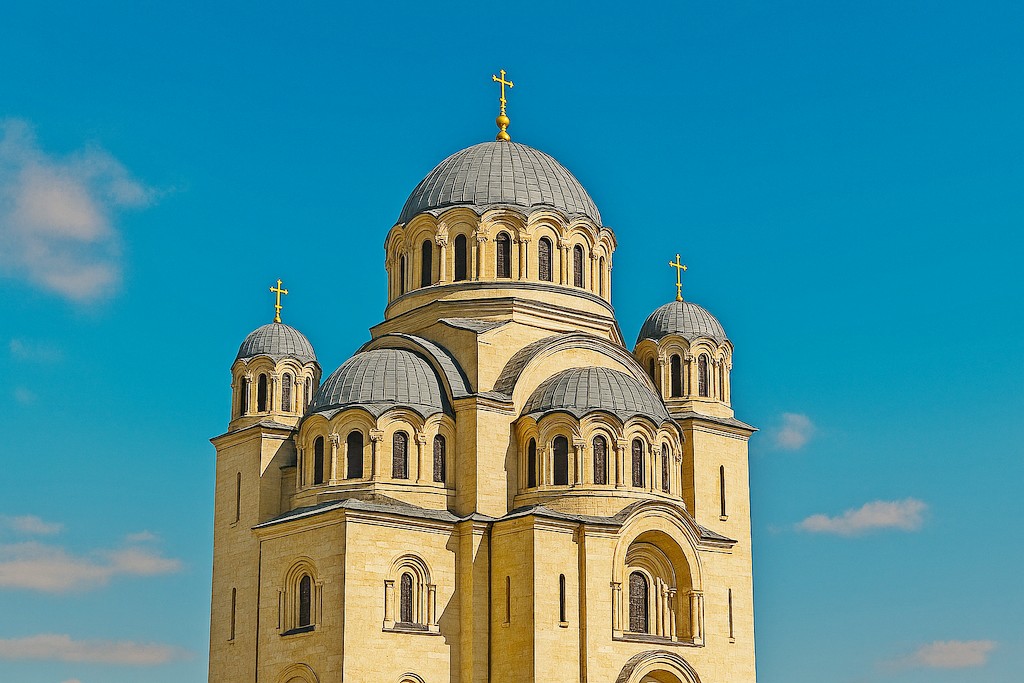
The number of researchers who are focusing on the life of the Orthodox communities on the North American Continent[ii] is increasing considerably, and the approaches they undertake in relation to this research are more and more complex[iii]. The fascination that such a complex problem of the Orthodox ecclesiastical American life has on the researcher is generated by a wide theological subject spectrum, where there can be found major fields of theological research (Ecclesiology, Missiology, Pastoral Care, Canon Law, History), by the vitality of the ecclesiastical bodies, by over-jurisdictional and pan-ecclesial structures[iv], but also by an excellent theological development due to the Orthodox theologians who have worked and continue to work in America. These theologians (Georges Florovsky, Alexander Schmemann, John Meyendorff, Demetrios Constantelos, John H. Erickson, Peter Paul L’Huillier, John Breck, John Behr, etc.) embody in the secularized, multi-ethnic and multi-confessional American environment, the ethos of the genuine Christian Church and influence the Orthodox world with it.
We also note here the fact that in recent debates, the themes of identity and self-consciousness[v] are constantly conveyed, as well as fidelity towards ecclesiological foundations and missionary commitment[vi]. At the same time, they are seeking solutions to resolve the ecclesiological and institutional hurdle generated by the ethnic/religious foundation on which the organization of Orthodox community life in a non-Orthodox region has been established[vii].
From an historical point of view, we easily recognize that in the evolution of Orthodox life in the United States, there are the following steps: missionary, ethnic, dissident [opposition of an authoritarian state]and that of the road to autocephaly. A constant in these steps is the preservation of the character and of the ad intra [from within]and ad extra [from without]missionary commitment of the Church in this non-Orthodox area. The ad extra mission focused and continues to focus on preaching the Gospel in order to convert people of other faiths; and the ad intra mission has been and continues to be oriented towards the organization of the internal, spiritual, liturgical and social life of the Orthodox communities. This double mission involves the activity of all aspects of Church missionary activity: evangelization, witness, diaconal and pastoral; but it also assumes the specific requirements of Church mission in a concrete historical context; because, as a contemporary missionary theologian has pointed out, “…according to the Orthodox view, the Christian mission is not limited to the simple proclamation of the Word of God, but it refers to the incorporation of people and their growth as members of the Church – Christ’s Body, ‘…unto the measure of the stature of the fullness of Christ’” (Ephesians 4:13)[viii].
Taking into consideration these aspects, our research seeks to investigate the history of the American Orthodox communities; to identify and to have in view the missionary vein of the Orthodox presence in North America; to question ecclesiological, canonical, liturgical, social and ethical elements that define Orthodox institutional existence in this context; and, to illustrate the jurisdictional mosaic that resulted from the prevalence of the logical ethnic organizational structure to the detriment of the ecclesiological structure[ix].
Missionary beginnings
The beginning of an Orthodox presence on the American continent is a problem involving many aspects: some of them are purely chronological; others have a missionary and ecclesiological character. In the controversies of the second half of the 20th century concerning the organization of Orthodox Church life in the United States, the ecclesiological and missionary aspects proved to be more important. This resulted from the premise that the first one to come into a “missionary territory” has the right to impose its jurisdiction and authority.
Chronologically speaking, we are dealing with two stages in which the Orthodox discovered America: a hypothetical one and an actual one. October 12, 1492, is the day entered in historiography as the day that America[x] was discovered by Christopher Columbus[xi]. There are also authors who promote the hypothesis of the “discovery” of these territories some centuries earlier, by nomads from Asia[xii], the Scandinavian sailors and the Vikings from Northern Europe[xiii]. These authors presuppose that around the year 1000, in Greenland, which now is considered part of North America [geographically and ethnically], a missionary campaign of Northern Christians took place, initiated and led by Eric the Red. There is no information about the fate of these Christian missionaries in the new territory. All that can be asserted is their affiliation with the Christian faith, which at that time was still undivided[xiv].
Clear evidence of the manifestation of Orthodox Christianity on American soil is offered to us only in the 18th century. According to the documentary testimonies, the very first Divine Liturgy was celebrated on July 20, 1741[xv] in Alaska. There were three main factors that had an important contribution to the spread of Orthodox Christianity in Alaska and Northwest America, or in the New World, as this territory had been called in the 18th and 19th centuries. The first factor was the discovery of Alaska by the explorers of the 18th century, who were followed by merchants and fur traders. The second one was the support that the establishment and the activity of the Russian-American Company gave to the Christian evangelization of the native pagan peoples in this territory. Although its priority was the representation of the Great Russian Empire, interests in this territory which included the exploitation of natural resources and the fur trade, the Company jump-started the Orthodox Church mission by founding permanent settlements and populating them, and by providing transportation and financial support for Russian missionaries. Finally, the third factor that led the native pagan peoples to the light of the Orthodox faith is the heroic activity of missionaries. They were brave men, devoted and ready to sacrifice their own lives for the cause in which they believed so strongly[xvi].
The discovery of Alaska was preceded by several important discoveries which increasingly enlarged the Eastern borders of the Russian Empire[xvii]. Thus, in 1648, the Cossack Simeon Deznev reached the Eastern extremity of Asia (Cape Deznev), and he discovered that Asia was separated from another territory by water[xviii]. In 1711, another Cossack, Popov, was sent to collect taxes from the tribes of the Deznev-discovered territories. On his return, he made known the existence of an island beyond Cape Deznev,[xix] and he spread the news that there was much land beyond the waters. The news brought by Popov quickly arrived at St. Petersburg, and the Emperor Peter the Great (1682-1725)[xx] decided to organize an expedition in order to check Popov’s discoveries and to extend the exploration of the New World. The Danish captain, Vitus Bering, was appointed to lead this expedition[xxi]. After a journey lasting more than a year, from St. Petersburg to Petropavlovsk, Kamchatka boarding port, and after another two years of preparation, Bering began his expedition. During the expedition, although he did not manage to get to Alaska, Bering discovered St. Lawrence Island, that is the westernmost point of North America today. In what Bering failed, Fedorov and Gvozdev succeeded in 1732. They arrived on an unknown coast, without realizing that, in fact, they had discovered the North American coast. Their observations and measurements would be very precious in the making of the first Bering map. Because of the great interest in these discoveries, the Russian Government, the leader of the Russian Navy and the Academy of Sciences in St. Petersburg decided to organize another expedition in order to explore the American Continent. Although they had gotten the Empress Ana Ivanova’s approval in 1732, they only started the expedition on June 4, 1741, after years of preparation. Two ships sailed in the expedition: “St. Peter” commanded by Vitus Bering, and “St. Paul,” commanded by Alexei Chirikov[xxii]. There were important scientists of the Academy on the crew, whose mission was to map, identify and note aspects of unique flora and fauna of the Alaskan Coast. The bishop Innocent of Irkutsk (1733-1747) showed a great interest in this expedition. He sent monks on each ship, so that, during the travel, on Sundays and on holy days, religious services could be held on board[xxiii].
The two ships traveled together for a while, but because of fog and a violent storm, the crews lost each other. The first crew, which saw the Alaskan Coast on July 15, 1741, was the one from the St. Paul ship commanded by Chirikov. Having lost two boats and many sailors who had been sent to reconnoiter the area, and had probably been killed by the natives; and, being worried about the hostility with which they were met, they returned to Kamchatka. Vitus Bering and the crew of St. Peter’s ship arrived near the American Continent, a few days later than Chirikov, on July 19, 1741, on the eve of the feast day of the Holy Prophet Elijah. In his honor, they called the surrounding mountains “Saint Elijah”[xxiv]. After the ship was anchored in the bay nearby, the first Holy Liturgy was celebrated on board in Alaska the next day[xxv] by the monk Ilarion Trusov and by the priest Ignatius Kozirevsky[xxvi].
Alaska was discovered in 1741 and occupied by Russia until 1867. During these 126 years, many adventurers, hunters, fur traders, administrators, explorers, priests and monks made their mark on the native population – the Aleuts, Eskimos and Indians; however, their influence was strongest in the religious aspect of the lives of the natives[xxvii]. Alexander Schmemann noted that Alaska did not represent the beginning of the historical Orthodox presence on the American Continent only, but it was and would be forever the spiritual foundation of the Orthodox Church in America, its main “reference period”. From this point of view, whatever is being done in and for the Church must be related to the high and holy ideals revealed once and for all by the Apostles of the Orthodox faith in Alaska through their missionary zeal and through their devotion for their calling[xxviii].
Before recalling the Orthodox missionary experience in Alaska, the protagonists and their achievements, we have to mention another event, so that we preserve chronological order. History records the fact that on June 16, 1768, the first colony of Greeks (New Smyrna Colony) was founded near the oldest American town, St. Augustine, Florida. According to the data, the colony was formed by about 200 to 500 Greek immigrants who arrived in the New World under the protection of the Scotsman Dr. Andrew Turnbull and his wife Mary (of Greek origin), who emigrated from the Peloponnese. Dr. Turnbull planned to establish a Greek Orthodox parish and to bring a priest for it, but there is no evidence that his plans were successful. It still has not been proven, even now, if the Greek immigrants were followed by a priest or if there was any parish established in that colony in 1769[xxix]. It seems, in fact, that the existence of this colony was short-lived[xxx].
The year 1794 is another chronological landmark. An Orthodox mission on the North American territory had been officially established that year. On September 24, 1794, the monks from Valaam Monastery were sent by the Russian Orthodox Church[xxxi], and after a 293 day journey and 7300 nautical miles navigated, finally landed on Kodiak Island, Alaska. From that moment on, the Orthodox Divine Liturgy has never stopped being served in North America. These monks did not come as political refugees or immigrants driven by economic interests and preoccupations, in search for a better life[xxxii]. They were the bearers of a very clear missionary mandate: the preaching of the Gospel of redemption among the natives of Alaska. The latter had to face the fate of all true missionaries: isolation, lack of understanding, adversity and martyrdom; but, their mission laid the foundation of the Orthodox presence in the New World and inculcated a profound missionary character in this presence.
We can but acknowledge the success of this mission. This success was due to the efforts of the missionaries, exceptional spiritual personalities, who dedicated themselves to the missionary ideal without any hesitation. Among them, we shall recall: Archimandrite Ioasaf (later on, Bishop), Saint Herman[xxxiii], Saint Juvenaly[xxxiv], Saint Innocent[xxxv], Saint Jacob Netsvetov[xxxvi] and others[xxxvii].
The contribution that the laity had in spreading the Christian faith in these territories should not be ignored. The bishop Innocent Veniaminov confirms it in a work dedicated to the history of the Russian Orthodox Church in America which was translated and published in 1972[xxxviii]. For example, he mentions the fact that in 1828, when Iakov Netsvetov, a young Creole priest[xxxix], after studying a while in Siberia, returns to Atka Island, he finds out that all the inhabitants from his native town were already baptized, they had given up the shamanistic practices and became familiar with the rudimentary elements of the Christian faith, although no Orthodox priest had visited there since 1743 when it was discovered[xl].
The mission in Alaska presupposed respect for the culture of the natives, linguistic adaptability, and cultural sensibility[xli], attitudes confirmed by the translation of the Gospel and of the Divine Liturgy in the languages and dialects of the various populations from this territory; and obviously, by the notable number of conversions. The Orthodox success was due to the following reasons: the affirmation of some local leaders from whom the future priests were selected, and who carried out the catechetical and pastoral responsibilities because of the lack of priests in their communities; the use of the local dialects in the catechetical and sacramental activity; the permanent concern for education and an attitude of sympathy and tolerance related to the cultural shock experienced by the new Christian converts[xlii]. These principles are to be found and explained in missionaries’ instructions elaborated by Metropolitan Innocent Veniaminov[xliii].
We must also confess the fact that in spite of some explicit instructions that were given by the Russian authorities, according to which those who were going to the New World should treat the natives gently, without exploiting or cheating them[xliv], there quite frequently existed situations, especially at the beginning, when the missionary efforts of the laity did not arise from pious motives[xlv].
Consequent to the activities initiated by the Orthodox missionaries, in 1812, there had already been an Orthodox Church outside Alaska in California, at Fort Ross. In 1834, the Divine Liturgy and the Catechism were translated into Aleut; in 1840, the first bishop[xlvi] was ordained for the Aleutian and Kuril Islands, whose See was in Kamchatka; in 1841, a pastoral school was established in Sitka, with the mission being to prepare priests from among the native converts; in 1848, St. Michael Cathedral in Sitka was consecrated. Therefore, in 1867, when Alaska was sold to the United States, there were in this territory 12,000 native Orthodox Christians, 9 parishes, 35 chapels, 17 schools and 3 orphanages[xlvii].
The commercial transaction which brought Alaska into the possession of the United States had consequences upon the Orthodox mission in that territory. Due to the fact that the activity of the Orthodox missionaries was perceived as an undesired relic from Alaska’s past, the future of the Orthodox mission was, for a while, uncertain. By openly supporting the proselytism of the Protestant missionary groups, the new rulers of the territory launched a campaign of “Americanization” of the Orthodox population. The Orthodox prayers, the icons and the native languages were forbidden in the new American schools. The repeated protests of the Orthodox bishop addressed to the President, the Congress and the military authorities were ignored[xlviii]. On the other hand, there were serious problems generated by the termination of financial support for Orthodox missionary activities.
Nevertheless, between 1870 and 1920, Orthodoxy in America transformed itself from a small mission in Alaska into a Church which recorded a rapid growth in North America. The decisive factors in this respect were two: the transfer of the Episcopal See from Sitka to San Francisco; and especially, the undeterred wave of emigration at the end of the 19th century and beginning of the 20th century. This wave brought Orthodox immigrants across the ocean from Greece, Serbia, Romania, Bulgaria, Ukraine, Macedonia, etc.
The artisan of the transfer of the Episcopal See from Sitka to San Francisco was Bishop John Mitropolski (1870-1876). He saw in San Francisco the city from which the mission in Alaska could be better defended[xlix] on the one hand; and on the other hand, it could be the basis for an Orthodox mission on the territory of the United States[l].
During the following twenty years, Bishop John and his successors, Bishop Nestor Zakkis (1876-1888), Bishop Vladimir Sokolovsky (1888-1891)[lii] and Bishop Nicholas Ziorov (1891-1898) laid the foundation for the extension and organization of the Orthodox Church in North America.
The number of Orthodox Christians increased considerably during the pastoral activity of Bishop Nicholas, especially because of the conversion to Orthodoxy of some tens of thousands of Greek-Catholics who came from the regions formerly under the Austro-Hungarian reign, especially Ukrainians.
Immigration and the era of ethnic churches
The immigration of a notable number of Orthodox people from Southern and Eastern European countries[liii] created a new dimension and a new mission perspective for the Orthodox presence in America. As emigrants came across the ocean in search of a better life and for freedom, they brought along their spiritual treasure too, a treasure in which the Orthodox faith occupied the central place. For its preservation and cultivation, they established Orthodox parishes all throughout the North-American territory. These parishes played a central part in the life of the new community of immigrants both from a religious point of view and from a social and cultural one. The cultivation inside the parishes of national cultural values and of the languages of each Orthodox immigrant ethnic entity offered the immigrants a sense of continuity with their past and a feeling of social and religious affiliation which helped them preserve their identity and integrate, without major spiritual risks, into the socio-mental structures specific to the spirit of American society. From an ecclesiological point of view, the establishment of these Orthodox parishes/jurisdictions based on ethnic criteria created a mutation in the missionary orientation of the Church and generated a series of problems which, unfortunately, have not yet been overcome.
With the exception of the Greeks, who founded their parishes under the direct protection of the ecclesial authorities from Greece[liv], the parishes initially established by the Orthodox Christian Arabs, Serbs and Albanians joined the Russian Missionary Diocese, contributing thus to the constitution of the so-called “Immigrant Church”[lv].
Immediately following his appointment in 1898 at the head of the Missionary Diocese, Bishop Tikhon[lvi] discovered, as a result of some pastoral visits made on the vast American territory, that the organizational structure of his diocese no longer corresponded with the missionary purposes and postulates which he had initially assumed. Consequently, he initiated a series of dramatic changes which would regenerate the life and organization of North American Orthodoxy. He is the one who changed the priorities of Orthodox missionary activity in the New World, choosing to satisfy the religious needs of the new Orthodox immigrant communities instead of evangelizing the indigenous population [lvii].
In 1903, Bishop Tikhon, in the spirit of the initiated changes, consecrated a bishop for Alaska. In 1904, he designated a bishop with the special mission of administering the Arab parishes of the multi-ethnic diocese, and in 1905, he moved the administrative center from San Francisco to New York in order to be closer to the center of the Greek Catholic conversions and to the new immigrants[lviii] who were settling in the northeastern part of the United States.
That same year (1905), Tikhon proposed a more fundamental reorganization of the Missionary Diocese. In his view, it was supposed to reunite several distinct auxiliary jurisdictions (dioceses), one for each Orthodox ethnic group in America. He started from the premise that the missionary diocese “…is composed of different nationalities…which though one in faith, have their peculiarities in canonical order, liturgical practices, and in parish life. These peculiarities are … tolerable from a general Orthodox point of view. This is why – he asserted – we do not consider that we have the right to interfere; on the contrary, we should try to preserve them, giving each a chance to be governed directly by leaders of the same nationality”[lix].
Therefore, in addition to the “Russian” diocese of New York and the “Arab” diocese with its See in Brooklyn, Tikhon envisioned the establishment of a “Serbian” diocese in Chicago, as well as of a Greek one. Although these ecclesiastical jurisdictions were about to be established according to some ethnic criteria, the ethnicity was not a threat for the unity, but it was part of an internal missionary strategy designed to assure the vitality of the united ecclesial body of this territory.
We should especially mention here the way in which the ethnic Orthodox parishes were established and organized. In most cases, the laity were the initiators. They were the ones who made the legal proceedings for their establishment; and also, they often established the rules for the organization and administration of these parishes. Basically, they assumed almost the entire authority in the new parishes. This is the root of many problems that Orthodoxy in America is still facing today. The foundations of this organization were of a congregational type, with hierarchical, ecclesiastical authority being absent or minimal. From the perspective of sociology of religion, the congregational religious organization has the following characteristics: it has a list of members; it is led by authorities who were elected by members among whom are laity also, who design the policy of the institution and administer its activity; the activity of the institution is carried out by people who are charged with this mission; it has clergy chosen by the organization; and, it gets its financial resources from its members[lx]. According to Nicholas Ferencz, from the point of view of authority, these criteria may be summarized as referring to two major areas of lay authority: the authority over the properties and parish goods; and the authority of choosing and appointing the clergy for a parish. From this perspective, the clergy (the priests and the bishops) are either completely excluded from having authority, or their role is reduced to the consultative level, in the best case[lxi]. In time, the congregational organization evolves into the situation that Ferencz calls “modified congregationalism”. In this situation, authority is divided: the hierarchy exercises spiritual authority (the bishop is the only one who has the power to appoint the priest in a parish); the priest has full authority in the liturgical services, in preaching and catechesis; and the lay authority is exercised over the material aspects[lxii].
Taking into account these realities that had already taken shape in ethnic parishes; and, because it had been considered that the collaboration of the clergy and the laity would find solutions for all the problems, Tikhon, in keeping the tradition of the Church, and taking into account the spirit of American democracy, suggested that the immigrant Church should adopt a conciliar form of administration. The conciliarity and synodal structure involve an active participation of all members (clergy and laity) in all aspects of Church life. Tikhon had also publicly expressed his belief that the immigrant Church would be capable of developing into a truly united American body.
Bishop Tikhon’s plans remained at the level of a future project, because in 1907, he was called back to Russia and appointed Bishop of Yaroslav. Moreover, ten years later, the Bolshevik revolution in Russia had fatal effects upon Orthodox life on the North American continent, leading to the decomposition of the multi-ethnic jurisdiction of the Missionary Diocese. In only four years (1917-1921), everything that had been accomplished from the point of view of the organization of the ecclesial jurisdictions during several decades disintegrated. From the ruins of the multi-ethnic Diocese appeared no less than 10 independent jurisdictions: three Russian, two Arab, as well as Serbian, Albanian, Romanian, Ukrainian, Carpatho-Russian, and the Greek jurisdictions.
Different ecclesiastical jurisdictions appeared for the first time in the same geographical area[lxiii] in 1921, marking, thus, the beginning of a new, complicated and confusing era of the “ethnic Churches” of Orthodox Christians in North America. John Meyendorff saw in this a victory of nationalism (phyletism), condemned as a heresy by the Synod of Constantinople in 1872. Phyletism postulated the organization of the Church on solely ethnic criteria, without taking into consideration territorial borders[lxiv]. This principle triumphed in the majority of the groups of immigrants without coming up against a firm position from the bishops, but even being encouraged and supported by the Mother Churches.
Two canonical principles[lxv] clashed when the problem of the organization of the ecclesial life of the immigrants was raised. We are referring to the ethnic and jurisdictional principles.
The ethnic principle provides that the bishops of each nation gather in a single Church, under the presidency of a primate (or head), according to Apostolic Canon 34[lxvi]. This principle is observed by the Romanian Orthodox Church, and by all Slavic and Oriental Orthodox Churches. That is why their Orthodox Diaspora all over the world belongs to the Mother Church[lxvii]. We must also take into consideration the fact that, theologically, ethnicity does not represent a Church’s fundamental criterion, even though this theological view is neglected in practice.
The jurisdictional or territorial principle, on the other hand, according to canon 8 of the First Ecumenical Council and to canon 12 of the Fourth Ecumenical Council[lxviii], stipulates that it is unnatural for two or more Orthodox jurisdictions to exist in the same territory. The existence of multiple jurisdictions on the North American territory came about through the observance of the ethnic principle[lxix]. Actually, the canons mentioned above condemn the extension and overlapping of jurisdictions of the bishops, the natural ecclesiological and canonical logic being: one Church – one Eucharist – one Bishop – one territory.
Commenting on these facts, Radu Preda notes that “…the basic model referred to is the Episcopal jurisdiction of territoriality according to which there cannot be two bishops in the same city. We have here the canonical interpretation of the Pauline principle of not preaching the Gospel in places where it had already been done, and thus build on someone else’s foundations (Romans 15:19-20). As is already known, the destruction of the unity of the Church of Christ through the appearance and perpetuation of schisms did not only cause the institutionalization of multiple canonical jurisdictions in the same place, but the very principle of territoriality was replaced by the personal-ritual principle, causing the real existence of the local Church to be deformed through the introduction of pastoral restriction, with the Church following its faithful to the place where they settle down, even if the new territory is part of an already existing jurisdiction[lxx].
The emergence of ethnic jurisdictions set the stage for many decades of ecclesiological contradictions in the life of the Orthodox Churches sharing the same territory, thereby dividing the Orthodox according to the principles of nationality, culture, and language. The energies of the “jurisdictions” were now directed to the preservation of the various national-cultural heritages – Russian, Greek, Syrian-Lebanese, Serbian, Romanian, Albanian, Bulgarian, Ukrainian, etc. Gradually, both in America and in the Mother Churches, Orthodoxy in North America began to be viewed as a “Diaspora”; or, to be precise, as specific national and ecclesial “Diasporas”, united in one common Orthodox creed, but divided ethnically, culturally, canonically, and administratively[lxxi]. Without entering into details, we mention that Maria Hämerli demonstrated, in a recent study, that the concept of “Orthodox Diaspora” and the sociological reality which it circumscribes are from an ecclesiological and eschatological point of view incompatible with Orthodox theology[lxxii].
The existence of parallel, ethnically-oriented jurisdictions results, at least in practice, in the following problems: the violation of the principle of territoriality; disregard of the traditional boundaries of dioceses; exacerbation of ethno-phyletism; the diminution of Church universality; and the generation of strong conflicts with respect to canonical status.
Through the establishment of parallel, ethnic jurisdictions, Orthodoxy in America entered into a period of “cultural hibernation”[lxxiii], with the only major concern for each Orthodox jurisdiction being to become, from an institutional point of view, self-sufficient and autonomous. Consequently, each jurisdiction has spent great effort in acquiring its own hierarch, diocesan headquarters, fraternal organizations, youth camps, and especially, its own seminary and monastery. Indeed, the fully self-sufficient jurisdiction became the measure, means, method, plan and symbol of “success” among the ethnic Orthodox in America[lxxiv].
This fact, however, did not deter the production of sociological mutations which transformed the “second generation” (and following generations) of immigrants into “hyphenated-Americans”, that is Greek-Americans, Russian-Americans, Romanian-Americans, etc. The latter, like their ethnic Churches, identified themselves economically and patriotically with America, and spiritually and culturally with their ancestral heritage. This process created new challenges for the Church. As a proof of this fact, we have the introduction of the English language into the liturgical services[lxxv]. A pioneer in this direction was the Antiochian Archdiocese, which gained the reputation as the most “progressive” Orthodox jurisdiction; and, it also became the jurisdiction chosen by many American converts to Orthodoxy[lxxvi]. Today, in many parishes, the religious services are celebrated exclusively in English, and an even greater number offer bilingual services (English and Greek, English and Romanian, etc.), while an ever-decreasing number of parishes serve only in Greek, Slavonic, Romanian, or any other national language.
Dissidence and Autocephaly
As regards the original missionary Church, it continued the mission assumed at the beginning of its manifestation on the American continent. From that time, this Church developed organically. From a Mission, as we have seen, it became a Diocese, then a group of Dioceses or a local Church[lxxvii]. It did not stop there; and, despite the emergence, in 1921, of parallel ethnic jurisdictions, it continued its fight for the identity and unity of Orthodoxy in North America.
The normal jurisdictional relations between the Church in America and the Moscow Patriarchate were interrupted, de facto, by the tragic events of the Bolshevik Revolution in 1917. It was not a schism, dispute or conflict. The bishop appointed by Moscow went back to Russia and never returned to his Episcopal See. Deprived of the material support of the Mother Church and poisoned by the revolutionary (communist) propaganda, the Church in America found itself in a situation of great spiritual danger. In such a circumstance[lxxviii], that Fr. Alexander Schmemann considers “tragic”, the Synod, reunited in Detroit in the period March-April 1924, proclaimed the temporary autonomy of the Missionary Church; which, from that moment on, called itself the Russian Orthodox Metropolia in America. The motivation of this act was a profoundly and exclusively missionary one: the wish to insure, in the new circumstances, the continuity in the life, faith and order of the ecclesial body. The Moscow Patriarchate, finding itself under the communist yoke, reacted harshly to this act and condemned the Metropolia as schismatic; and, in 1933, it established its own jurisdiction on the North American territory in the form of an Exarchate[lxxix].
The experience of the Russian Metropolia was relived by the other ethnic jurisdictions also (Romanian, Bulgarian, Serbian, Albanian, Ukrainian) after World War II, when their canonical relations with the Mother Churches, which were under siege by the communist regimes aggressively installed in Eastern Europe, were cut off. Like the Moscow Patriarchate, the Mother Churches reacted harshly, regarding as “schism” the dissident actions of the ethnic jurisdictions in America and establishing other jurisdictions, parallel to the old Dioceses, but which were under obedience to them. This situation complicated even more the already rather complicated problem of the Orthodox jurisdictions in America, being the immediate result of the prevalence of ethnicity in ecclesial life. The Orthodox in America felt that it was necessary to join forces against the communist authorities who oppressed their brothers left at home; and who in their opinion, attempted to control their lives through the Church. Politically, the dissidence was legitimate. The motivation of the ecclesial American body was clear: “We cannot … and we do not want to maintain relations with Church authorities who are being subjected to political pressure and can no longer respect the right of a man to be free, a right given by God, which for us, as citizens of the New World and of our adoptive countries, is guaranteed by the Constitution; and, that we have the duty to keep it, to defend it and if necessary, to fight for it to be respected in the countries where it is still unknown, especially in those countries where this right is trampled upon without any scruples”[lxxx].
From an ecclesiological and canonical point of view, the dissidence was easily associated with schism, a fact that provided arguments for Mother Churches in their “restabilization” actions for canonical order[lxxxi].
In these conditions, a virtual bishop, without parishes, is recognized as being “canonical,” since he has been “recognized” by his patriarch. At the same time, a bishop of the same Church who was ministering to a flourishing diocese was considered “non-canonical,” since he had not benefited from the same recognition[lxxxii]. One cannot but notice the fact that in this period, the notion of canonicity acquired a relative value, and that there were some rather questionable ordinations of bishops and priests from a canonical point of view.
In time, the idea of the reestablishment of relations between the Russian Orthodox Church and the American Metropolia were launched. The discussions, begun at an unofficial level in 1963, took the form of official meetings, occuring in several rounds of discussions between 1967 and 1969[lxxxiii], and finalized with the granting, in April 10, 1970, by the Russian Orthodox Church, of the status of Autocephalous Church (equal in rights and sister Church) to the American Metropolita, known, from that moment on, by the name “Orthodox Church in America” (OCA).
The Synodal Tomos[lxxxiv] through which the Russian Orthodox jurisdiction in America became autocephalous, guaranteed to the new Church independence and autonomy, the right to choose its own Primate (or head) and bishops – without the need of their confirmation by some other Church and without the possibility of veto from the part of some other jurisdiction; in other words, the authority, privileges and rights that the term “autocephaly” implies in the tradition of the Orthodox Church[lxxxv] and in which all sister Churches enjoy.
The decision of the Russian Patriarchate to grant autocephaly to the Orthodox Church in America stirred a vehement reaction from the Ecumenical Patriarchate, which exerted pressure so that this unilateral act of the Russian Orthodox Church would not be recognized by the sister Churches. The justification of the Russian Church for having granted autocephaly to the Church in America, hoping that this act would be for the benefit of Orthodoxy in America and to the glory of God, came up against the claims of the Ecumenical Patriarchate to be recognized as the only authority entitled to grant the status of autocephalous Church. These claims were, and continue to be, founded on a subjective interpretation of canon 28 of the Fourth Ecumenical Council[lxxxvi], which, according to the representatives of the Ecumenical Patriarchate, would confer to the Constantinople See jurisdiction over the entire Orthodox Diaspora. With the exception of the Greek Churches, the other Orthodox Churches rejected as non-canonical the claims of the Ecumenical Patriarchate[lxxxvii].
The refusal to confirm the autocephaly was justified by the representatives of the Ecumenical Patriarchate by the fact that the Orthodox Diaspora in America had not yet reached the maturity necessary for the conferring of such a status; and, that it is too early to speak of an American Orthodoxy, “…which has not yet been born and cannot be forced to be born before its time”[lxxxviii]. Despite this position, the new autocephalous Church was recognized by the Orthodox Churches of Georgia, Bulgaria, Poland and Czechoslovakia, and its hierarchs maintained communion with the other Orthodox hierarchs in America.
Among the first acts of the new American autocephalous jurisdiction was the delivery of an invitation addressed to all the Orthodox jurisdictions in America to join it, becoming part of a united Orthodoxy on the American continent. Following is what was said, among other things, in the Message to all Orthodox Christians in America: “How can the world accept and believe our claim to be the One, Holy, Catholic and Apostolic Church, of having kept in its fullness the Orthodox faith, if we ourselves are divided? We have the same faith, the same Tradition, the same hope, the same mission. We should then constitute one visible, organic, whole Church … There can be no excuse for our jurisdictional divisions, alienation from one another, and parochialism. The removal of such divisions and the organic unity of all Orthodox in America is the goal of our Church. We invite you to become part of the unity.”
The document also proposed a reasonable accounting of ethnic particularities of each community: “But we also know and fully acknowledge that we have come from different backgrounds and have been nourished by various traditions within the same and unique Orthodox Tradition. We firmly believe that this variety constitutes the richness of American Orthodoxy; and, that what is true, noble, inspiring, and Christian in our various customs and practices ought to be fully preserved, and if possible, shared. Therefore, although we insist that the One Orthodox Church here must be the home of all, we equally stress that there must be no loss of our respective national and cultural heritages and certainly no domination of any group by any other group, but a full equality, total trust, and truly Christian brotherhood.”[lxxxix]
This has remained the official position of the Orthodox Church in America until today. It was joined by the other three Orthodox ethnic jurisdictions. The Romanian Orthodox Episcopate, which had cut its canonical relations with the Romanian Patriarchate in 1952, joined the Metropolita in 1960[xc]; and, following the agreement on December 17, 1970, it became part of the Orthodox Church in America. It was followed by the Albanian Church in America (1971), and the Bulgarian Diocese (1976). Also, several individual parishes which had previously belonged to other jurisdictions joined the new jurisdiction. The jurisdiction of the Orthodox Church in America also extended over some scattered parishes in Australia; and, in 1972, as a result of the conversion to Orthodoxy of approximately 10,000 people, members of the Mexican National Catholic Church, the Orthodox Church in America established a Mexican Exarchate.
For twenty years, there had been no official relations between the Orthodox Church in America and the Ecumenical Patriarchate. Only in February 1990, was a delegation of the Orthodox Church in America invited to the Ecumenical Patriarchate at the Fanar in Istanbul. This visit marked the beginning of a serious effort to know and understand the actual ecclesial situation in North America. It was agreed that the twenty years of silence and lack of collaboration had been lost[xci]. Although this meeting did not put an end to the canonical dispute between the two sides, it was very important, because it opened a series of significant contacts, with both sides engaging in dialogue to find positive solutions to ensure unity and canonical order for the American Orthodox communities.
In July 1990, the Ecumenical Patriarch Dimitrios paid a pastoral visit to the USA, and he declared with this occasion that he regards “…all the Orthodox as a single whole, united in one faith, one worship, one Holy Eucharist, regardless of ethnic origin or other particularities”[xcii]. On July 4, 1990, the Ecumenical Patriarch Dimitrios visited St. Nicholas Cathedral in Washington; and with this occasion, he reaffirmed his concern for the unity of the whole Orthodox Church, especially for the Church in America, recognizing that what was happening from the jurisdictional point of view – the existence of more than one bishop in one city – was scandalous, a situation in flagrant contradiction with the canonical provisions of Orthodox ecclesiology.
On the other hand, he considered that the gesture of the Russian Orthodox Church to grant autocephaly in a unilateral manner to the Russian Metropolia had contributed more to emphasize the existing divisions in American Orthodoxy rather than to unite it. Given all these considerations, he expressed his desire that this serious problem confronting Orthodoxy in America would be resolved in the most correct way from a canonical perspective[xciii].
For Alexander Schmemann,[xciv] a very significant fact is that, with few exceptions, the schisms and the conflicts which poison ecclesial life in America and impede any progress, are not rooted in the North American situation, but in the formal dependence on some centers that are to be found thousands of kilometers from America and radically alienated from the real needs of the Church in America[xcv].
The Episcopal Assembly – from dream to reality
A few months after the Ecumenical Patriarch’s visit to the USA, in November 1990, the Preparatory Commission of the Great and Holy Council of the Orthodox Church, discussed the problem of the Orthodox Diaspora, at a time when “…the scandal of Orthodox fragmentation in the Diaspora was pressing in a critical way upon the representatives of the Holy Orthodox Churches”[xcvi].
On this occasion, the current Ecumenical Patriarch, Bartholomew I, then Metropolitan of Chalcedon, underlined in his inaugural address the importance that the rapid and correct resolution of the Orthodox Diaspora has for the actual witness of Orthodoxy: “…the times ask for a witness and living presence of Orthodoxy as a Church; and Orthodoxy, by expressing its belief in one, holy, catholic and apostolic Church, must be an example and a model of an ecclesiastic body, according to its own ecclesiology, with its canons and secular tradition. The Orthodox Church cannot present itself as thinking and teaching one thing while doing something completely different in practice. The Orthodox Church is judged not by the outside world only, which is expecting a lot from it and from its own sons also, especially from the youth, who are requiring consistency in theory and practice, between theology and church life.
At the very least, it is necessary to emphasize the importance of this problem. In the ultimate analysis, it is about the very credibility and seriousness of the Orthodox Church. Everyone, and especially the Christians of other churches and denominations, who are less familiar with Orthodox theology, will ask how so many “canonical” jurisdictions in different regions exist and coexist, with many bishops, although according to Orthodox ecclesiological principles, it is forbidden. This is why, according to the principle of economia, this situation was tolerated all of this time. But I am sure you will agree with me: this situation cannot last forever, especially in the light of the Holy and Great Council that we are preparing to convoke. We must look for a solution to this problem, in accordance with the ecclesiology of the Church, and not by responding to factions or partisan opportunities”[xcvii].
After the discussions held in Chambésy-Geneva, from November 7-13, 1993, the preparatory Commission proposed a transitional situation to pave the way for a strictly canonical solution to the problem of the Orthodox Diaspora. The Commission also proposed that for the transition period, Episcopal Assemblies should be created, composed of all canonical bishops of a region (for example, the United States). These meetings would be chaired by the first hierarch from the jurisdiction of the Church of Constantinople, and in the case of his absence, the order of diptychs would be applied. The work and the responsibility of these Episcopal Assemblies concerns the manifestation of Orthodox unity and the development of common activities for all the Orthodox people of the region, toward the cultivation of theological education and parochial schools,[xcviii] etc.
Since 1960 in the United States, such an Episcopal Conference, which had been proposed by the Chambésy document, already existed and was called the Standing Conference of Canonical Orthodox Bishops in the Americas (SCOBA).
The Standing Conference of Canonical Orthodox Bishops was founded on June 7, 1960, as a result of the efforts to bring together all the Orthodox in America for establishing relations of consultation and collaboration. Twelve bishops[xcix] were present at the constitutive meeting, representing all important Orthodox jurisdictions known as being canonical in America at the time. They decided to create an organization whose aim was to provide the necessary framework for discussing and finding solutions for common problems, to allow for the coordination of various Orthodox jurisdictions, and to strengthen the bonds of Orthodox unity, that is in fact, the very essence of Orthodoxy[c].
Since its founding, the Episcopal Conference remained the main forum for inter-Orthodox cooperation in North America. However, the Conference itself was not a strong institution, and it had no canonical authority; its role was merely consultative[ci]. Any decision made by the Standing Conference had to be approved by each jurisdiction, and in many cases by Mother Churches. As a result, the SCOBA was unable to achieve significant results.
The SCOBA held a meeting, considered by many to be historic, from November 30 – December 2, 1994, in Ligonier, Pennsylvania, hosted by the Antiochian Orthodox Archdiocese. Twenty-eight bishops gathered under the presidency of Archbishop Iakovos of the Greek Archdiocese and issued two extremely important declarations for the future of Orthodoxy in America: the Statement on Mission and Evangelism and the Statement on The Church in North America[cii].
In the context of our discussion, the second declaration, that about the Orthodox Church in North America, is very precious. The signatories express their gratitude to the venerable fathers and brothers, hierarchs of the Mother Churches from across the ocean, for their love and concern shown to the canonical situation of the Orthodox Churches in America, a fact evidenced by the inclusion of the subject “Diaspora” on the agenda of the future Holy and Great Council and by the texts adopted by the Preparatory Committee.
Following this captatio benevolentiae [winning of good will]of the declaration, a series of criticisms were leveled at the same “fathers and brothers”. The first charge was their lack of consultation with those involved in this problem. “How is it possible for there to be discussion about the future of the Church in North America in our absence?”, the signatories of the declaration asked themselves. Their conclusion on this problem was that they must be present at these discussions in order to share the experience of two hundred years which they have acquired in preaching the Gospel and in living the Orthodox faith outside the territories that had been historically Orthodox. In this respect, the signatories asked the Ecumenical Patriarch to find a solution for the representatives of the Conference of Bishops to be present in future discussions on the subject.
Moreover, the bishops expressed their disagreement regarding the use of the term “Diaspora” to define North American ecclesial realities. They justified their argument by stating: “We have agreed that we cannot accept the term “Diaspora” as used to describe the Church in North America. In fact, the term is ecclesiologically problematic. It diminishes the fullness of the faith that we have lived and experienced here for the past two hundred years.” They also considered it important to recognize the progress that had been made, and the fact that the Church in North America had matured. The proof was the existence of the Conference of Bishops and its “agencies” or “formal structures,”[ciii] such as: International Orthodox Christian Charities (IOCC), The Orthodox Christian Education Commission (OCEC), The Orthodox Theological Society in America (OTSA), The Orthodox Christian Missions Center (OCMC) and other inter-Orthodox efforts in North America like the meetings between theological schools, the monastic gatherings, clergy and laypeople fellowships, and the associations promoting liturgical music and sacred art. All of these organizations and their events witness to the powerful foundation upon which unity of Orthodoxy in America needs to be built. The efforts speak to the capacity of the Orthodox to overcome ethnic and jurisdictional boundaries for the purpose of working toward common goals.
Beginning with this premise, the bishops in America concluded that all their efforts should be coordinated in a general ecclesial framework. This would ensure the freedom and flexibility that would allow the Orthodox jurisdictions to organically become an administratively-united Church.
The decisions of this meeting (including the declarations noted above) were unexpectedly rejected by the Ecumenical Patriarchate[civ], its representatives putting serious pressure[cv] upon the signatory bishops to withdraw their support, claiming that the Orthodox Diasporas on the American Continent are not yet mature enough to be at the level of a local Church; and, as such, it is necessary to maintain the current jurisdictional structures[cvi].
Very interesting are the comments[cvii] of the Orthodox hierarchs from America [see excerpts below], who participated at the meeting in Ligonier and who signed its declarations, on the 10th anniversary of this event in 2004. In the comments, one recognizes, almost without exception, the importance of the decisions made at the meeting, and the regret of the fact that the decisions failed to be put into practice. Regret and hope, enthusiasm and disappointment represent the feelings that echo beyond the official statements.
November 30 to December 2, 1994
Metropolitan Philip, the Primate of the Antiochian Orthodox Christian Archdiocese of North America, declared that the meeting “…was the brightest moment in the history of Orthodoxy in North America. For the first time, 29 Orthodox bishops from the USA and Canada gathered at Antiochian Village to pray together, discuss Orthodox problems together and formulate a common vision for the future. This brotherly and well-meaning meeting caused an unexpected earthquake in some of the ancient Orthodox Patriarchates. Let us hope that the spirit of Ligonier will be born again, and our dream for a united Orthodoxy in America will never fade away.”
Metropolitan Herman, at that time Primate of the Orthodox Church in America, said: “I think of Ligonier as a moment in the history of Orthodoxy in North America when a love for the missionary mandate of the Gospel transcended ethnic and cultural barriers and concerns.”
Archbishop Kyrill of Pittsburgh and Western Pennsylvania (OCA) stated that: “…the meeting of the North American Orthodox hierarchs at Ligonier in November 1994 was extremely encouraging and positive in its decision-making. We reached the conclusion that canonical unity is needed for the Orthodox jurisdictions in America. The meeting offered great hope for the unity of Orthodoxy in America. My vision for the future remains the same: One United Canonical Church in the Americas”[cviii].
At the Pan-Orthodox level, the problem of the Orthodox Diaspora remained open. The Canonists’ Congress, held in Geneva from April 9-14, 1995, had completed the Statute Project for the functioning of the Episcopal Assemblies in the Diaspora[cix]. With the completion of this Project, the discussion ended on the topic of the Orthodox Diaspora in view of its presentation at the Fourth Pre-Conciliar Conference in preparation for the Great and Holy Orthodox Council. The first article of the Statute provided that all the Orthodox bishops in a region, who are in communion with all Holy Autocephalous Orthodox Churches, would be organized into Episcopal Assemblies (par. 1). The purpose of the Episcopal Assembly is to manifest Orthodox Church unity; to promote collaboration between different jurisdictions in all pastoral areas; and to maintain, preserve and develop the interests of the communities dependent upon the canonical Orthodox bishops in the region (art. 2).
The provisions of this project were adopted by the Fourth Pan-Orthodox and Pre-Synodal Conference held in Chambésy from June 2-12, 2009. At this Conference, the existence of canonical anomalies in Church organization were again recognized, especially in the Diaspora. In order to resolve the problems generated by these anomalies, a temporary solution was decided upon: the formation of Episcopal Assemblies whose mission would be the preservation and promotion of the unity of Orthodox Churches outside the traditional Orthodox territories.
As a result of these decisions, the Assembly of Canonical Orthodox Bishops of North and Central America was formed. Its first meeting took place on May 26, 2010, in New York. On this occasion, the representatives of the 15 Orthodox canonical jurisdictions of Central and North America (United States, Canada and Mexico)[cx] set the following objectives: 1. To promote and to realize Church unity in Central and North America; 2. To fortify the pastoral mission oriented to the Orthodox Christians in the region; 3. To have a common witness in front of those of different denominations; and, 4. To organize the Church in America according to the canonical and ecclesiological tradition of the Orthodox Church[cxi].
This Assembly of Bishops holds annual meetings, makes decisions by consensus; and between sessions, a secretariat functions to coordinate the activities of the different committees and Orthodox organizations in America that work under the auspices of the Assembly.
At this time, the 15 canonical jurisdictions of Central and North America are represented by 68 hierarchs: 23 are under the jurisdiction of the Ecumenical Patriarchate; 12 under the Antiochian Patriarchate; 11 under the Moscow Patriarchate; 4 under the Serbian Patriarchate; 2 under the Romanian Patriarchate; 2 under the Bulgarian Patriarchate; 1 under the Georgian Patriarchate; 13 under the Orthodox Church in America (OCA).
Conclusions
In spite of their jurisdictional divisions, the Orthodox faithful in America are united by the same Creed. This unity of faith overcomes all barriers, be it jurisdictional, political, ethnic or of another nature; because, its power does not emanate from the people or from the world, but by the grace of our Lord Jesus Christ, the love of God the Father, and the communion of the Holy Spirit. In this grace and communion of love, each Orthodox jurisdiction needs all the other jurisdictions, each with its own gift and individuality, in order to accomplish together the inseparable unity of the single body of Christ.
Hence, two contradictory processes are affecting, on a large scale, the situation of Orthodoxy in North America at the beginning of this millennium. On the one hand, throughout history, the Orthodox jurisdictions in America have kept the relation between their ethnic and religious identities in a rather accentuated manner. On the other hand, today, slowly but inevitably, the process of indigenization of Orthodox Christians in America and the growth, among them in proportion to the members of the 3rd and 4th generation of Orthodox born in America, combined with an increasing number of people converted to Orthodoxy, creates a constant pressure upon these relations.
Consequently, among theologians today, the term “Diaspora” has begun to appear as improper and even harmful when used by those across the ocean to describe the nature of the Orthodox Church in North America. Our number is so big – stated Fr. Leonidas Contos, a prominent theologian of the Greek Archdiocese – our lives are so ordered, our organizations so articulated, our identity so well defined, our purposes so coherent […] that to regard us as a “dispersion” tends, in a very subtle form, to trouble our self consciousness[cxii].
The future of Orthodoxy in America depends on the ability of the Orthodox Churches present on the American continent to articulate clear strategies and policies regarding four main problems: the dichotomy between the ethnic and religious identities of their members; relations with the Mother Church in the Old World; the comprehension and recovery of their missionary role in North America; and their social responsibility towards the American society as a whole[cxiii].
In such conditions, the motto work and pray for Orthodox unity in North America no longer remains a mere slogan but becomes a real missionary program for any responsible Orthodox Christian.
[i] Acknowledgement: This study was conducted with financial support from the Babeș-Bolyai University, Cluj-Napoca, within the project GTC_34040/2013, entitled The Orthodox diaspora. Confessional identity and ethnic consciousness – project director Rev. Gabriel-Viorel Gârdan, PhD. ,Associate Professor.
[ii] For a presentation of the most important contributions of the Orthodox Communities in the United States see: Thomas E. Fitgerald, The Orthodox Church, Greenwood Press, Westport & London, 1995, pp. 229-235; Gabriel Viorel Gârdan, Cercetări privind Ortodoxia în America, in Studia Universitatis Babeş-Bolyai, Theologia Orthodoxa, vol. 51, 2006, nr. 1, pp. 233-239.
[iii] Among the most recent approaches there is Nicholas Ferencz’s work, American Orthodoxy and Parish Congregationalism, Gorgias Press, 2006. We also mention here that institutions and organizations developed which provided the institutional environment for ongoing debates on the role of the Orthodox presence in the United States, such as American Orthodox Institute, Orthodox Christian Laity, etc.
[iv] We refer here to the Pan-Orthodox organizations where the bishops, the priests and the Orthodox lay people work together, ignoring the jurisdictional divisions which separate them. The most important such organizations are: Council of Eastern Orthodox Youth Leaders of Americas (CEOYLA); International Orthodox Christian Charities (IOCC); Orthodox Inter-Seminary Movement (OISM); St. John of Damascus Association of Orthodox Iconographers, Iconologists and Architects; Orthodox Christian Adoption Referral Service; Orthodox Broadcasting Commission; Orthodox Christians for Life; Orthodox Christian Association of Medicine, Psychology & Religion; Orthodox Peace Fellowship; Orthodox People Together; Orthodox Theological Society of America; Syndesmos Youth Group, North American Region; Orthodox Christian Education Commission (OCEC); Orthodox Christian Mission Center (OCMC); Orthodox Christian Laity (OCL), etc.
[v] Leonid Kishkovsky, Orthodoxy in America: Diaspora or Church? in Europaica, Bulletin of the Representation of the Russian Orthodox Church to the European Institutions, no. 49, 5th October 2004, a survey accessible as electronic resource on the site www.orthodoxeurope.org; A Native Church or Diaspora? The Orthodox Church in North America, in The Canadian Journal of Orthodox Christianity, vol. IV, no. 3, 2009, pp. 116/128; Archbishop Peter L’Huillier, Are We Living in Diaspora?, in Jacob’s Well, Fall 2003, electronic resource http://jacwell.org/Fall2003/are_we_living_in_diaspora.htm; George Edmund Matsoukas, A Church in Captivity: The Greek Orthodox Church of America, iUniverse, Inc., Bloomington, New York, 2008; etc.
[vi] Jonah Paffhausen, Perspectives on Orthodoxy in America, Divine Ascent Press, Manton, Ca, 2008; Anton C. Vrame (editor), The Orthodox Parish in America: Faithfulness to the past and Responsibility for the Future, Holy Cross Orthodox Press, Brookline, Massachusetts, 2003; Statement on Mission and Evangelism and Statement on The Church in Noth America, in The Word, vol. 48, no. 9, November, 2004, pp. 15-17. See also the comments refering to the these statements and to the context of their assumption in the same number of The Word magazine.
[vii] George C. Michalopoulos, E Pluribus Unum: One Church From Many ? electronic resource on the American Orthodox Institute site www.aoiusa.org/2009/09/e-pluribus-unum-one-church-from-many.htm; Working Draft of a Strategic Plan for the Orthodox Church in America, version 4.6, June 24, 2010, electronic resource on the site www.oca.org ; etc.
[viii] Valer Bel, Misiunea Bisericii în lumea contemporană. Premise Teologice, Presa Universitară Clujeană, Cluj-Napoca, 2004; Valer Bel, Misiunea Bisericii în lumea contemporană. Exigențe, Presa Universitară Clujeană, Cluj-Napoca, 2002, p. 9; Valer Bel, Misiune, Parohie, Pastorație, Editura Renașterea, Cluj-Napoca, 2002.
[ix] A lot of aspects of our analysis are to be found in the preceding studies published by Gabriel-Viorel Gârdan: Problema cărţilor de cult şi a învăţământului teologic în Episcopia Ortodoxă Română din America, in Studia Universitatis Babeş-Bolyai, Theologia Orthodoxa, vol. 46, 2001, no. 1-2, pp. 251-264; Policarp Moruşca, primul episcop al românilor ortodocşi din America, in Studia Universitatis Babeş-Bolyai, Theologia Orthodoxa, vol. 47, 2002, no. 1-2, pp. 229-252; Cercetări privind Episcopia Ortodoxă Română din Statele Unite ale Americii, in Revista Teologică, new series, vol. 13, no. 3, July-September, 2003, pp. 40-54; Arhiepiscopul Valerian D. Trifa, o personalitate controversată a diasporei ortodoxe române din Statele Unite ale Americii, in Studia Universitatis Babeş-Bolyai, Theologia Orthodoxa, vol. 48, 2003, no. 1-2, pp. 212-242; Lupta romanilor-americani pentru unitatea naţională, in Studia Universitatis Babeş-Bolyai, Theologia Orthodoxa , vol. 49, 2004, no. 1-2, pp. 231-238; Ortodoxia în America. Radiografia unei probleme complexe, in Studia Universitatis Babeş-Bolyai, Theologia Orthodoxa, vol. 50, 2005, no. 2, pp. 217-240; Între conflict şi unitate – situaţia actuală a românilor ortodocşi din America de Nord, in Studia Universitatis Babeş-Bolyai, Theologia Orthodoxa, vol. 50, 2005, no. 1, pp. 231-246; Cercetări privind Ortodoxia în America, in Studia Universitatis Babeş-Bolyai, Theologia Orthodoxa, vol. 51, 2006, no. 1, pp. 233-239; The Petition of the Romanian Orthodox Episcopate in United States of North America to President Woodrow Wilson, in Transylvanian Review, vol. 19, no. 3, (Autumn 2010), pp. 108-121; Demographic mutations in the structure of the Orthodox ethnic jurisdictions in America, in Transylvanian Review, vol. 19, Supplement no. 2:2, (2011), pp. 33-50; Unitatea și autocefalia Bisericii în dialogul panortodox presinodal, in Studia Universitatis Babeş-Bolyai, Theologia Orthodoxa, vol. 56, 2011, no.1, pp. 89-98 or in the works Episcopia Ortodoxă Română din America – parte a Ortodoxiei Americane, Editura Presa Universitară Clujeană, Cluj-Napoca, 2007; Românii Ortodocşi din America. Documente. Vol. I, Editura Presa Universitară Clujeană, Cluj-Napoca, 2010. See also, Gabriel-Viorel Gârdan, Marius Eppel, The Romanian Emigration to the United States up Until the First World War. Revisiting Opportunities and Vulnerabilities, in Journal for the Study of Religions and Ideologies, vol. 11, no. 32, (Summer 2012), pp. 256-287.
[x] The name “America” was given to the “New World” or the “West Indies”, as Columbus had named them, by the German cartographer Martin Waldseemüller who, in 1507, out of ignorance, attributed the discovery of these territories to Amerigo Vespucci, a Florentine sailor, who reached the American coasts in 1497, after Columbus. For details regarding the life and activities of exploration undertaken by Amerigo Vespucci, see: Nina Baker, Amerigo Vespucci, McCelland & Stewart Limited, Canada, 1956; Richard Bohler, World Explorers and Discoverers, MacMillan Publishing Company, New York, 1992.
[xi] Details about the life, journeys and discoveries of the “Admiral of the Ocean Sea” can be found in R. L. Kress, Christopher Columbus (1451-1506) in Dictionary of Christianity in America, editor Daniel G. Reid, InterVarsity Press, Illinois, 1990, p. 301; J. Favier, Marile descoperiri, Bucureşti, 2001; D. J. Boorstin, Descoperitorii, vol. I., Bucureşti, 1996. See also Ioan-Vasile Leb & Gabriel-Viorel Gârdan, Scene şi chipuri din istoria creştinismului american, Editura Presa Universitară Clujeană, Cluj-Napoca, 2008.
[xii] A synopsis of American History, fifth edition, vol. I, editors Charles Sellers, Henry May, Neil R. McMillan, Houghton Mifflin Company, Boston, 1981, p. 2.
[xiii] Fr. Andrew Phillips, Orthodox Christians in North America 1000 Years Ago, article available in electronic format at www.roca.org; see also A Synopsis of American History, p. 3.
[xiv] The presence and activity of these missionaries are presumed, yet not fully proved from a documentary point of view. For further details, see: Ad. F. Bandelier, America, in Catholic Encyclopedia, vol. I, Robert Appleton Company, New York, 1907 and in the on-line edition by Kevin Knight, 2005, available at www.newadvent.org., and Joseph Fisher, Pre-Columbian Discovery of America, in The Catholic Encyclopedia, vol. I, Robert Appleton Company, New York, 1907 and in the on-line edition by Kevin Knight, 2005.
[xv] See: Timeline of Orthodoxy in America, on the site: orthodoxwiki.org/Timeline_of_Orthodoxy_in_America.
[xvi] Bishop Gregory Afonsky, A History of the Orthodox Church in Alaska (1794-1917), St. Herman’s Theological Seminary, Kodiak, Alaska, 1977, p. 1.
[xvii] Valerie Kivelson, Cartographies of Tsardom: The Land and Its Meanings in Seventeenth-Century Russia, Cornell University Press, 2006.
[xviii] For details about the expedition, see Raymond H. Fisher (editor), The Voyage of Semen Dezhnev in 1648, The Hakluyt Society, 1981.
[xix] Diomede Island in Bering.
[xx] Among many works dedicated to him, we mention: Lindsey Hughes, Peter the Great: A Biography, Yale University Press, 2002; Paul Bushkovitch, Peter the Great: The Struggle for Power, 1671–1725, Cambridge University Press, 2001.
[xxi] For detailed presentations of Bering expeditions see: Peter Lauridsen, Vitus Bering, The Discoverer of Bering Strait: Russian Explorations 1725-1743, Kessinger Publishing, 2007.
[xxii] Basil M. Bensin, Russian Orthodox Church in Alaska, 1794-1967, Sitka, 1967, p. 7.
[xxiii] Ibidem, p. 8.
[xxiv] Bishop Gregory Afonsky, A History of the Orthodox Church in Alaska (1794-1917), pp. 3-4. For a detailed presentation see: H.H. Bancroft, History of Alaska (1870-1885), Antiquarian Press, New York, 1959, pp. 64-75.
[xxv] Thomas Fitzgerald, The Orthodox Church, Greenwood Press, Westport & London, 1995, p. 14.
[xxvi] George S. Corey, A Zero Makes a Difference, în Calendarul almanah Solia, 1994, p. 149.
[xxvii] Barbara S. Smith, Orthodoxy and Native Americans. The Alaskan Mission, Syosset, NY, 1980, p. 7
[xxviii] Alexander Schmemann, Foreword, in Barbara S. Smith, Orthodoxy and Native Americans. The Alaskan Mission, p. 3.
[xxix] Demetrios J. Constantelos, The Greek Orthodox Church in North America, în Greek-American Review, August 1991, pp. 33-34. For more details see: E.P. Panagopoulos, New Smyrna: An Eighteenth Century Greek Odyssey, University Press of Florida, Gainesville, 1966; Demetrios J. Constantelos, Understanding the Greek Orthodox Church, its Faith, History and Practice, Seabury Press, New York, 1981.
[xxx] John H. Erickson, Orthodox Christians in America, Oxford University Press, New York, 1999, p. 134.
[xxxi] The history of the Russian Orthodox Church external mission, that contains many interesting, educational and glorious events, is still quite little known. Among the few works published in English, we mention the wonderful work written by Serge Bolshakoff, The Foreign Missions of the Russian Orthodox Church, Society for Promoting Christian Knowledge, 1944.
[xxxii] Archpriest John Meyendorff, The Bicentennial: 1794-1994, in Solia Almanac, 1994, p. 147.
[xxxiii] The first Orthodox Saint canonized in 1970 by the Orthodox Church in America (OCA).
[xxxiv] He was canonized in 1980 by the OCA.
[xxxv] He was canonized by the Russian Orthodox Church in 1977, at the request of the OCA, under the name of “St Innocent, Enlightener of the Aleuts, Apostle to America and Siberia”.
[xxxvi] He was canonized by the OCA in October 1994, under the name of “St Jacob, Enlightener of the Peoples of Alaska”.
[xxxvii] For a presentation of the ecclesial personalities who left their mark upon the Orthodox mission in America, see Archpriest George S. Corey, A Zero Makes a Difference, pp. 149-150. See also Michael Oleksa, Alaskan Missionary Spirituality, St. Vladimir’s Press, Crestwood, N.Y., 1992.
[xxxviii] Robert Nichols & Robert Croskey (eds., trans.), The Condition of the Orthodox Church in Russian America: Innokentii Veniaminov’s History of the Russian Church in Alaska, in Pacific Northwest Quarterly, April, 1972, pp. 41-54.
[xxxix] Creole is a term the Russians use for a person born from the mixture of the native population with the Russian settlers.
[xl] Barbara S. Smith, Orthodoxy and Native Americans. The Alaskan Mission, p. 8.
[xli] Mark Stokoe & Leonid Kishkovsky, Orthodox Church in North America 1794-1994, Orthodox Christian Publication Center, 1995, p.15.
[xlii] Barbara S. Smith, Orthodoxy and Native Americans. The Alaskan Mission, pp. 22-27.
[xliii] A selection of the most important ideas of this document can be found in Barbara S. Smith, Orthodoxy and Native Americans. The Alaskan Mission, pp. 28-33 and John H. Erickson, Orthodox Christians in America, pp. 40-41.
[xliv] Gregory Afonsky, A History of the Orthodox Church in Alaska (1794-1917), p. 7.
[xlv] Real situations cited by Robert Nichols & Robert Croskey in The Condition of the Orthodox Church in Russian America, p. 42.
[xlvi] The first Orthodox bishop was St. Innocent (John Veniaminov). He arrived in Alaska in 1820 and initiated an intense missionary activity. Among his numerous accomplishments, one may count the translation of the Holy Scripture and of the liturgical services in the various Aleutian dialects. For this purpose, he created an alphabet and a grammar of these languages and dialects. A detailed presentation of his mission and achievements can be found in Paul Garrett’s, St. Innocent: Apostle to America, St. Vladimir’s Seminary Press, Crestwood, N.Y., 1979 and in John Matusiak, A History and Introduction of the Orthodox Church in America, article available in electronic format at www.oca.org.
[xlvii] Gabriel-Viorel Gârdan, Ortodoxia în America, in Anuarul Facultăţii de Teologie Ortodoxă Cluj-Napoca, IV, 1996-2000, Editura Arhidiecezana, Cluj-Napoca, 2000, p. 192. For a more complex perspective on the results of the Russian Orthodox mission in Alaska, see: Richard Pierce, The Russian Orthodox Religious Mission in America, 1794-1837, The Limestone Press, Kingston, ON., 1978; Gregory Afonsky, History of the Orthodox Church in Alaska, 1794-1914, Barbara Smith, Orthodoxy and Native Americans: The Alaskan Mission and Thomas E. Fitzgerald, The Orthodox Church, p. 221.
[xlviii] Mark Stokoe & Leonid Kishkovsky, Orthodox Christians in North America 1794-1994, p. 19.
[xlix] As a consequence of these measures, in 1906 there were 16 priests, lead by a bishop, who were active in Alaska. Barbara Smith, Orthodoxy and Native Americans: The Alaskan Mission, p. 18.
[l] Mark Stokoe & Leonid Kishkovsky, Orthodox Christians in North America 1794-1994, p. 19.
Bishop Nestor translated the New Testament into the language of the Eskimos.
[lii] Bishop Vladimir, a talented musician, out of a desire to render the Orthodox faith more accessible to the American environment, translated numerous liturgical texts into English.
[liii] A complex analysis of the main features of the Romanian Orthodox emigrants can be found in Gabriel-Viorel Gârdan, Marius Eppel, The Romanian Emigration to the United States up Until the First World War. Revisiting Opportunities and Vulnerabilities, in Journal for the Study of Religions and Ideologies, vol. 11, no. 32, (Summer 2012), pp. 256-287.
[liv] The first Greek parish established on American territory was founded in 1864 in New Orleans. Thomas E. Fitzgerald, The Orthodox Church, p. 221.
[lv] Mark Stokoe & Leonid Kishkovsky, Orthodox Christians in North America 1794-1994, p. 45.
[lvi] He was canonized by the Russian Orthodox Church in October, 1989. For a presentation of his life and activity, see Jane Swan, A Biography of Patriarch Tikhon, Holy Trinity Monastery, Jordanvile, New York, 1964; Protopresbyter Mikhail Polsky, The New Martyrs of Russia, The Monastery Press, Montreal, 1972; Leonid Kishkovsky, Archbishop Tikhon in America, in St. Vladimir’s Theological Quarterly, vol. 19, no. 1, pp. 9-31.
[lvii] Nicholas Ferencz, American Orthodoxy and Parish Congregationalism, p. 125.
[lviii] It is a well-known fact that the city of New York was the main gate of entrance of immigrants to the territory of the USA. There was, at that time, the so-called “Immigration Station” on Ellis Island (today a museum), situated at more than a kilometer from the New York Harbor, where the immigrants were debarked in order to be submitted to the medical examinations and to the formalities necessary for permission to enter American territory. For details, see Alexandru Nemoianu, Ellis Island, a place of happiness and despair, in Romanian American Heritage Center Information Bulletin, (R.A.H.C.I.B), VI, 1988, no. 4, pp. 3-4.
[lix] Mark Stokoe & Leonid Kishkovsky, Orthodox Christians in North America 1794-1994, p. 37.
[lx] Helen Rose Ebaugh & Janet Saltzman Chafetz, Structural Adaptation in Immigrant Congregations, in Sociology of Religion, vol. 61, Summer 2000, p. 137.
[lxi] Nicholas Ferencz, American Orthodoxy and Parish Congregationalism, pp. 2-3.
[lxii] Ibidem, p. 3.
[lxiii] Handbook of Member Churches World Council of Churches, edited by Aus Jan van der Bent, Geneva, 1982, p. 218.
[lxiv] Archpriest John Meyendorff, The Bicentennial: 1794-1994., pp. 147-148.
[lxv] For a presentation of the canonical principles of organization of the Orthodox Church, see Ioan N. Floca, Drept canonic ortodox, vol. I, Editura Institutului Biblic şi de Misiune al Bisericii Ortodoxe Române, Bucureşti, 1990, pp. 191-205.
[lxvi] Ioan N. Floca, Canoanele Bisericii Ortodoxe, note şi comentarii, 1992, p. 26.
[lxvii] Irimie Marga, Principiul jurisdicţional în Biserica Ortodoxă, in Revista Teologică, new series, XIV (86), no. 3, July-September 2004, p. 61.
[lxviii] Ioan N. Floca, Canoanele…, pp. 56-57.
[lxix] See also Liviu Stan, Ortodoxia şi diaspora, in Ortodoxia, XV, no. 1, 1963, pp. 3-38; Ioan N. Floca, Diaspora ortodoxă şi organizarea ei canonică, problemă pe agenda Sfântului şi Marelui Sinod, in Revista Teologică, new series, VI (78), no. 3-6, July-December 1996, pp. 218-236.
[lxx] Radu Preda, Ortodoxia & Ortodoxiile. Studii social-teologice, Editura Eikon, Cluj-Napoca, 2010, pp. 31-32.
[lxxi] Archpriest Leonid Kishkovsky, Orthodoxy in America, Diaspora or Church?, in Europaica, Bulletin of the Representation of The Russian Orthodox Church to the European Institutions, no. 49, 5 October 2004, study available in electronic format at www.orthodoxeurope.org.
[lxxii] Maria Hämerli, Orthodox Diaspora? A Sociological and Theological Problematisation of a Stock Phrase, in International Journal for the Study of the Christian Church, vol. 10, no. 2-3, May-August 2010, pp. 97-115.
[lxxiii] Mark Stokoe & Leonid Kishkovsky, Orthodox Christians in North America 1794-1994, p. 75.
[lxxiv] Ibidem, p. 76.
[lxxv] This process was preceded by lively debates which lasted for almost two decades.
[lxxvi] Mark Stokoe & Leonid Kishkovsky, Orthodox Christians in North America 1794-1994, p. 90.
[lxxvii] Fr. Alexander Schmemann, Problems of Orthodoxy in America; The Canonical Problem, in St. Vladimir’s Theological Quarterly, vol. 8, no. 2, 1964, p. 66.
[lxxviii] For a detailed description of this crisis, see: D. Grigorieff, The Historical Background of Orthodoxy in America, in St. Vladimir’s Theological Quarterly, vol. 5, no. 1-2, 1961, pp. 3-32 and A. Bogolepov, Toward an American Orthodox Church, New York, 1963.
[lxxix] Fr. Alexander Schmemann, Problems of Orthodoxy in America; The Canonical Problem, p. 67.
[lxxx] This is a passage from the impressive Declaration given at the Romanian Orthodox Diocese Congress, held in Chicago on July 1-4, 1951, a Declaration by which autonomy from the Romanian Orthodox Church was proclaimed. For the whole text, see: Gabriel-Viorel Gârdan, Episcopia Ortodoxă Română din America – parte a ortodoxiei americane, pp. 281-364.
[lxxxi] For a case study referring to the interruption of canonical ties with the Mother Church, of its stages, implications and consequences, see Gabriel-Viorel Gârdan, Episcopia Ortodoxă Română din America – parte a ortodoxiei americane, especially pp. 281-364.
[lxxxii] Alexander Schmemann, Problems of Orthodoxy in America; The Canonical Problem, p. 67.
[lxxxiii] The evolution of the negotiations between the Russian Metropolia in America and the Russian Patriarchate is presented by Father Schmemann, actively involved in these discussions, in a document dated October, 1969, entitled: Report on the preliminary negotiation concerning the establishment in America of the Autocephalous Church and addressed to the Department of External Affairs of the American Metropolia. The document is available in electronic format at www.schmemann.org.
[lxxxiv] The Tomos, the official act of recognition of the autocephaly, signed by Patriarch Alexis of Moscow and by the members of the Holy Synod of the Russian Orthodox Church, can be consulted in John H. Erickson & Constance J. Tarasar, (eds.) Orthodox America, 1794-1976: Development of the Orthodox Church in America, Orthodox Church in America, Dept. of History and Archives, Syosset, N.Y., 1975, pp. 279-280 or in electronic format at www.oca.org.
[lxxxv] Tomos, art. 2, paragraphs a and d.
[lxxxvi] Ioan N. Floca, Canoanele…, pp. 93-95.
[lxxxvii] With the exception of the Greek Churches, the other Orthodox Churches rejected as non-canonical the claims of the Ecumenical Patriarchate. For details, see Liviu Stan, Ortodoxia şi diaspora, pp. 3-38.
[lxxxviii] Archimandrite Bartholomew V. Anania, Orthodoxy in America Today, abstract from Credinţa Almanac, 1971, Detroit, 1971, p. 6.
[lxxxix] Mark Stokoe & Leonid Kishkovsky, Orthodox Christians in North America 1794-1994, pp. 99-100.
[xc] Documents related to the passing of the Romanian Orthodox Episcopate in America under the jurisdiction of the Russian Metropolia; and, later on, its joining the Orthodox Church in America (the press release, the memorandum signed with the Metropolia, the interview of Bishop Trifa in which he explains what the attachment to the jurisdiction of the Metropolia and the Agreement between the Orthodox Church in America and the Romanian Episcopate in America presuppose) are available in Solia Almanac, 2005, pp. 220-271.
[xci] Mark Stokoe & Leonid Kishkovsky, Orthodox Christians in North America 1794-1994, p. 124.
[xcii] Ibidem, p. 25.
[xciii] Ibidem.
[xciv] Fr. Schmemann has many times expressed, as a member of the Department of External Relations of the OCA, his position towards the delicate situation of Orthodoxy in America. Among the most relevant opinions we mention: Episcopatus Unus Est, în St. Vladimir’s Seminary Quarterly, vol. 4, no. 4, 1960, pp. 26-29; Problems of Orthodoxy in America, the canonical problem, in St. Vladimir’s Seminary Quarterly, vol. 8, no. 2, 1964, pp. 67-84; Problems of Orthodoxy in America, the liturgical problem, in St. Vladimir’s Seminary Quarterly, vol. 8, no. 4, 1964, pp. 164-185; Problems of Orthodoxy in America, the spiritual problem, in St. Vladimir’s Seminary Quarterly, vol. 9, no. 4, 1965, pp. 171-193, etc.
[xcv] Schmemann’s position is extensively analyzed by Dinu Cruga, Despre Canonicitatea şi Unirea Bisericilor Ortodoxe în America , in Solia, LXIV, 1999, no. 9, p. 17.
[xcvi] Dr. Damaskinos Papandreou, Metropolitan of Switzerland, the secretary for the preparation of the Holy and Great Council, Sfântul şi Marele Sinod al Ortodoxiei: Tematica şi lucrări pregătitoare, traducere de pr. Nicolae Dascălu, Editura Trinitas, Iaşi, 1998, p. 140.
[xcvii] Ibidem, pp. 140-141.
[xcviii] See the text of the document, Ibidem, pp. 143-147.
[xcix] The 12 participating bishops were: Archbishop Iakovos, (Greek Diocese), Metropolitan Anthony Bashir (Antiochian Diocese), Metropolitan Leonty (Russian Metropolia), Bishop Dionisie (Serbian Diocese), Metroplitan Andrei (Bulgarian Diocese), Bishop Andrei Moldovan (Romanian Missionary Diocese), Bishop Bohdan Shpilka (Ukrainian Diocese), Bishop Orestes Chorniak (Carpatho-Russian Diocese), Bishop Mark Lipa (Albanian Diocese), Ukrainian Archbishop Palladios.
[c] Protopresbyter Alexander Schmemann, Episcopatus Unus Est, on the Standing Conference of Canonical Orthodox Bishops in the Americas, in St. Vladimir’s Seminary Quarterly, vol. 4, no. 4, 1960, p. 26.
[ci] Archpriest Leonid Kishkovsky, loc. cit.
[cii] The entire text of these declarations can be found in The Word Review, vol. 48, no. 9, November, 2004, pp. 15-17, or in electronic format at www.antiochian.org .
[ciii] The details regarding the organization, the purposes and actions of these organizations can be seen on the sites www.orthodoxed.org (OCEC), www.iocc.org (IOCC), www.ocmc.org (OCMC), www.otsamerica.org (OTSA) etc.
[civ] Interesting comments referring to these events are found in Archbishop Nathaniel, O aniversare nebăgată în seamă: Ligonier, in Solia, LXVI, 2001, no. 1, pp. 17-18; Idem, Ligonier II or D. C. I , in Solia, LXVI, 2001, no. 5, p. 17 and 24.
[cv] Unofficially, it is said that the retirement of the Archbishop Iakovos from the Greek Archdiocese in 1996, an Archdiocese that existed under the jurisdiction of the Ecumenical Patriarchate, was the “reward” of his signature on the declaration mentioned above.
[cvi] Nicolae, Metropolitan of Banat, Diaspora Ortodoxă, in Solia, LXIV, 1999, no. 3, p. 20.
[cvii] These comments were published in The Word magazine, vol. 48, no. 9, November 2004, pp. 4-9. See also the article Ligonier revisited, tenth anniversary of historic meeting of Orthodox Bishops, available in electronic format on www.ocl.org .
[cviii] The Word, vol. 48, no. 9, November 2004, p. 6.
[cix] This Statute Project was sent to all churches for analysis and observations. By the address no. 1822 from December 18th 1995, the Romanian Patriarchate External Relations field sent these documents to the Commission members of the Romanian Orthodox Church for church relations and for pre-conciliar theological dialogue with the Orthodox Church Sisters, in order to be studied, and the observations to be discussed and to develop an official position of the Orthodox Romanian Church concerning this pre-conciliar document.
[cx] There participated 55 of 66 canonical orthodox bishops of this geographic area.
[cxi] See The Message of the Episcopal Assembly of Canonical Orthodox Bishops in North and Central America May 26-28, 2010, New York, accesibil in on-line format on www.roea.org or www.assemblyofbishops.org.
[cxii] Leonidas Contos, The Church in Crisis, Holy Cross Orthodox Press, Brookline, Massachusetts, 1982, p. 24.
[cxiii] Alexei D. Krindatch, art. cit., passim.