
Source: Public Orthodoxy
Joshua Townson
PhD Candidate at the University of Oxford
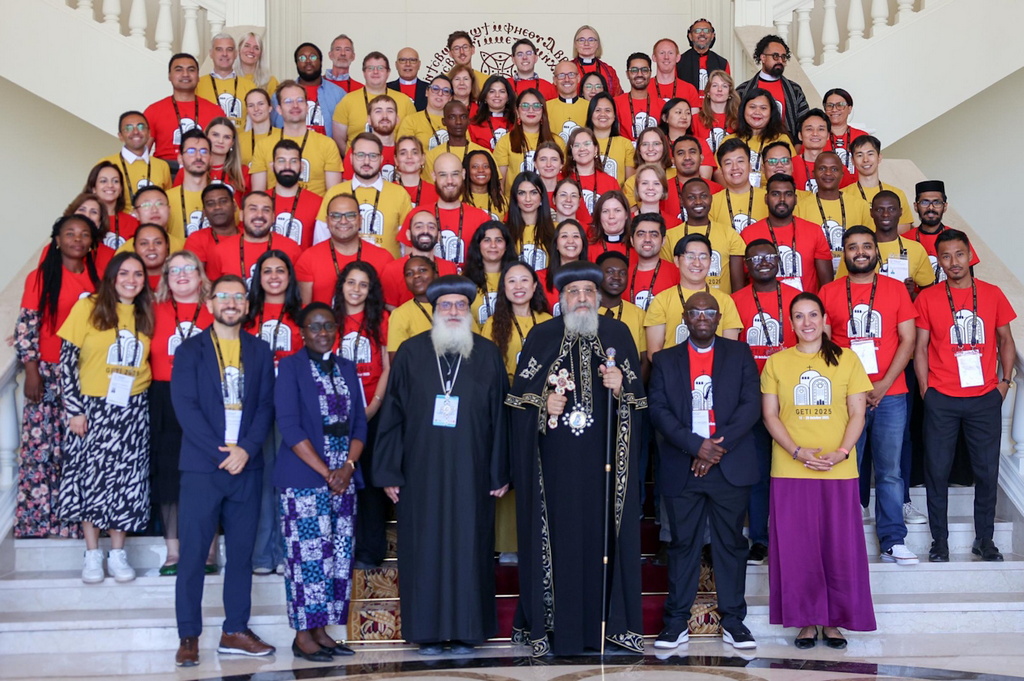
In October 2025, the World Council of Churches held its fourth Global Ecumenical Theological Institute (GETI) in Wadi El Natrun, Egypt on the theme “Where Now for Visible Unity,” bringing together around 65 students for six weeks culminating in the 6th World Conference on Faith & Order. Among these students were five Eastern Orthodox, of which I was the sole convert and sole “Westerner.” Having reached the program’s end, I share reflections on a question that emerged during my participation: Where Now is Visible Unity?
Many may be familiar with the stereotype of the young conservative convert to Orthodoxy. This wasn’t my journey. I found my way through theological studies that led to deep love of Eastern Orthodoxy’s distinct theology. This makes me an outlier in UK Orthodox churches where my socially liberal attitudes can put me at odds with members from the “Old Countries.” Yet there’s general acceptance among Western Orthodox that we’ll have varied ethical beliefs while remaining bonded through Orthodox faith.
Arriving at GETI, my context dramatically changed. At home I’m the socially liberal one in my church and the theologically conservative (Orthodox) one in my Church of England job. Both contexts share enough doctrinal overlap and UK location to enable mutual acceptance. At GETI, however, I confronted two markedly different groupings: liberal Westerners and conservative Orthodox. This divide pervaded both ethics and doctrine—Westerners were liberal in theology and social ethics, while Orthodox were conservative toward both.
With my socially liberal, theologically conservative outlook, I suddenly felt entirely uncomfortable. Unity appeared to be “Binity,” with no place for me in either wing. This became obvious when I discussed doctrine’s importance with fellow Westerners and defended my social attitudes to fellow Orthodox using theological language.
GETI focused primarily on liberation and narrative theologies rather than doctrinal issues, frustrating me early on. When I raised this with non-Orthodox colleagues, responses invariably suggested doctrine only obstructs proper theology—namely, listening to the oppressed. Meanwhile, I fell into defending equal marriage to fellow Orthodox, leading to accusations of playing fast-and-loose with patristic tradition and opening doors to subjectivized interpretation.
I felt lost, with the cultural overlaps enabling my existence at home gone, feeling placeless among Christians gathered to experience unity in the Egyptian desert.
Then two miracles happened.
The first came from an Indonesian Protestant pastor I’ll call G. Seeing my struggle to engage Western colleagues on doctrine’s importance, she asked me to try something. Removing her shoes, she encouraged me to do the same, and we literally swapped shoes, walking laps of the classroom. We giggled at this literal enactment of an old adage, but this sacramental act of reaching out profoundly impacted me. G told me that even when she didn’t understand my perspective, she knew it came from love—and that’s all we need to encounter each other. After the session, when I asked G to pray for me and we spent time together in the Holy Spirit, we both were reduced to tears. A truly life-changing moment of Christian encounter.
Where now is visible unity? In moments when Christians step into each other’s shoes and acknowledge each other in God’s love.
The second miracle came through prayer and reflection on explaining my perspective to colleagues from both traditions. I articulated what I’d subconsciously known: my focus on Scripture, Church Tradition, and doctrine defines both theological and ethical beliefs. If Christians can define where we overlap, we can at least understand why we reach different conclusions on issues like equal marriage while acknowledging both approaches are based on rigorous interpretation of Christian faith. This emerged on GETI’s penultimate night when a Coptic friend (M) explained church tradition to a Protestant. The conversation turned to equal marriage, and M had never heard anyone earnestly defend it as locatable within the Fathers’ theological framework. Our mutual awareness that we both interpret the same Orthodox doctrines (Eastern vs. Oriental) allowed us to listen openly and acknowledge the underlying Christianity of both conclusions.
Where now is visible unity? In agreement on theological bases enabling us to see our underlying relationship’s unity through Christ and Church, even when we disagree on 21st century application.
Regarding GETI and F&O’s theme—Where Now for Visible Unity?—unity appeared further away than expected. F&O felt more retrospective than future-oriented. A particularly frustrating workshop on a common Pascha date had three speakers (Eastern Orthodox, Roman Catholic, Lutheran) agreeing it should be easy to calculate dates and that all churches favor agreement, yet concluded “ordinary Christians don’t really like change so we’ll leave it.” This didn’t go well with listeners; one Lebanese Orthodox woman vocalized the real-world difficulties this causes Christians in her country.
Where now is visible unity? There’s theological agreement. Where now for visible unity? Nowhere—we’re stuck in wait-and-see attitudes even when oppressed brothers and sisters cry out for action.
This was symptomatic of F&O entirely. Forward momentum seemed absent. Despite excellent talks from Cardinal Koch, Tamara Grdzelidze, Miroslav Volf, and others, most plenary sessions offered entry-level liberation theology with limited discussion space. This left no room for momentum toward greater unity. We ended where we started.
I suggest there may have been fear of tackling big issues beyond high-level social action. The liberation theology focus led to easy agreement that genocide and war are wrong, but we lacked opportunity to agree on what we’d do about these issues or even why theologically. Should we remain comfortable to avoid disagreement, or forge ahead knowing disagreement is part of living as family?
M and I disagreed well because we found that though we don’t reach the same ethical conclusions, we base thinking on the same doctrines and Church Tradition. We could disagree and still see each other as faithful Christians within the One Holy Catholic and Apostolic Church. At a conference celebrating 1,700 years since Nicaea, this could have been a genuine opportunity to examine overlapping doctrines grounding all Christian faith, enabling us to move forward where profound disagreement can exist without compromising unity.
Where now is visible unity? F&O throws up a challenge to the contemporary ecumenical movement to reassess its current location and consider how it can forge a new path forward based on our shared faith. Perhaps GETI’s most transformative aspect was hospitality offered by Pope Tawadros II and the Coptic Orthodox Church. The Logos Papal Centre in Wadi El-Natrun was beautiful, testament to bringing the World into the Coptic Church. Throughout our stay, Coptic volunteers made us feel welcome while challenging those of us who take religious freedom for granted. In a place where being Christian can mean professorial persecution, arrest for carrying Bibles, or death for attending church, the faith strength of young Copts was phenomenal.
The highlight was visiting monasteries of Al Baramus and St Macarius. St Macarius has around 130 monks with 2-3 new novices yearly—numbers we can only dream about in the Anglophone world. The Coptic Church connects with youth profoundly and communally. Being Coptic was central to participants’ existence, not incidental. It sets them apart culturally, ethnically, and socially from Egypt’s Muslim majority. Being Coptic connects them to Apostles through St. Mark and to ancient Egyptians through music traced to sixth-century BC temple melodies.
Christianity for Copts isn’t a Sunday hobby—it defines who they are. Their self-awareness remains rooted in ongoing martyrdom. Unlike for Westerners, martyrdom remains a real prospect, and their devotion upholds the Red Witness as paramount virtue.
Where now is visible unity? For Copts, in oneness that comes with being an oppressed minority.
An alternative perspective came from Palestine. Protestant speakers saw Christian duty as survival rather than martyrdom. The dramatic decline of Palestinian Christians to 0.8% demands international support rejecting Israeli State oppression and genocide. Faith connected their people to the outside world through international prayers of solidarity.
Where now is visible unity? For Palestinian Protestants, in prayers from outside their homeland expressing the wider Body of Christ’s love.
Yet our oppressed brothers and sisters lead us into impasse—red witness versus avoiding death. This mirrored the Orthodox-Western theological split among GETI participants.
Deciphering how to address this division is an emerging 21st-century theological challenge, but one thing draws these Middle Eastern churches together: anamnesis. Both demonstrate clear desire for the wider Christian world to remember they exist through prayer. The Palestinians call directly for prayer, while Copts, by hosting GETI and F&O, make concerted efforts toward unity through praying in the same place at the same time.
This solidarity through prayer recalls Psalm 105: “Remember us, O Lord, when you show favour to your people.” This is surely the ecumenical movement’s core aim and simplest answer to where now for visible unity. With the Psalmist we’re called to stand together as one people under God, remembering each other to Him so we can, in Paul’s words, “rejoice with those who rejoice and weep with those who weep.” If we seek visible unity, praying for Christians worldwide regardless of denomination must be the starting point. Let us first remember each other through prayer as diverse members of Christ’s Body, because only when we pray for each other can we review doctrinal differences in humility that comes from mutual recognition before the Lord.
ABOUT THE AUTHOR
 Joshua Townson
PhD Candidate at the University of Oxford