
Source: Public Orthodoxy
by Dr. Mariia Smyrnova
University of Waterloo
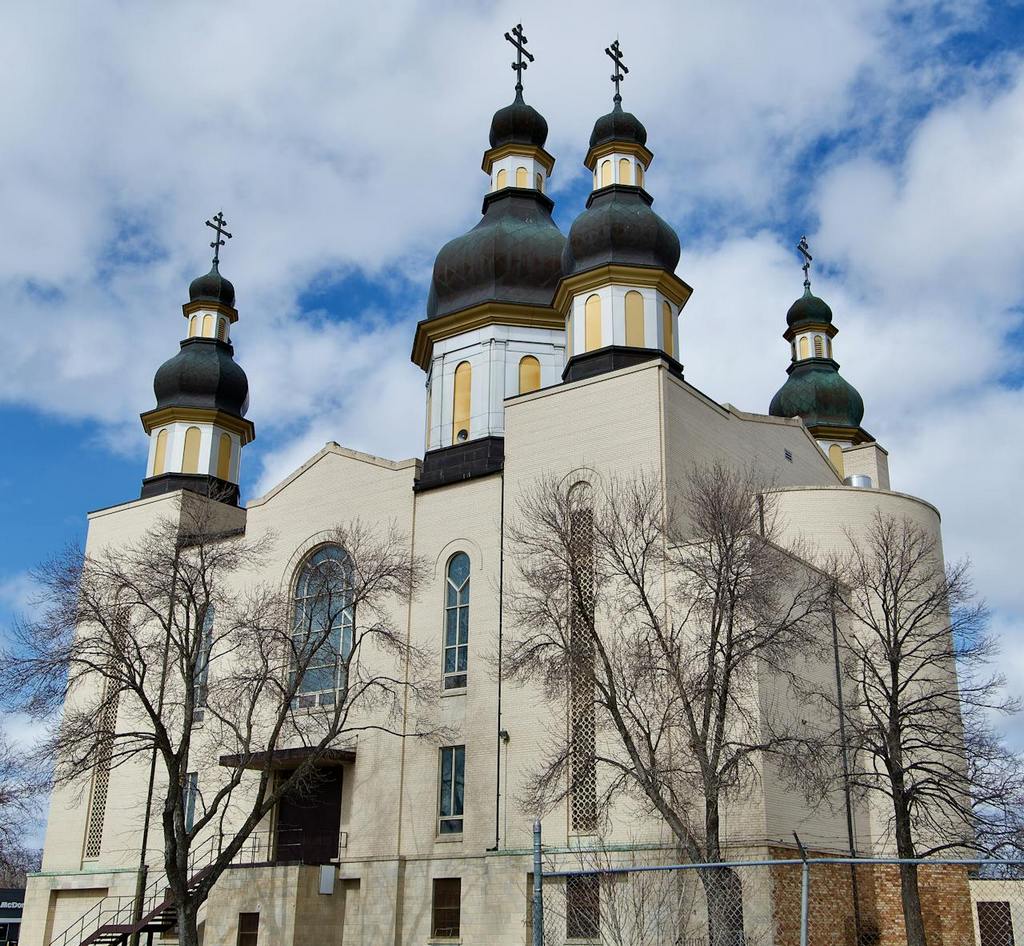
The Quebec government recently introduced a new secular Bill 9, An Act Respecting the Laicity of the State, sparking concern among religious communities. The bill targets daycare workers, prayer spaces, and religious meals, and in particular, it prohibits public employees from wearing visible religious symbols, including crosses, hijabs, turbans, and yarmulkes. It also aims to restrict public prayer and religious practices in universities, such as prayer rooms and providing meals based solely on religious dietary rules, and would pass a requirement to have faces uncovered throughout the daycare system. These changes are not entirely new but rather build on previous laws (Bill 62 in 2017 and Bill 21 in 2019).
I take a closer look at whether the new bill threatens Quebec’s Orthodox Christian community and why the province is pushing stricter secular measures.
Quebec’s Journey to Secularism
Until the 1960s, Quebec was one of the most religious provinces in North America. In 1759, Britain defeated France and assumed control of present-day Canada, allowing the predominantly French-speaking population of Quebec to oversee its own domestic matters. The Catholic Church controlled many of the province’s institutions, and it had significant influence that political leaders could not enjoy. Quebec’s public education system was openly Catholic, alongside a separately-funded Anglican system, and the Church operated most hospitals. To be successful in their career, students needed a recommendation from the parish priest; that’s why for many years, religious minorities experienced discrimination and left school at the age of 15. The sharpening conflict was not merely religious, but it also lay in an unequal power distribution and constant economic clashes between Catholics and Protestants.
Everything changed rapidly during the 1960s in a period known as the Quiet Revolution. Liberal Jean Lesage was elected as Premier of Quebec. He promised to make French-speaking Quebecers “maîtres chez eux” (“masters of their own house”), as English-speaking elites controlled Quebec economy. People supported the secular changes since nobody wanted the Church telling them what to do, whom to marry, and how many kids to have. Broad secularization and legislative reforms significantly diminished the Catholic Church’s influence in education, healthcare, and social services.
The issue of secularism was not the most important on agenda in the ‘70s-‘90s, as debates over Quebec’s independence dominated.
But the 9/11 attacks on the World Trade Center in New York sparked a global reaction against Islam. In the years that followed, Quebec rolled back many of the concessions previously granted to religious groups.
Muslims and the Debate over Bill 9
Secularization in Quebec continues today, driven in part by large waves of immigration over the past decade. The government aims to separate religion from the state, prevent favoritism in hiring based on faith, and limit Muslim proselytism by new Canadians. In a speech, Premier François Legault warned of a radical Islamist threat to Quebec’s identity.
Last year, eleven teachers, mostly of North African background, were suspended from a Montreal elementary school after a government report found that they fostered a harmful environment and avoided teaching subjects such as science and sex education.
Bill 9 also followed recent pro-Palestinian protests, during which demonstrators set up tent cities on university campuses, prayed in parks, or blocked public transit. The bill tends toward removing any religious expression, including Christian, from public spaces, and affirms the religious neutrality of the province.
However, critics argue that this bill targets mainly women of Muslim faith, many of whom work in daycares and as teachers. They say some religious garments are easier hide under regular clothing, such as crosses used in Christianity compared to turbans or hijabs. The Canadian Council of Muslim Women says that people feel alienated by the government’s policies and that some consider it as Islamophobia and xenophobia. Non-Muslim critics call it a “political opportunism” which serves as a distraction from province’s issues with doctors and affordable housing.
Laicité, Conspicuous, and Heritage: What these Terms Mean
Although at first glance the terminology in Bill 9 seems clear, the supposedly interchangeable terms are not equivalent.
Secularism vs. laicité: Whereas “secularism” traditionally refers to separation of church and state (like in France), laicité is a culturally-driven adaptation to its Canadian reality and is about separating religion from the public sphere with the government staying neutral when it comes to religion.
Conspicuous vs. soft symbols: The bill defines “conspicuous” religious symbols as highly visible items that public-sector employees are banned from wearing (hijab, niqab, burqa head coverings, turban, kippah, large crosses), while “soft” symbols are generally permitted (small necklaces or earrings).
Religious vs. Cultural heritage: There are special exemptions for religious expressions that affirm “elements of Québec’s religious cultural heritage.” This wording allows Catholic symbols, like the crucifix, to be interpreted as merely “cultural.”
Impact on Eastern Orthodox Christians
According to Statistics Canada’s 2021 census, around 145,805 people in Quebec identify as Christian Orthodox. The province is home to roughly 46 Orthodox churches, three monasteries, and one skete. Université Laval and Université de Sherbrooke offer programs in Orthodox theology.
For now, municipal councils will decide case by case whether to allow public religious events, respecting Charter rights. The ban is designed to still allow Jewish holidays, Catholic processions, and similar celebrations. Prayer rooms on university and college campuses must close next year, but those in dorms, hospitals, long-term care, and prisons can stay open. Hospital chapels and multi-faith rooms in airports are also allowed.
For Quebec’s Eastern Orthodox population, the new secularism bill may not bring major changes. Worshipers can still pray in hospitals or call a priest for sacraments to a hospital. College prayer rooms can be moved to dormitories.
However, we must also bear in mind that Orthodox symbols may not benefit from the same allowances as Catholic “cultural heritage.” Also, many other open questions remain, just to name a few—about chaplain positions at colleges with theology programs, chapels operation, theological internships for students in MTS and MDiv programs. It’s unclear whether traditional practices like processions around a church in a park, ringing bells at Easter, or making the sign of the cross when passing a church in public transport will be allowed.
Although the law principally regulates public-sector employees and does not extend to private time, each religious tradition contains particular practices that lawmakers frequently overlook. Consequently, scenarios may arise in future in which clergy cannot perform sacraments in shared hospital spaces or could have their vestment and crosses restricted, or the absence of prayer rooms or spiritual care providers will limit one’s access to religious support. Advocates emphasize the importance of considering the spiritual needs of diverse faith communities, while acknowledging that it remains the prerogative of Quebec residents to determine their preferred way of life.
Conclusions
The current debates over laicité and religious expression in Quebec can be seen as a kind of societal “allergic reaction” to its religious past, particularly the centuries-long dominance of Catholicism. This reaction might also reflect a broader shift toward a post-Christian era, where public life seeks to minimize religious influence and privilege neutrality. Balancing the desire for secular uniformity with the recognition of Canadian spiritual and cultural diversity remains one of the key challenges for Quebec.
About the author
 Dr. Mariia Smyrnova
University of Waterloo