
Source: Peter Anderson, Seattle USA
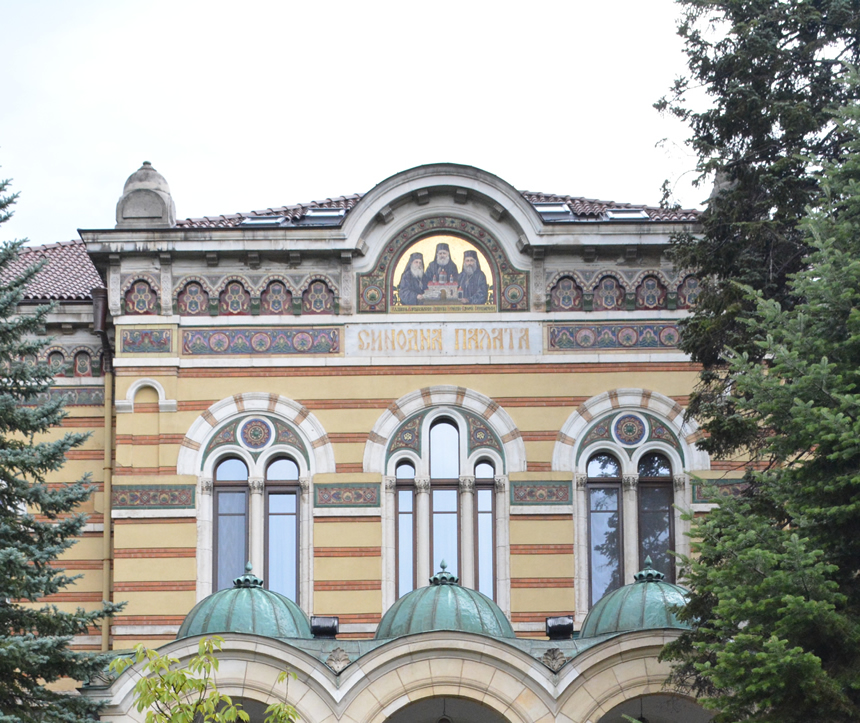
Normally, the election of a new member of the Holy Synod of a Local Orthodox Church would not be considered important news. However, in Bulgaria, it is important. The Holy Synod of the Bulgarian Patriarchate is sharply divided into two wings. One wing favors the Ecumenical Patriarch and the recognition of the OCU. Its primary members are Metropolitans Nikolai, Anthony, Naum, Cyprian, Yakov, and Arseny. The other wing is headed by Patriarch Daniil and does not recognize the actions of the Ecumenical Patriarch in Ukraine. Each new Synod member can have an effect on the future direction of the Bulgarian Patriarchate. Interestingly, Bulgarian society likewise is now divided on various matters. For example, Bulgaria was without an elected government from April 9, 2024, until January 16, 2025. https://sofiaglobe.com/2025/01/16/bulgarias-parliament-votes-zhelyazkov-government-into-office/#google_vignette)
The election of Metropolitan Daniil of Vidin as Patriarch on June 30 created a vacancy for a new metropolitan to head the Vidin diocese. This metropolitan will automatically be a member of the Holy Synod. Under the charter of the Bulgarian Patriarchate, there is a three-step procedure for electing a new metropolitan to head a diocese. https://bg-patriarshia.bg/statute (Articles 83 – 94) The first step is for the Synod to prepare a list of those bishops whom the Synod desires to be candidates for the vacancy. Because of the difficulty of the members of the Synod to decide which bishops would be on the list for the Vidin vacancy, the list was not published until January 14 – more than six months after the vacancy was created. https://bg-patriarshia.bg/en/news/the-holy-synod-determined-the-list-of-bishops-who-are-candid The published list contains the names of eight bishops. One of the candidates, Bishop Vissarion of Smolyan (vicar bishop under Metropolitan Nikolai), requested the Synod to remove his name from the list for health reasons. https://bg-patriarshia.bg/news/pismo-na-smolenskia-episkop-visarion-do-balgarskia-patriarh
In the second step, the Vidin Diocesan Electoral Council elects a “shortlist” of two bishops from the list of bishops provided by the Holy Synod. In the case of the Vidin Council, the Council consists of 30 clergy and laypersons – six persons from each of the five deaneries. In the election, each of the Council members circles the names of two bishops. To be on the shortlist, a bishop must obtain a majority of the votes. On Sunday, February 2, the Council met in Vidin and were able to prepare its shortlist in only one round of voting. The two bishops receiving a majority vote were Bishop Pahomiy of Branitsa with 24 votes and Bishop Gerasim of Melnik with 18 votes. https://bg-patriarshia.bg/news/eparhiyski-izbor-na-dvamata-dostoizbiraemi-episkop-za-nov-vi There were a total of 29 voters. In the third and final step, the Holy Synod will elect one of these two as the new Metropolitan of Vidin. This will occur on Sunday, February 9, absent a valid canonical challenge to the February 2 election.
It is very likely that Patriarch Daniil is pleased with the bishops now on the shortlist. Bishop Pahomiy was rector of the Sofia Theological Seminary “St. John of Rila” from June 2017 to July 9, 2024. Patriarch Daniil, at the first meeting of the Holy Synod following his election as patriarch, chose Bishop Pahomiy to be his “first vicar bishop of Sofia.” https://bg-patriarshia.bg/branitskiyat-episkop-pahomiy This indicates that the Patriarch has confidence in Pahomiy. The second person on the shortlist, Bishop Gerasim, has been the General Secretary of the Holy Synod since September 2014. https://bg-patriarshia.bg/episkop-gerasim-biografia In May 2024 Bishop Gerasim was one of two bishops on the shortlist for the vacant diocese of Sliven. In the election by the Holy Synod, Gerasim lost but one of his supporters was Daniil. https://bg-patriarshia.bg/news/sv-sinod-izbra-znepolskia-episkop-arseniy-za-nov-slivenski-m However, as far as I can determine, neither Pahomiy nor Gerasim has been a very vocal advocate for Moscow as have Daniil and Gavrill.
On January 31, three days before the election in Vidin, Faktor.bg published a long analysis of the forthcoming election in Vidin. https://faktor.bg/bitkata-za-vidinski-vladika-dva-voyuvashti-klana-sluguvashti-na-chujda-strana-shte-opredelqt-badeshteto-na-bpc Although the author obviously has a very strong bias, the article contains a great deal of detail. The title of the article refers to “two warring clans.” The article states that the first choice of Patriarch Daniil for the open position is Bishop Pahomiy and that Daniil is hoping that all of the metropolitans will support Pahomiy. This hope may indicate that Pahomiy, if elected, may choose not to be a member of one of the two “warring clans.”
In another important development in Bulgaria, the National Assembly (parliament) adopted on January 31 a new law which designates the Bulgarian Patriarchate as the sole exponent and representative of Eastern Orthodox, the traditional religion for the country. According to the law, the Bulgarian Patriarchate is the only religious organization that can use the word “Orthodox” in its title. https://www.parliament.bg/bg/news/ID/6181 It appears that the exact text of the law will be available at https://www.parliament.bg/bg/bills/ID/165951 BTA, the Bulgarian state news agency, gives a description of the new law at https://www.bta.bg/bg/news/bulgaria/national-news/825026-balgarskata-pravoslavna-tsarkva-e-edinstven-predstavitel-na-traditsionnoto-za-ba . The description includes the following:
The Parliament adopted on the second reading amendments to the Law on Religious Denominations, which define the autocephalous unified Bulgarian Orthodox Church-Bulgarian Patriarchate (BOC-BP) as the sole exponent and representative of the country’s traditional religion – Eastern Orthodoxy. This text was supported by 186 MPs from all parliamentary groups, and one from “Continuing Change – Democratic Bulgaria” (PP-DB) voted “against”. The name of another religion cannot contain the word “Orthodox”, as well as derivative or similar words, the deputies also wrote in the law. The text was approved by the votes of 173 deputies, 11 deputies from “Moral, Unity, Honor” (MECH) abstained.
The reason for the amendments to the Law on Religious Denominations is a decision of the Supreme Court of Cassation (SCC) of December 16 last year, which ruled on the registration of a religious institution with the name “Bulgarian Orthodox Old-Style Church”. The SCC decision is in connection with a 2021 decision of the European Court of Human Rights in the case “Bulgarian Orthodox Old-Style Church and Others v. Bulgaria”.
Within two months of the entry into force of the provisions adopted today, registered religious denominations and applicants in pending initial registration proceedings are obliged to change their name and statutes in accordance with the amendments and to apply for entry of the change in the register of religious denominations with the status of legal entities at the Sofia City Court, the deputies finally adopted. Registered religious denominations that do not fulfill the above obligation and do not have pending proceedings for the entry of changes resulting from its fulfillment shall be terminated. A subsequent procedure for liquidation and deletion of a religious denomination from the register by the court has also been scheduled. The amendments to the Law on Religious Denominations adopted today enter into force on the day of their publication in the State Gazette.
It is likely that there will be legal challenges to this new law.
In Estonia, the Estonian government submitted to the Riigikogu (parliament) on January 27 a new proposed law relating to religion. The full text of bill, 570 SE, can be read at https://www.riigikogu.ee/tegevus/eelnoud/eelnou/133fc804-5a56-46f8-b595-84cc2a66465f/kirikute-ja-koguduste-seaduse-muutmise-seadus/. I have prepared an English translation (by Google) of the full text. If you desire a copy, please request it by a reply email. The following is one of the key provisions:
3) Section 3 is supplemented with subsection 2-1 in the following wording:
“(2-1) A church, congregation, union of congregations and monastery may not be guided in their activities by a person or association with significant influence located in a foreign country, nor may they be affiliated, by statute, contract, other documents on the basis of which the activities are based, or economically with a religious association, spiritual centre, governing body or spiritual leader located in a foreign country, if the aforementioned spiritual centre, governing body, spiritual leader, person or association:
1) poses a threat to the security, constitutional order or public order of the Estonian state;
2) has supported military aggression or called for war, a terrorist offence or otherwise the unlawful use of armed force or violence, or
3) is in conflict with the generally recognised principles of international law in its activities.”
It appears that this bill suffers from some of the same legal defects under international law as Ukrainian Law 3894. For example, it makes mere affiliation a basis for outlawing a religious organization. Under the bill, it is not necessary to prove that the Estonian religious organization poses a threat but only that the foreign religious organization does. The Estonian Orthodox Church – Moscow Patriarchate has issued a press release that the bill violates its fundamental rights. https://et.orthodox.ee/news/moskva-patriarhaadi-eesti-oigeusu-kirik-kirikute-ja-koguduste-seaduse-muutmise-eelnou-ohustab-usuorganisatsioonide-pohioigusi/ In this regard, it cites the legal conclusions of the UN Office of the High Commissioner for Human Rights with respect to Ukrainian Law 3894. In response to the concerns expressed by a Tartu court to its name, the Church has agreed to change its registration to a new name – the Estonian Christian Orthodox Church. https://ru.orthodox.ee/news/v-tallinne-sostoyalas-tretya-sessiya-sobora-epcz-mp/
Lastly, an appeal has been made by a group of clergy and laity who remain in Russia but oppose the war in Ukraine. https://noek.info/hintergrund/3646-christus-und-dem-evangelium-treu-bleiben (German translation of the Russian original)
Peter Anderson, Seattle USA