
Close Menu
    Facebook X (Twitter) Instagram
    Trending
    • #Giving Tuesday – Support Orthodox Christian Laity!
    • Together We Thrive: OCL Annual Conference & Year-End Giving Campaign
    • Archon Officers Participate in Historic Pilgrimage to Nicaea
    • Ecumenical Patriarch Bartholomew and Pope Leo recite the Creed together during 1700th Anniversary of Nicaea
    • Mission Center Board Convenes
    • The “Orthodoxy as Masculinity” Narrative
    • Walk with Us: Orthodox Volunteer Corps (OVC)
    • St. John Chrysostom’s Legacy: From Antioch to America
    Orthodox Christian Laity
    Facebook X (Twitter) YouTube
    • Home
    • OCL
      • About OCL
      • Leadership
      • OCL News
      • OCL Publications
      • Focused Study and Research Topics
      • OCL Archives at DePaul University
    • Orthodox News & Links
      • Orthodox News Stories
      • Headlines & News Archives
      • Governance & Unity
        • Governance Top Stories
        • Governance & Unity Essays
        • Grassroots Unity in Action
      • OCL Forums
      • Orthodox Christian Laity News
      • Web Links
    • Audio & Video
      • Audio Index
      • Video Index
    • Contact
    • Make a Donation
    Orthodox Christian Laity
    You are at:Home»Orthodox News»Orthodox Leader Deepens Progressive Stance on Environment

    Orthodox Leader Deepens Progressive Stance on Environment

    0
    By Webmaster on December 3, 2012 Orthodox News, Orthodox News Top Stories
    Share
    Facebook Twitter LinkedIn Pinterest Email Telegram WhatsApp Copy Link
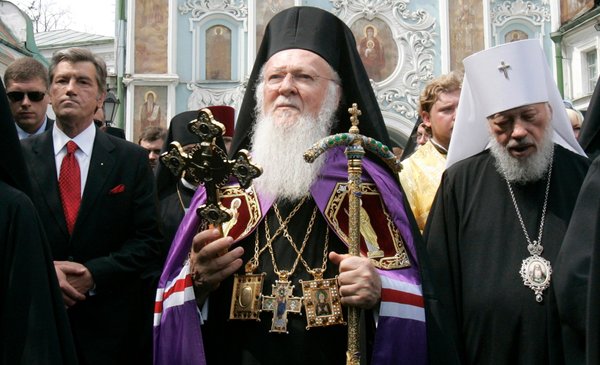
    Ecumenical Patriarch Bartholomew I of Constantinople, center, in 2008.
    Ecumenical Patriarch Bartholomew I of Constantinople, center, in 2008.

    Source: The New York Times

    By MARLISE SIMONS

    Originally Published on December 3, 2012

    At a conference near Istanbul last June, the chimpanzee expert Jane Goodall spoke about the endangered habitat of what she called “our closest relatives.” Underlining the evolutionary link, she described her encounter with a senior male ape who had a “beautiful white beard.”

    With a smile, she turned to the 72-year-old man in the front row and added, “Very much like yours.”

    The man with the long white beard was Ecumenical Patriarch Bartholomew I of Constantinople, the spiritual leader of the world’s Orthodox Christians. Fortunately, he is known for his easy, affable manner, and he joined the laughter that followed.

    But his commitment to environmental activism is deeply serious, earning him the nickname the Green Patriarch. He has preached that caring for the environment is a religious imperative, and for more than a decade, he has made a point of bringing together theologians and scientists like Dr. Goodall for debates and briefings.

    This year’s reports of record melting of the earth’s ice sheets and extreme droughts have given a new urgency to Bartholomew’s messages about the degrading natural world. While economists and politicians prescribe more growth and consumption to overcome economic crises, the patriarch insists that the real crisis is cultural and spiritual, and can be overcome only by moving away from rampant materialism.

    All human beings, he has said, should draw a distinction “between what we want and what we need.”

    In September, he published a strongly worded encyclical calling on all Orthodox Christians to repent “for our sinfulness” in not doing enough to protect the planet. Biodiversity, “the work of divine wisdom,” was not granted to humanity to abuse it, he wrote; human dominion over the earth does not mean the right to greedily acquire and destroy its resources. He singled out “the powerful of this world,” saying they need a new mind-set to stop destroying the planet for profit or short-term interest.

    Other religious leaders, including Pope Benedict XVI, the Dalai Lama and the archbishop of Canterbury, have also called for responsible stewardship of the environment. But Bartholomew has gone further than most; some theologians call his stance revolutionary.

    “Traditionally in Christianity, sin was what you did to other humans,” said Kallistos Ware, a prominent Orthodox theologian based in Britain, “but Bartholomew insisted that what you do to the animals, the air, the water, the land can be sinful, not just folly, and that was quite a change.”

    Aides say that Bartholomew’s embrace of environmental issues is part of his agenda to modernize a deeply conservative church that can seem distant and insular, with its focus on long Byzantine rituals and mysticism. Speaking in defense of nature as a creation of God fits church teachings, and perhaps just as crucial, his aides say, it can also transcend the rivalries and nationalist rifts of the Eastern Orthodox Church. As a federation of 15 independent national churches, it lacks the central authority of, say, the Vatican.

    Still, Bartholomew’s seat, established 1,700 years ago, holds primacy among the world’s 300 million Orthodox Christians. As “first among equals” in the church, he acts as convener and can set the agenda for discussion.

    Not all church prelates are inspired by his efforts to enlighten the faithful on the environment. “The patriarch is going against the current in much of Orthodoxy,” said the Rev. John Chryssavgis, an archdeacon of the church and adviser on environmental issues. “He has to preach and promote this constantly.”

    Aboard a ferry steaming toward Istanbul, Father Chryssavgis pointed out a sprawling church-owned building perched atop of the island of Buyukada. A former orphanage, it was seized by the Turkish government but returned to the church recently. Now empty and in disrepair, it will become an interfaith study center for the environment if Bartholomew has his way.

    “He wants a permanent institution,” Father Chryssavgis said. “When he passes on, there may not be the same concern for the environment.”

    The impact of the patriarch’s many sermons and conferences is difficult to gauge. There has been wide interest in a new book, “Greening the Orthodox Parish,” said Frederick Krueger, its American editor. Subtitled “A Handbook for Christian Ecological Practice” and with a preface by Bartholomew, it covers theology, special liturgies and prayers as well as science papers and practical advice.

    Numerous Orthodox monasteries and churches in Eastern Europe and the United States have switched to solar energy in recent years.

    Among them is the Chrysopegi monastery on the Greek island of Crete, where the nuns use the environmental texts of the patriarch and other theologians in their teachings.

    “More and more young people are coming to our courses,” Mother Theocheni, the abbess of the monastery, said at the conference at Halki, near Istanbul. “They come to find meaning. Many seem to find inspiration in ecology. It’s been growing fast for the last 10 years.”

    A version of this article appeared in print on December 4, 2012, on page D3 of the New York edition with the headline: Orthodox Leader Deepens Progressive Stance on Environment.

    Share. Facebook Twitter Pinterest LinkedIn Tumblr Email WhatsApp Copy Link
    Previous ArticleRussians approve of priests in elections but won’t vote for them
    Next Article National Philopotochos Society Achieves Historic Milestone, a Permanent Home at 126 East 37th Street

    Related Posts

    December 1, 20251 Min Read

    Together We Thrive: OCL Annual Conference & Year-End Giving Campaign

    November 28, 20255 Mins Read

    Archon Officers Participate in Historic Pilgrimage to Nicaea

    November 28, 20251 Min Read

    Ecumenical Patriarch Bartholomew and Pope Leo recite the Creed together during 1700th Anniversary of Nicaea

    Leave A Reply Cancel Reply

    This site uses Akismet to reduce spam. Learn how your comment data is processed.

    Sign the Declaration for Orthodox Unity – click here…

    Register for OCL's Annual Conference - October 11, 2025

    Sign the Declaration for Orthodox Christian Unity

    Enter the Slogan Contest

    Share this page
    DISCLAIMER

    All articles represent the views of the authors and  not necessarily the official views of Orthodox Christian Laity (OCL). They are posted to encourage thoughtful discussion on topics and concerns relevant to Orthodox Christians living in a pluralistic society. OCL encourages your comments.

    Stay Informed!

    Subscribe to our Newsletter

    WE WELCOME YOUR INPUT AND SUPPORT!

    Your donation impacts and helps advance the unity of the Orthodox Church of America.

    DONATE NOW

    THANK YOU FOR YOUR CONTINUED SUPPORT!

    Upcoming Events
    Notice
    There are no upcoming events.
    Recent Comments
    • George Warholak on Ecumenical Patriarch Bartholomew and Pope Leo recite the Creed together during 1700th Anniversary of Nicaea
    • Dn Nicholas on Ecumenical Patriarch Bartholomew and Pope Leo recite the Creed together during 1700th Anniversary of Nicaea
    • Dana C Purnell on Ethiopian Bible is the oldest and complete bible on earth
    • Peter on Abp. Elpidophoros installed as National Council of Churches board chair
    • james wiliams on Video: A Vision for Orthodox Christianity’s Future in North America
    • Veras Coltroupis on Abp. Elpidophoros installed as National Council of Churches board chair
    • Joe Forzani on Ancient Christianity (Free Course) – Hillsdale College Online
    • Joe Forzani on Ancient Christianity (Free Course) – Hillsdale College Online
    • sandy myers on Ethiopian Bible is the oldest and complete bible on earth
    • Peter on Unity in the Orthodox Church
    OCL Archives Online
    Project for Orthodox Renewal
    renewal-resize
    OCL Digital Newsletter

    Subscribe to our Newsletter

    MAKE A DONATION

    Sign the Declaration for Orthodox Christian Unity

    Facebook
    Twitter
    YouTube

    St. Symeon the New Theologian and St. Photini are the Patron Saints of OCL

    footer-fnl

    Orthodox Christian Laity
    PO Box 6954

    West Palm Beach, FL · 33405
    561-585-0245

    ocladmin@ocl.org (or) orthodoxchristianlaity@gmail.com

    Sponsored by Ann Souvall in memory of husband George

    DISCLAIMER: All articles represent the views of the authors and  not necessarily the official views of Orthodox Christian Laity (OCL). They are posted to encourage thoughtful discussion on topics and concerns relevant to Orthodox Christians living in a pluralistic society. OCL encourages your comments.

    ©2025 Orthodox Christian Laity (OCL) ·  Login

    Type above and press Enter to search. Press Esc to cancel.