
Source: Orthodox Observer
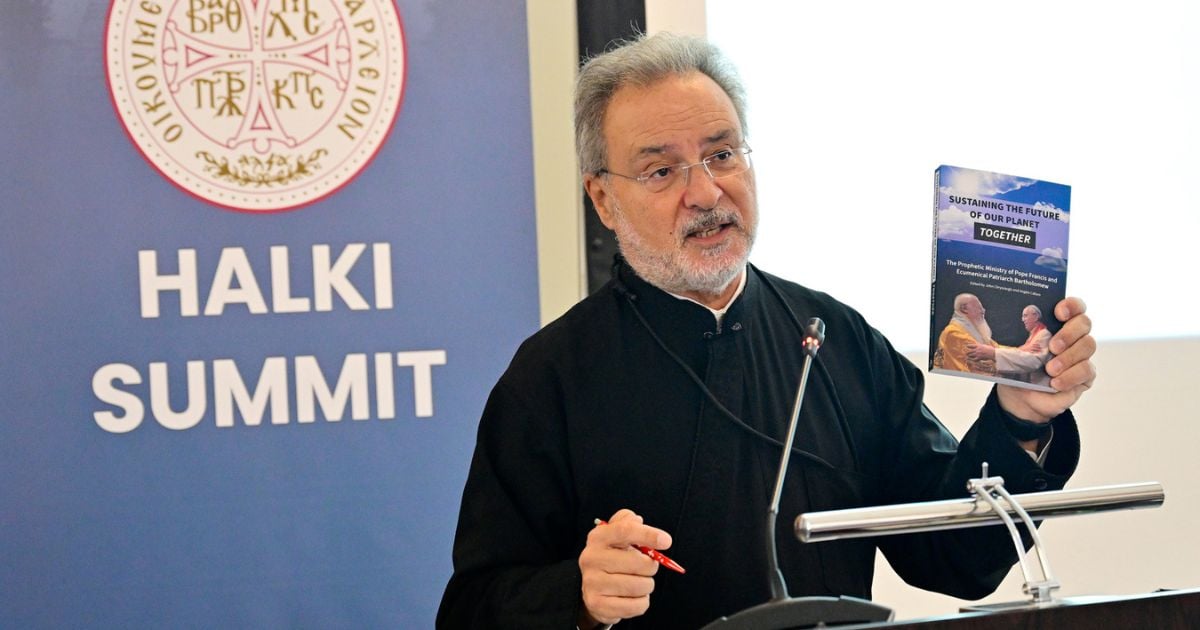
Rev. Dr. John Chryssavgis, Archdeacon of the Ecumenical Throne, is currently Executive Director of the Huffington Ecumenical Institute at Holy Cross School of Theology, where he is Professor of Theology. He also serves as theological advisor to His All-Holiness Ecumenical Patriarch Bartholomew. The author of numerous books on patristic theology and contemporary issues such as climate change, his most recent publications include Creation as Sacrament: Reflections on Ecology and Spirituality (Bloomsbury Publishing, 2019) and The Letters of Barsanuphius and John: Desert Wisdom for Everyday Life (Bloomsbury Publishing, 2022).
In this piece, Ben Malian, a contributing writer to the Orthodox Observer, interviews Fr. John about Orthodoxy and ecology, and His All-Holiness Ecumenical Patriarch Bartholomew’s awarding of the Templeton Prize.
Ben Malian is a student at Holy Cross School of Theology, where he works as a graduate assistant at the Huffington Ecumenical Institute.
Ben: Fr. John, thank you for taking the time to speak with me. Let’s begin with a basic but burning question: What does ecology have to do with Orthodoxy? From your own experience as a professor of patristics, widely regarded for your scholarly contributions to the field of medieval monastic spirituality, what first drew your attention to the well-being of the natural world?
Fr. John: I recall traveling back from Oxford to Sydney after completing my doctoral studies with the late Metropolitan Kallistos (Ware) and wondering how I could possibly relate, let alone integrate, my reading of the classics of desert spirituality in early Egypt and Palestine with the secular, seemingly godless Australian society. As the plane flew several hours over the vast, remote, and empty Australian outback, I realized that the answer potentially lay in the story of the Australian desert, the mystery of the Aboriginal Dreamtime and its spiritual beliefs related to “mother earth.”
So, my first goal was to learn about the history of this “new world” of Western discovery through the story of the ancient land and its first inhabitants. In my desire to understand the meaning behind the heart of the desert and why all the major cities of Australia emerged on the coastal margins—as if by some strange, centrifugal force—I developed close friendships with natives, artists, and historians. These helped me to discern the spiritual perspectives of the land—what native cultures refer to as “mother earth” and where the second chapter of Genesis also claims that humankind derived from. As a result, my book, The Desert is Alive: Dimensions of Australian Spirituality (1990), became the first endeavor to view the history of Australia through the lens of the desert.
Ben: Thirty-five years later, you now serve as Archdeacon of the Ecumenical Throne and theological advisor to His All-Holiness Ecumenical Patriarch Bartholomew on environmental issues. Across roughly that same span of time, the Ecumenical Patriarchate emerged at the forefront of faith-based engagement with the findings of modern science, particularly in the field of ecology. His All-Holiness even earned an affectionate moniker, the “Green Patriarch,” for personally spearheading this unprecedented and frankly unparalleled development. How did your work with the Ecumenical Patriarch begin, and, as his advisor, what would you say are the guiding themes of his “green” ministry?
Fr. John: Well, my own reckoning with the “Dreamtime” was occurring in the late 1980s, around the same time as the Ecumenical Patriarchate was initiating the yearly Day of Prayer for the Environment. Then, a series of events brought me into close contact with His All-Holiness, then Metropolitan Bartholomew of Philadelphia and the closest coworker of the late Ecumenical Patriarch Demetrios (+1991). But perhaps the most pivotal of these was my work beside him at the Seventh General Assembly of the World Council of Churches in Canberra, where he led the patriarchal delegation. I had the privilege of sitting beside him for two weeks in 1991. It was at that time that I first recognized and admired his commitment and dedication to sustaining and raising the profile of our church on the ecumenical and international levels. I was also deeply impressed and ultimately influenced by his tireless and persistent work ethic. That same year, I accompanied my ordaining Archbishop Stylianos of Australia to the funeral of Patriarch Demetrios, after which Bartholomew was elected Ecumenical Patriarch.
The origin of the label “Green Patriarch” is debated. Some, mostly in America, like to associate it with the visit of His All-Holiness to the United States in 1997, when he was welcomed to the White House and Al Gore referred to him by that title. Others, mostly in Europe, claim that Bartholomew was dubbed “Green Patriarch” after the successful, inaugural ecological symposium that traveled by ship from Athens to Patmos in 1995. Either way, there is no doubt in my mind that no other global religious leader has placed creation care at the very center of his ministry.
And the reason for this recognition is quintessentially theological. The church is not involved in ecological matters because it is prophetic or because it seeks to be modern. The unfortunate reality is that the church came rather late and quite reluctantly to the table of the climate crisis. It is science that long led the way on this issue. Nor is the church involved in environmental concerns because it is fashionable or political. That would be a betrayal of its faith in the message of the Gospel. And we have seen in recent years that “green issues” may be “politically correct,” but they are hardly socially convenient. The church should care about the environment because of its deeper theological teachings and authentic spiritual conviction.
As the patriarch has repeatedly stated, this is not primarily a secular or scientific program, but an inherently spiritual and liturgical ministry. In fact, all of the initiatives and activities of the church are an applied ecology. What we are called to do is not so much to raise awareness about or respond to ecological challenges, but rather to understand and practice the fundamental principles and articles of our faith. Creation care is not a modern notion or phenomenon. It is what we profess as Christians.
Ben: Ecumenical Patriarch Bartholomew has been honored with countless awards and commendations for pioneering this theological approach to environmental ministry. This September, he will travel to the United States to accept the prestigious Templeton Prize awarded by the John Templeton Foundation. What is the Templeton Prize and what does it mean for His All-Holiness to be named its 55th recipient?
Fr. John: There are indeed a number of awards and recognitions, as well as honorary degrees, that have been bestowed on the Ecumenical Patriarch over the years for his environmental service. I was in attendance when he received the Sophie Prize in Norway in 2002. Among other awards, he was proclaimed United Nations “champion of the earth” in 2004. And it was an immense honor to see him acknowledged as one of Time magazine’s “most influential people in the world” in 2008.
However, without a doubt, receiving this year’s Templeton Prize is by far the greatest commendation of and tribute to the work that Ecumenical Patriarch Bartholomew has achieved over a lifetime of ministry. Twenty years ago, there were efforts at our Archdiocese to nominate the patriarch for the Templeton, but they went unanswered. Then, some eighteen months ago, I approached His All-Holiness for his blessing to resubmit an application, because I believed that there was a far stronger case for such a nomination after thirty-five years of tireless and relentless environmental leadership. The patriarch consented, but insisted that this should be the final attempt, and the rest is history.
I must express my sincerest gratitude to those who assisted me in this process by submitting and supporting the nomination, especially Prof. Eric Priest (University of St. Andrews), Dr. Jane Goodall (Jane Goodall Institute), Prof. Jane Lubchenco (former director of NOAA), the Most Rev. Dr. Rowan Williams (former Archbishop of Canterbury), and Dr. Gayle Woloschak (Northwestern University).
Ben: You have worked alongside His All-Holiness at various high-level conferences, symposia, and international summits on the environment, many of which, in fact, you played an instrumental role in organizing. Certainly, you have crossed paths with plenty of prominent individuals over the years: powerful politicians, venerable faith leaders, pioneering scientists, renowned authors, the list could go on. Who are some of the more inspiring people you have encountered in your time with the Ecumenical Patriarch?
Fr. John: The most inspiring, without a shadow of doubt, is Jane Goodall, the renowned primatologist and United Nations messenger of peace. I first reached out to invite her to the inaugural Halki Summit in 2012, a new series of ecological conferences organized by the Ecumenical Patriarchate, and she has since become a precious friend. When I began my new ministry in 2023 as executive director of the Huffington Ecumenical Institute at our theological school in Boston, Jane happened to be in Boston and accepted to visit our campus, where she addressed a large gathering immediately prior to her departure for New York.
Another inspirational person is Bill McKibben, whom I am also fortunate to count as a friend. Bill is an extraordinary author and journalist, who was the first to raise awareness about the climate crisis with his first book, The End of Nature, published in 1989. Bill works out of Middlebury College in Vermont and has also been involved in the Halki Summit series.
Ben: The individuals you just highlighted—they are certainly not Orthodox, and perhaps not even explicitly Christian in their professional approach. Nevertheless, they are admirers of the Ecumenical Patriarch, dear friends of yours, and committed collaborators in realizing our Church’s contemporary mission. In general, what do you think the non-Orthodox world recognizes in the Ecumenical Patriarch’s environmental ministry that evokes such a uniformly positive response from an otherwise diverse and oftentimes divergent array of perspectives?
Fr. John: I would prefer to locate the answer in the individuals themselves, rather than in anything we may pride ourselves in doing as Orthodox. The truth is that Goodall and McKibben are deeply convinced and committed to what they believe and profess. They literally “walk the talk.” And what they discern in the work of the patriarch is the potential and power of religion to influence attitudes and behavior across communities and societies. It is the recognition that the world of faith can prove a transformative ally in addressing issues of social justice, economic imbalance, and political corruption. There is a sense of common concern and common responsibility.
The problem is not how others perceive the role of Orthodox Christianity, but the fact that we Orthodox are unaware of our own indebtedness to our fundamental doctrines and spiritual treasures. It is disappointing to witness the patriarch’s call to pray for and protect the natural environment finding little or no resonance within our own churches because some leaders have chosen to politicize the word “environment.”
Even where Orthodox Christians embrace the patriarch’s message, it is usually adopted as an afterthought. How many of our clergy preach about the environment as an integral part of their pastoral purview? How many of our theology professors include the environment in their classes on scripture, doctrine, liturgy, and spirituality?
Ben: In your book, Creation as Sacrament, you go a long way towards recovering some of those neglected teachings and treasures. Specifically, you identify three “cardinal” values or symbols of the Orthodox faith: icons, liturgy, and ascesis. In your opinion, which of these elements best encapsulates the uniquely Orthodox contribution to reconciling scientific findings with religious faith?
Fr. John: We Orthodox like to blame Western churches for their action-oriented teaching. The problem is that we Orthodox seem to obsess, sometimes with a dose of narcissism, about our “orthodoxy” or authenticity. It is regrettable that more energy and time are spent debating theological responses to creation care than encouraging comprehensive action at the parish level.
I observed this especially during the pandemic, when people’s response to COVID-19 proved a good indicator of how insecure we are in our faith and how intimidated we are by science. In the face of countless deaths, we Orthodox appeared to be more concerned about threats to the church, liturgy, and communion than the safety of our parishioners.
But in answer to your question, I would say that all three of the above symbols “work” if they assist and encourage people to review their attitudes and actions related to material things and environmental resources. And none of them “work” if they fail to transform our hearts and minds, if they contribute to abstract discussion alone. In my book, I adopt those basic principles of our tradition—icons, liturgy, and ascesis—as a way of reminding people that creation care is part and parcel of Orthodox theology and tradition. The last two have also played a prominent part in the encyclicals of the Ecumenical Patriarchate for September 1st as the annual Day of Prayer for the Environment since the days of Patriarch Demetrios. But there are countless others that one can harness in our obligation and vocation to care for God’s creation, that bridge the gap between faith and science.
Ben: What role, then, does—or, better yet, should—religious dialogue, both inter-Christian and interfaith, play in implementing an Orthodox approach that truly “works?”
Fr. John: You asked me about labels and symbols. The crucial question is not which terms we choose; we Orthodox have refined these over two millennia. The critical challenge is how we practice what we preach. How do live out what we claim and proclaim? Not just in our liturgical services or personal prayers, but in our daily lives and in our interactions with other people.
Your readers may be aware of a document officially commissioned some time ago by the Ecumenical Patriarchate in order to formulate general parameters and guiding principles for the role of the Orthodox Church as well as the responsibility of Orthodox Christians in the modern world. The document, entitled For the Life of the World: Toward a Social Ethos of the Orthodox Church (Holy Cross Orthodox Press, 2020), offers a sustained and sensitive pastoral approach to critical and controversial issues, with an entire section dedicated to “Science, Technology, and the Natural World.” Its diverse contents also address the role of the church in the public square, the course of human life, the challenge of social justice, the tragedy of war, and the importance of ecumenical dialogue. In brief, it sketches the profile of an Orthodox ethos.
This, as I see it, is the role of the Huffington Ecumenical Institute: to offer students (and a wider audience) the tools for living out an Orthodox ethos or phronema beyond the classroom and outside the liturgy. And this can only occur through encounter and in dialogue with other churches and faiths, as well as with other scientific disciplines and social sectors. For example, this past year, we were delighted to offer the first ever course at Holy Cross School of Theology (and, in fact, at any Orthodox seminary) on theology and ecology. And this fall, in partnership with the Pan-Orthodox Concern for Animals, we have established an international essay competition on respect and responsibility for animals for students of Orthodox seminaries.
As Orthodox Christians, we are never isolated; and when we are, we lose our own authenticity. It is only in contact—and even in conflict—with others that we preserve and advance our identity. The question is: Will we hide the lamp, or place it on a lampstand (Mt. 5.15)?
Ben: If you were to suggest a handful of essential texts that every Orthodox Christian should read to gain a deeper appreciation of our “sacramental worldview,” what would they be and why?
Fr. John: From a theological and liturgical perspective, I would propose Fr. Alexander Schmemann’s For the Life of the World: Sacraments and Orthodoxy, alongside Fr. Vasileios’ Hymn of Entry. Published in the early 1960s and the early 1970s respectively, these have been influential in shaping my spiritual and ecological worldview. They are also the earliest contemporary writings that present a vision of the world perceived as a sacrament.
Metropolitan John (Zizioulas) of Pergamon also first broached the subject of creation and the natural environment in the late 1960s in a small article that first appeared in Greek and was later expanded to a series of three lectures on “Preserving God’s Creation” delivered at King’s College, London, in the late 1980s. Metropolitan John’s ecological writing focused captivatingly on creation as “cosmic liturgy” and on human beings as “priests of creation.” With Dr. Nikolaos Asproulis, I have edited a number of his ecological essays in Priests of Creation: John Zizioulas on Discerning an Ecological Ethos (Bloomsbury Publishing, 2021).
Finally, I would be remiss if I did not include the groundbreaking work of Philip Sherrard, who is also one of the principal translators of The Philokalia along with Metropolitan Kallistos Ware. I was humbled to secure Sherrard’s last book, Christianity: Lineaments of a Sacred Tradition, for Holy Cross Orthodox Press back in 1998, just after arriving at Holy Cross School of Theology from Australia. While sometimes excessively critical and harsh on Western thought and technology, Sherrard’s trilogy—The Rape of Man and Nature (1987), The Sacred in Life and Art (1990), and Human Image World Image (1992)—is nevertheless innovative and provocative about the way we perceive and treat the world.
Ben: Before we conclude, tell us something every Orthodox Christian can do in their daily life to transform their relationship with the non-human, natural world. How exactly do we begin to fulfill our essential calling as “priests of creation?”
Fr. John: In a word or two, I would say “Be Attentive!” It’s what the deacon repeatedly exclaims in Orthodox liturgies. It’s a call to concentrate, to focus! It is also the quintessential concept used in advice offered by the Desert Fathers and Mothers: “Nepsis!” Which means: Vigilance!
In other words: Pay attention! Be alert! Notice what is going on around you! Consider the origins of what you purchase! Read the labels of your groceries! Be alert to the causes of things that make you feel uncomfortable, like poverty, homelessness, drug addiction, human trafficking! Participate in what is going on around you! Don’t be disconnected and, certainly, don’t feel complacent. You aren’t a passive observer; you’re an active contributor. You’re either healing or hurting other people and global conditions. When it comes to preserving the balance of creation, it’s a matter of choices and lifestyles that will facilitate respect for our Creator’s creation and preserve it.