
 Source: The Church Messenger
By Protopresbyter Lawrence Barriger
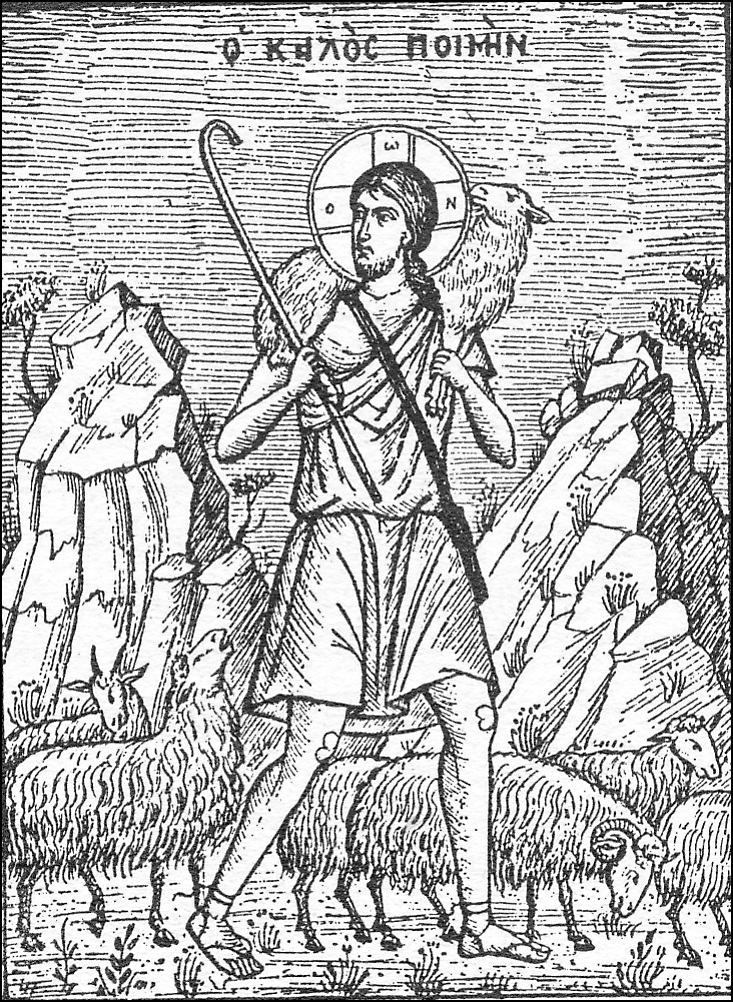
There is a story told about a group of pilgrims who were touring the Holy Land with a guide who was a native of the region. The guide was explaining how, since time immemorial, the shepherd did not walk behind his sheep but in front. The sheep would follow him wherever he would lead, just as the Lord describes Himself as the “Good Shepherd” in the Gospel of St. John: “…the sheep hear his voice; and he calls his own sheep by name, and leads them out. And when he puts forth his own sheep, he goes before them, and the sheep follow him, for they know his voice” (John 10:3-4). As the guide finished this explanation, the group laughed when they saw a man walking behind a flock of sheep and driving them along with a stick. Someone commented to the guide, “I thought you said the shepherds here always lead the sheep; why is that man walking behind and driving them forward.” The guide answered, “Because he isn’t the shepherd but the butcher!” “I am the Good Shepherd; I know My sheep, and my own know me” (John 10:14).
The English word, pastor, is borrowed directly from the Latin word ‘pastor’, meaning a shepherd. Bishop John of blessed memory once stated, “There are too many pastors for the wok that is being done and not enough for the work that needs to be done.” What is the work that needs to be done? “So when they had dined, Jesus said to Simon Peter, ‘Simon, son of Jonas, do you love Me more than these?’ He said unto Him, ‘Yes Lord; You know that I love You.’ He said unto him, ‘Feed my lambs.’ He said to him again the second time, ‘Simon, son of Jonas, do you love Me?’ He said unto Him, ‘Yes, Lord; You know that I love You.’ He said unto him, ‘Feed My sheep.’ He said unto him the third time, ‘Simon, son of Jonas, do you love Me?’ Peter was grieved because He said unto him the third time, ‘Do you love Me?’ And he said unto Him, ‘Lord, You know all things; You know that I love You.’ Jesus said unto him, ‘Feed My sheep’” (John 21:15-17).
The Lord did not say to Peter, “be a great liturgist, discuss theology, rule over the faithful, be a great scholar, dress strangely, have long prayers, shun the world” nor any of the other things that often typify the “work that is being done.” He says simply, “Feed My sheep.”
It is easy for all of us to forget that the task of the priesthood is to nourish the faithful of the Church, to “Feed My sheep.” There is simply no other way for the priest to show his love for Christ than by showing it for the people for whom Christ died.
The frustration with our own failures in the spiritual life has led many to embrace the delusion that if we look authentically Orthodox, if we have the correct icons, singing, fasting and services, God’s grace will somehow enter into us. In this scheme of things, the services of the Church and prayer itself is reduced to some magic formula offered with the hope that God will grant us, not what He has desired for us, but what we have desired for ourselves. If we fail, we believe that it is simply because we have not yet found the right formula to unlock the door.
In our times of spiritual emptiness, one of the greatest temptations for clergy is to look romantically at the great elders and spiritual fathers of times past and imagine what it would be like if we could only have the gifts that they had. What we fail to realize is that they received these gifts after long periods of intense spiritual labor, and they knew that the gifts they had were of God and not of themselves. We often give to ourselves, in our imaginations, a cheap and easy grace, which springs, not from a desire to imitate the lives and works of these Saints, but simply their appearance. The ministry of spiritual direction in the Orthodox Church is one that proceeds, not from the grace we give ourselves, but from the Holy Spirit: “The wind blows where it wills, and you hear the sound of it, but you cannot tell where it comes from, and where it goes to: so is every one that is born of the Spirit” (John 3:8).
No one can study to become a staretz or “elder” or even a “spiritual father.” Those who announce that they are such and seek to impose their will upon members of their parish, intruding into personal lives and demanding an accounting of absences from services and so forth, have fallen victim to the “lust for power” that St. Ephraim speaks of in the Lenten Prayer.
It is the butcher who drives the sheep; the shepherd who leads them.
A brother asked Abba Poemen: “Some brothers live with me; do you want me to be in charge of them?” The old man said to him: No, just work first and foremost, and if they want to live like you, they will see to it themselves.” The brother said to him, “But is it they themselves, father, who want me to be in charge of them?” The old man said to him, “No, be their example, not their legislator” (The Sayings of the Desert Fathers).
The tradition of the Church teaches the importance for each of us to have a helper in the spiritual life. However, the idea of blind obedience or domination is foreign to the life of the Church. Those who would feed the sheep of Christ must do so first by example and only secondarily by their words.
In North America, the person who will serve as a spiritual father most often will be our parish priest. St. John of Kronstadt, the famous “pastor of all Russia,” expressed his view of the pastor in these words that carry a message for both priests and faithful today: “A priest is a spiritual physician. Show your wounds to him without shame, sincerely, openly, trusting and confiding in him as his son; for the confessor is your spiritual father, who should love you more than your own father or mother; for Christ’s love is higher than any natural love. He must give an answer to God for you.”
The Lord commands Peter and all who follow in his footsteps, “Feed My sheep.” Those who are called to be the pastors or shepherds of the Lord must lead the flock of the faithful by being witnesses in their own lives to the Good News of forgiveness through the Cross of Christ and the hope of the Resurrection to all who seek the Lord in repentance and love. “The Shepherd … goes before them, and the sheep follow him, for they know his voice” (John 10:4).
Reprinted from “The Church Messenger,” September 20, 2015 issue, a publication of the American Carpatho-Russian Orthodox Diocese.
1 Comment
I know he did not obey God