
Source: Orthodox Christian Laity
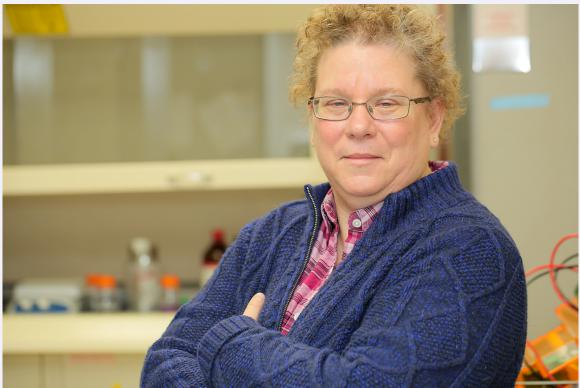
By Dr. Gayle E. Woloschak
Over the years, many people have complained to me that our Orthodox Church has not achieved unity in America after decades of work. For example, the Orthodox Christian Laity (OCL) has published pamphlets, held conferences, and engaged in dialogue with parishes about unity throughout its 40-year existence. I remember attending an OCL conference in Chicago in my youth, after which I was inspired (and even to this day remain inspired) to strive for unity in the Church. Nevertheless, it is easy for those who have worked for so long to become discouraged by what is perceived as the lack of progress toward unity.
The Orthodox Church has come a long way in the last 40 years, in part due to the OCL movement and also in part due to the diligence of Orthodox Christians who have been inspired to commit to unity in their hearts and minds. In my opinion, many Orthodox Christians believe that certain steps must occur before our Church can achieve unity—perhaps we must have a unity in finances or administration or parish organization. If that is where we have set our goals, then one could view that we have not succeeded. I believe though, that there are many markers of our success for unity. Even 5 years ago, I don’t think you would have heard bishops talking about the need for unity extensively, but I am hearing it almost universally these days. Most of our organizations (IOCC, OCMC, OCL, OCF, OCAMPR, OTSA, OFT, others) are all blind to jurisdictions; these groups have boards that select members without even considering the jurisdiction of the participants. In recent years, meetings of the Assembly of Bishops have become avenues for discussing issues of importance for the broad Church. Last year, they had a series of presentations from each of the seminaries to create more dialogue and interface among them. The Assembly has commissions that work on joint liturgical services, support our inter-jurisdictional committees, and even provide unity for these groups. Most of our parishes are mixed…few are exclusively Greek or exclusively Romanian, etc.
The work of unity is the Lord’s work, and as noted above, there is success in which we should take joy. There is of course much more work to do…but jurisdictional unity will never occur without all of these things–figuring out how the seminaries work together, having the same sets of services for the parishes, sharing our organizations, developing programs that interface among the parishes, developing networks of interactions, and more. Unity is a PROCESS NOT AN EVENT! We all need to continue to bear witness to the need for unity with the loudest voice possible…but in ways in which we can be heard and understood. We need to think about ways in which we can lead and nurture this process. We will not succeed if our goal is to achieve unity in one easy step or if we have a vision that is not based in a realistic view of our world. With Christ guiding our way, we can continue in this work by facilitating the efforts that are being exerted by the bishops and our many organizations, by cooperating with our sister Orthodox parish communities, by fostering interactions with each other, and by praying for the Lord’s direction.
Dr. Gayle E. Woloschak is Professor of Radiation Oncology, Radiology, and Cell and Molecular Biology in the Feinberg School of Medicine, Northwestern University. Her scientific interests are predominantly in the areas of molecular biology, radiation biology, and nanotechnology studies, and she has authored over 200 papers. She is editor-in-chief for the International Journal of Radiation Biology, is a member of various national and international committees and serves on the US delegation to the United National Scientific Committee on the Effects of Atomic Radiation. She also received a DMin degree from Pittsburgh Theological Seminary in Eastern Christian Studies having worked in bioethical questions and science and religion studies. She is Adjunct Professor of Religion and Science at Lutheran School of Theology Chicago and Sessional Professor of Bioethics at St. Vladimir’s Orthodox Theological Seminary. Her research interests there include environmental issues, bioethical questions, and evolution. Dr. Woloschak also serves as president of the board of the Orthodox Christian Mission Center (OCMC), vice-president of the International Orthodox Theological Association (IOTA), and officer on the board of directors of Orthodox Christian Laity (OCL). She is a past president of the Orthodox Theological Society in America (OTSA).
2 Comments
Thank you for sharing this insightful message. May Christ our Lord guide our Orthodox minds to unity.
The most we can hope for is unity of faith and practice. Other than that, the jurisdictions are still dependent on and required, for the most part, to support their respective ethnic parentage. This will never change.